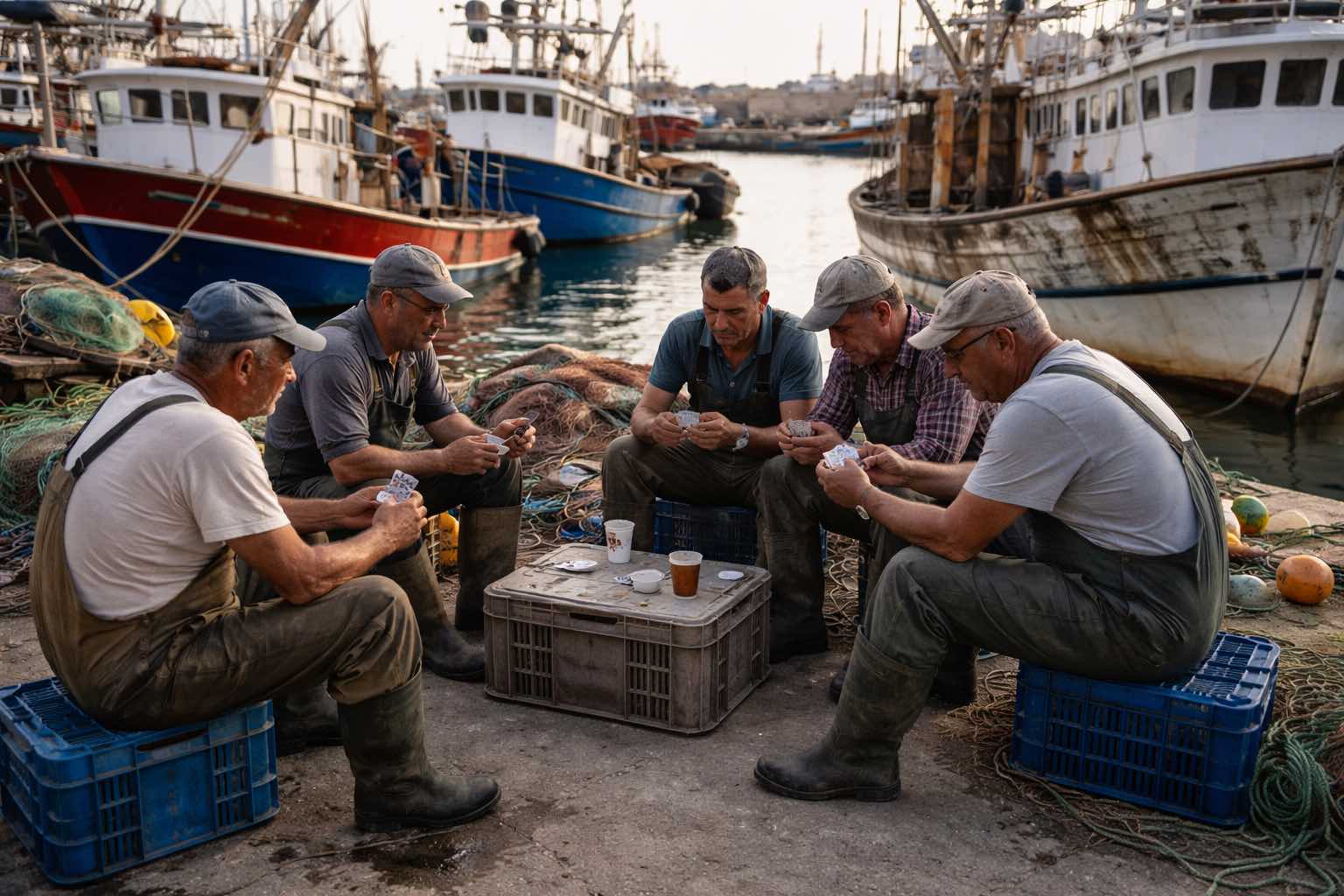
Europe’s fishing industry is facing a crisis that has arrived with startling speed and brutal clarity.
What began as a geopolitical shock in the Middle East has rippled outward, hitting one of the continent’s oldest and most culturally embedded industries with unforgiving force. The result is a stark and deeply worrying picture: boats tied up in harbour, crews without work, and a food supply chain beginning to fray.
At the centre of this unfolding story lies the Netherlands, where the impact has been especially severe. According to industry representatives, roughly half of the Dutch fishing fleet has remained idle in recent days, a dramatic contraction driven almost entirely by soaring diesel prices.
The figures tell the story in stark terms. Weekly fuel costs for some vessels have surged from around €12,000–€13,000 to nearly €30,000. That is not merely an increase—it is an existential threat. In many cases, fuel alone now costs as much as the total value of the catch.
Under such conditions, the economics of fishing simply collapse. Crews cannot be paid. Maintenance becomes impossible. Risk outweighs reward. The decision to stay in port is no longer strategic; it is unavoidable.
The structure of the Dutch fleet has made it particularly vulnerable. A significant portion of its vessels are beam trawlers—powerful but fuel-hungry ships designed to drag heavy gear across the seabed in pursuit of high-value flatfish such as sole and turbot. These vessels, while efficient in times of stable fuel prices, become liabilities when diesel costs spike sharply.
Yet this is not a Dutch problem alone. Across Europe, similar patterns are emerging. Fleets in Belgium and Britain, which also rely on beam trawling, are feeling the same pressure. Meanwhile, groundfish fleets targeting species such as cod and haddock are increasingly operating at—or below—break-even levels.
The crisis is continental in scope, and it is escalating.
The root cause lies far beyond Europe’s shores. The ongoing conflict involving Iran has sent shockwaves through global energy markets, disrupting supply chains and driving up the cost of diesel fuel at an extraordinary pace. Prices have risen by roughly 70% in a matter of weeks, a surge that few industries—least of all one as margin-sensitive as fishing—can absorb.
This is not just a sectoral issue; it is a systemic one. Diesel is the lifeblood of modern economies, underpinning transport, agriculture, and industry. When its price spikes, the effects cascade rapidly. Fishing, with its heavy reliance on fuel and exposure to volatile market prices for its catch, is among the first sectors to feel the strain—but it will not be the last.
The consequences are already becoming visible to consumers. Supplies of certain fish species are tightening, and prices are rising accordingly. The price of sole, for example, has jumped significantly at auction, reflecting both reduced catches and increased operating costs.
For restaurants and retailers, the implications are immediate. Margins are squeezed from both sides: higher wholesale prices and customers unwilling to absorb the full increase. Some establishments are responding by reducing portion sizes; others are quietly removing fish from their menus altogether.
This is how a fuel crisis becomes a food crisis—not overnight, but through a steady erosion of viability at every stage of the supply chain.
European governments are not blind to the problem. Countries such as Spain, France, and Italy have introduced limited support measures aimed at cushioning the blow. Yet these interventions remain modest relative to the scale of the challenge. In many cases, they are temporary, fragmented, and insufficient to restore profitability.
Industry groups are therefore calling for more decisive action at the European level. Chief among their demands is a relaxation of state aid rules, similar to the measures introduced during the energy crisis that followed Russia’s invasion of Ukraine in 2022.
The logic is straightforward: without rapid and coordinated support, large parts of the fleet may remain idle for extended periods, with lasting consequences for employment, food security, and coastal communities.
But even this may not be enough.
The deeper issue exposed by the current crisis is structural. European fishing has long operated on thin margins, highly sensitive to fluctuations in both fuel costs and fish prices. It is a model that works in stable conditions but becomes dangerously fragile when external shocks occur.
What we are witnessing now is not merely a temporary disruption but a stress test—one that raises uncomfortable questions about resilience, sustainability, and the future of the industry.
Can fleets that rely on fuel-intensive methods remain viable in an era of volatile energy markets? Should there be greater investment in more efficient technologies or alternative propulsion systems? And how can policymakers balance environmental objectives with the immediate economic survival of fishing communities?
These are not questions that can be answered overnight. But they can no longer be ignored.
For now, the immediate priority is clear: keeping boats at sea, crews employed, and supply chains functioning. Without that, the longer-term conversation becomes moot.
As things stand, however, the outlook is uncertain. If fuel prices remain elevated—or rise further—the current wave of idle vessels could become the new normal. And if that happens, the impact will extend far beyond the quaysides of Dutch ports.
It will be felt on dinner plates across Europe.
_______________________________________________________________________________________________________________________
Click here for more News & Current Affairs at EU Today
Click here to check out EU TODAY’S SPORTS PAGE!
_______________________________________________________________________________________________________________________