Increasingly, public policy debates are being fought in the courts, both in the United States, and in Europe.
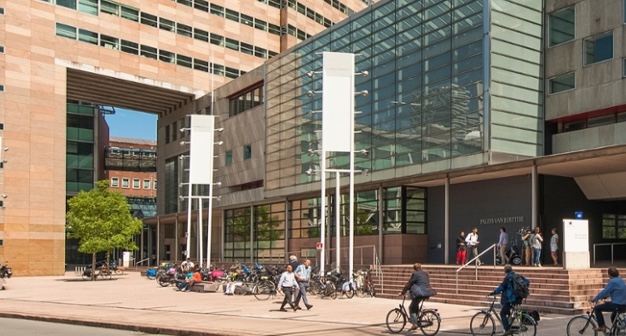
Notably, there has been the court case in the Netherlands whereby in 2021, the district court in The Hague, at the request of non-governmental organisations (NGOs) like Milieudefensie, ruled that Shell had to reduce its CO2 emissions by 45% by 2030 compared to 2019.
Legal analysts consider this to be a watershed moment in climate litigation: for the first time, a court imposed a reduction obligation on an individual company. In response, Shell warned that this would de facto force the company to stop investments and divest operations. Its appeal was succesful. On 12th November 2024, the Hague Court of Appeal overturned the landmark ruling, stressing that a court is not able to set a percentage by which a company must reduce its CO2 emissions.
A new development is NGOs pursuing legal avenues in Europe after losing in U.S. courts. Such a “transatlantic legal backdoor” is deemed to risk undermining judicial sovereignty and it has been rattling the US business community.
A case that exemplifies this concern involves Greenpeace, which has filed a lawsuit in the District Court of Amsterdam against U.S. energy firm Energy Transfer. In 2025, a U.S. court condemned Greenpeace to a $667 million award for tactics used to obstruct a new pipeline. Although a subsequent ruling reduced the fine, the judgment largely upheld the company’s claims. Greenpeace however responded by launching a new lawsuit about the topic, this time in Europe, in a bid to revisit its concerns abroad.
A transatlantic legal backdoor?
Michael McKenna, a columnist for The Washington Times, highlights the implications of this, as he writes: “European courts [could be asked] to nullify verdicts of American juries and American judges.” He thereby elaborates on the U.S. trial, noting:
“Energy Transfer’s case against Greenpeace has already provided a stark reminder of the lengths to which some are willing to go. In that trial, the jury heard compelling evidence that Greenpeace dispatched professional protesters to the region, provided equipment and then helped train other protesters at the site. Greenpeace also paid for lockboxes that protesters could use to tie themselves to construction equipment.
In the months that followed, protesters engaged in acts of violence, vandalism and arson in their efforts to prevent the pipeline from being constructed. Greenpeace also disseminated — let’s be charitable and call it inaccurate — information about the company and its project, wrongly claiming that the pipeline would cross the sacred tribal lands of the Standing Rock Sioux Tribe.
In its European lawsuit, Greenpeace does not offer any new evidence to dispute the findings of the North Dakota jury, which spent weeks hearing expert testimony and studying the evidence. Instead, it’s seeking a judiciary that is likely to have a more favorable view toward its brand of environmental extremism.”
McKenna also addresses Greenpeace’s SLAPP-inspired legal strategy:
“Laws against strategic lawsuits against public participation were originally developed to protect free speech by shutting down frivolous lawsuits designed to silence people. In this case, the lawsuit was plainly not frivolous, given that a jury agreed with the plaintiff. Greenpeace’s ability to say what it thinks has not been impinged upon in any way. Indeed, it continues to regularly attack Energy Transfer in its press releases and blog posts.”
He adds a warning about the potential consequences:
“If groups such as Greenpeace are granted de facto immunity from European courts to break American laws, their tactics would almost certainly become more violent and more damaging.”
Energy Transfer has described Greenpeace’s Dutch lawsuit as an attempt to relitigate issues already settled under U.S. law, calling it “nothing more than a ‘do-over,’ an effort to relitigate and politicize issues that have already been decided under U.S. law. This manoeuvre is a transparent political stunt designed to waste judicial resources, stage a broader activist campaign, and risk contradictory rulings.”
The company emphasised: “We will not allow Greenpeace to rewrite history or evade responsibility. The U.S. verdict was clear: Greenpeace broke the law, acted with malice, and caused extraordinary harm. Energy Transfer remains fully committed to defending its rights vigorously, ensuring that the rule of law is upheld, and putting an end to Greenpeace’s campaign of misinformation and disruption.”
Green claims
This legal debate emerges amid a broader European environment where corporate environmental claims are increasingly scrutinized by courts. Last October, the Financial Times reported that “Europe has become a risky place for corporate green claims” after a Paris court found Total guilty of “misleading commercial practices” in its public claims to be a “major actor in the energy transition.” The newspaper thereby noted:
“The verdict is particularly striking because TotalEnergies has been investing much more heavily in green areas than most of its oil and gas peers, with $4.8bn of capital expenditure on low-carbon energy last year.”
The FT further observed:
“The case is an important reflection of the tightening legal constraints in the EU around green claims by companies, following recent greenwashing verdicts against airlines KLM and Lufthansa.”
The verdict cited EU legislation passed last year, which prohibits green claims unsupported by “clear, objective, publicly available and verifiable commitments and targets.” The European Commission had proposed further measures under its so-called Green Claims Directive, requiring companies to submit sustainability messaging for approval before publishing it to consumers, but the proposal was withdrawn in June over concerns of bureaucratic overreach and excessive burden on businesses.
While the wave of new green EU regulations appears to have paused, judicial actions such as Greenpeace’s lawsuit continue to pose significant questions for transatlantic legal cooperation. Analysts argue that at a time when U.S.–EU relations are already under stress, allowing European courts to second-guess American judicial outcomes risks creating further legal and political friction.
Click here for more News & Current Affairs at EU Today
_____________________________________________________________________________________________________________________________