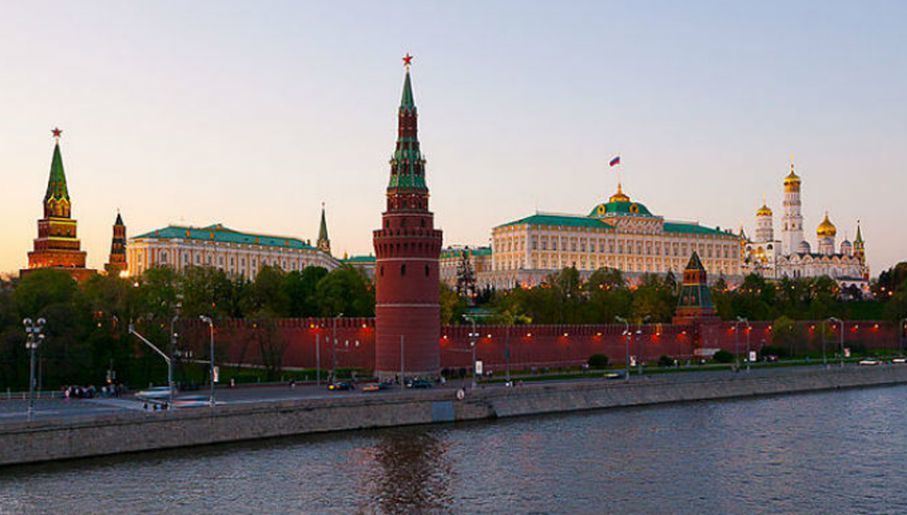
By now, one would hope Europe had learned how Vladimir Putin plays the game, yet the Kremlin’s latest dismissal of European and Ukrainian amendments to the U.S. peace plan shows, once again, that the continent remains depressingly easy to outmanoeuvre.
Moscow did not bother with diplomatic niceties. Yuri Ushakov, Putin’s foreign policy enforcer, announced that the European-backed tweaks “definitely do not improve” the chances of peace. Translation: Europe’s input is irrelevant, and Putin is perfectly comfortable saying so aloud.
It is hard to overstate how brazen this is — and how telling. The message from Moscow could not be clearer: Washington matters, Moscow matters, and Europe is little more than set dressing at its own security negotiations. For a continent that endlessly proclaims itself a “geopolitical actor,” it is a humiliating reality.
But the Kremlin’s confidence has foundations. Europe’s diplomatic machinery has spent the past year lurching from disagreement to paralysis. Hungary blocks sanctions and parrots Kremlin talking points; Slovakia flirts with “neutrality”; Belgium clutches its swollen coffers rather than release frozen Russian assets; and the EU’s unanimity rule ensures that one rogue statelet can hold 440 million people hostage. If Putin had scripted Europe’s divisions himself, they could scarcely be more convenient for him.
All of this emboldens him. Why take Europe seriously when Europe won’t take itself seriously? Why treat European amendments to the peace plan with respect when Europe cannot produce a unified foreign policy without half a dozen footnotes and a marathon overnight summit?
And so the Kremlin behaves exactly as you would expect: dismissive, confident, utterly unthreatened. While U.S. envoy Steve Witkoff tries to shepherd negotiations in Miami, Moscow sits back and reminds everyone that the only sign-off that matters is Putin’s. Europe is physically present but strategically absent — a spectator at a match being played on its own turf.
The consequences go beyond bruised European pride. They expose a structural weakness in Europe’s entire security posture. The truth — whispered in Brussels but understood plainly in Moscow — is that without NATO, and especially without the Americans, Europe would be in serious danger. The continent talks a great deal about “sovereignty” and “autonomy,” yet it still cannot field the hard power necessary to deter a Russia that has turned its economy into a war machine.
Meanwhile European leaders assure their publics that they have “reduced dependence on Russian energy,” as though this alone solves the problem. Gas is only one lever. Russia still holds influence through critical minerals, trade pressures, and the ability to rattle global markets. Europe remains vulnerable.
Worse still, European democracies continue to underestimate the information war. Putin does not need to convince Europeans of Russia’s virtue — he merely needs to deepen existing fractures. Hungary, Slovakia, the eurosceptic right, the pacifist left, the energy lobbies, the business elites who dream of a return to “normality” with Moscow — all are fertile ground for disruption. The Kremlin knows this and invests accordingly.
And then, of course, there is Ukraine. Europe insists that “Ukraine’s future is Europe’s future,” but it has yet to act with the conviction such a phrase demands. Kyiv cannot negotiate from a position of strength if its most important European backers cannot even get their own house in order. When Moscow declares Ukrainian and European amendments irrelevant, it is not simply negotiating; it is testing the West’s unity — and repeatedly finding it lacking.
The uncomfortable truth is this: Putin is playing games because Europe lets him. He is dismissing Europe because Europe has made itself easy to dismiss. He is setting the tempo because Europe refuses to pick up the baton.
This is not a plea for reckless escalation or chest-beating bravado. It is a call for seriousness. Europe must end the unanimity farce, boost defence production, and establish a coherent and enforceable foreign policy. It must stop behaving like a loose federation of quarrelling provinces and start behaving like a bloc with interests, borders, and resolve.
Until then, Putin will keep toying with Europe — not because he is a master strategist, but because Europe keeps leaving the back door unlocked. And every time Europe dithers, every time it retreats into committee rooms and communiqués, the Kremlin grows only more certain of one thing: that Europe will never stop him unless someone else takes the lead.
Click here for more News & Current Affairs at EU Today
Click here to check out EU TODAY’S SPORTS PAGE!
____________________________________________________________________________________________________________________________