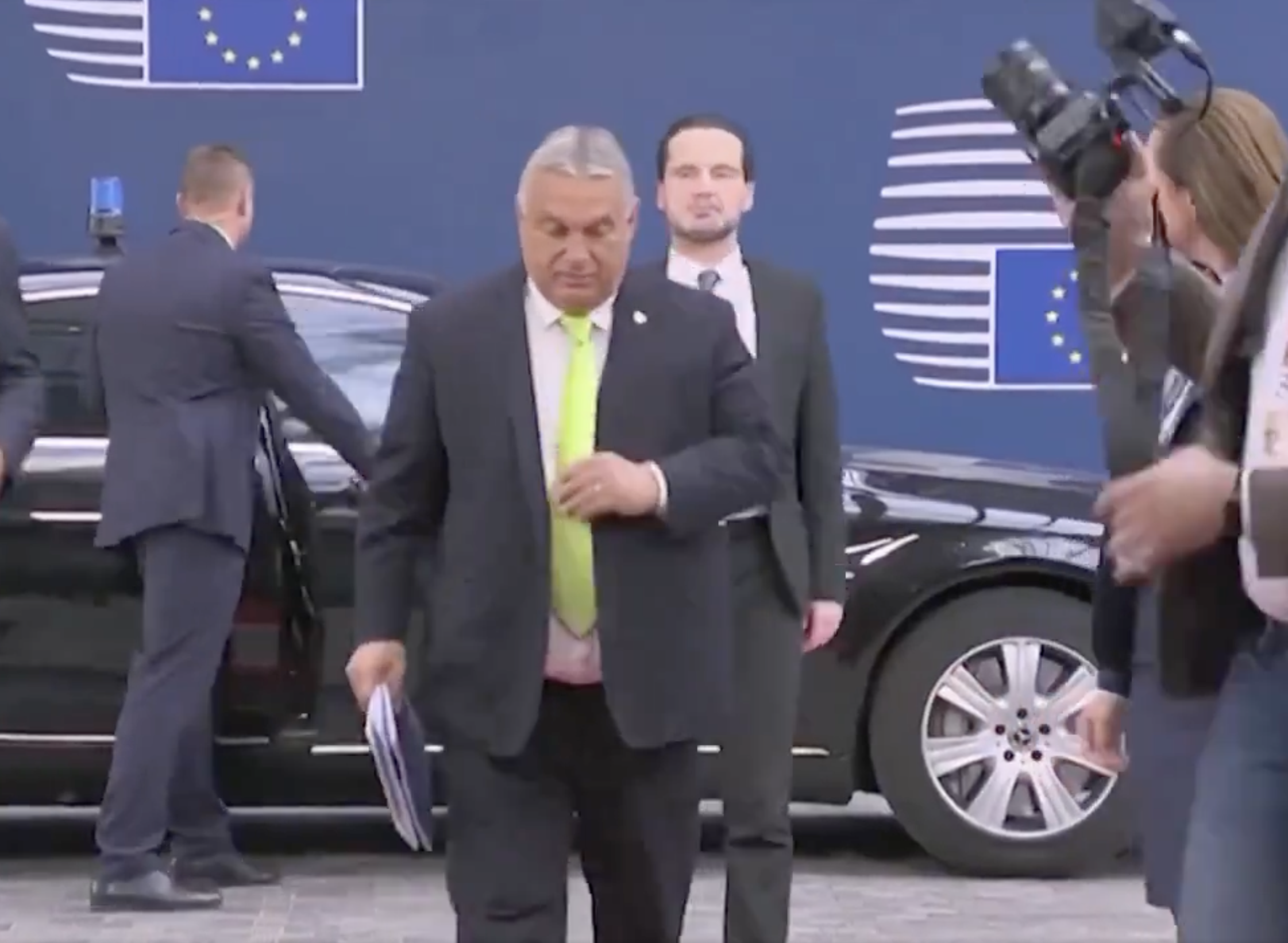
A delegation of Members of the European Parliament (MEPs) has returned from Budapest with a dire warning: Hungary, under the prolonged leadership of Viktor Orbán, is no longer merely diverging from EU democratic norms—it is accelerating in reverse.
In a scathing assessment delivered this week, the group of cross-party lawmakers condemned the Hungarian government’s increasing disregard for the rule of law, mounting restrictions on civil society, and a sweeping rollback of minority rights.
The delegation, part of a formal fact-finding mission organized by the European Parliament, pointed to a string of recent constitutional amendments and political maneuvers by Orbán’s Fidesz party as further evidence of democratic backsliding. Chief among their concerns were new measures that effectively ban Pride events, curb media independence, and hinder the judicial system’s ability to operate independently.
The timing of the delegation’s findings could not be more critical. With Hungary preparing to take over the rotating presidency of the Council of the European Union later this year, fears are mounting in Brussels that Budapest may use its platform to obstruct, rather than advance, the bloc’s shared values.
According to the MEPs, the Hungarian judiciary is under increasing political pressure. Judicial appointments have been reshuffled to favour loyalists, and controversial reforms have reduced the checks and balances that once provided at least a degree of autonomy to the courts. Critics argue that judges who challenge the government face marginalisation or early retirement, fostering an atmosphere of intimidation.
Meanwhile, Orbán’s government has pursued constitutional changes with what one MEP described as “chilling efficiency.” Last year’s amendment banning “the promotion of gender transition to minors” has already drawn condemnation from human rights groups. More recently, Hungary enacted sweeping legislation prohibiting events deemed to promote “non-traditional family values,” effectively outlawing public Pride marches and other LGBTIQ gatherings.
“These laws are not just symbolic,” said former Dutch MEP Sophie in ’t Veld. “They carry real consequences for the freedoms of Hungarian citizens, particularly the LGBTIQ community, who now face legal persecution for simply existing publicly.”
Media and Civil Society Under Siege
In addition to judicial reforms and cultural restrictions, lawmakers highlighted the ongoing pressure on Hungary’s media landscape. Once vibrant and diverse, the country’s press has come under heavy state influence, with government-friendly conglomerates now controlling the lion’s share of news outlets. Independent journalists face growing harassment, both legal and personal.
Civil society organisations are faring no better. NGOs that receive foreign funding or advocate for minority rights have been subjected to punitive audits, raids, and branding as “foreign agents,” reminiscent of policies seen in Russia and other authoritarian states.
The MEPs stressed that these actions are not merely internal matters but threaten the very fabric of EU cooperation. “If one member state abandons the rule of law, it undermines trust across the entire Union,” said German MEP Katarina Barley. “We cannot stand by while one of our own slides into authoritarianism.”
Call for Stronger EU Action
While the European Commission has taken some steps—freezing billions in EU funds earmarked for Hungary due to rule-of-law concerns—lawmakers are calling for a tougher stance. The delegation urged Commission President Ursula von der Leyen to make full use of the EU’s conditionality mechanism, linking access to funds with respect for democratic norms.
Furthermore, the delegation recommended advancing Article 7 proceedings, the EU’s most serious political sanction, which could lead to the suspension of Hungary’s voting rights within the Council.
However, the mechanism has been stalled for years due to the need for unanimity among member states—a hurdle made all the more difficult by the mutual protection pact between Orbán and his Polish allies.
Still, as Orbán continues to double down on his defiance of Brussels, pressure is building for the EU to act decisively. Analysts warn that inaction not only emboldens authoritarian leaders but sets a dangerous precedent for other would-be illiberal regimes.
Whether the European Union will muster the political will to confront Hungary more forcefully remains uncertain. But one thing is clear: the question of how to respond to Budapest’s trajectory is fast becoming a defining test of the EU’s commitment to its own foundational principles.