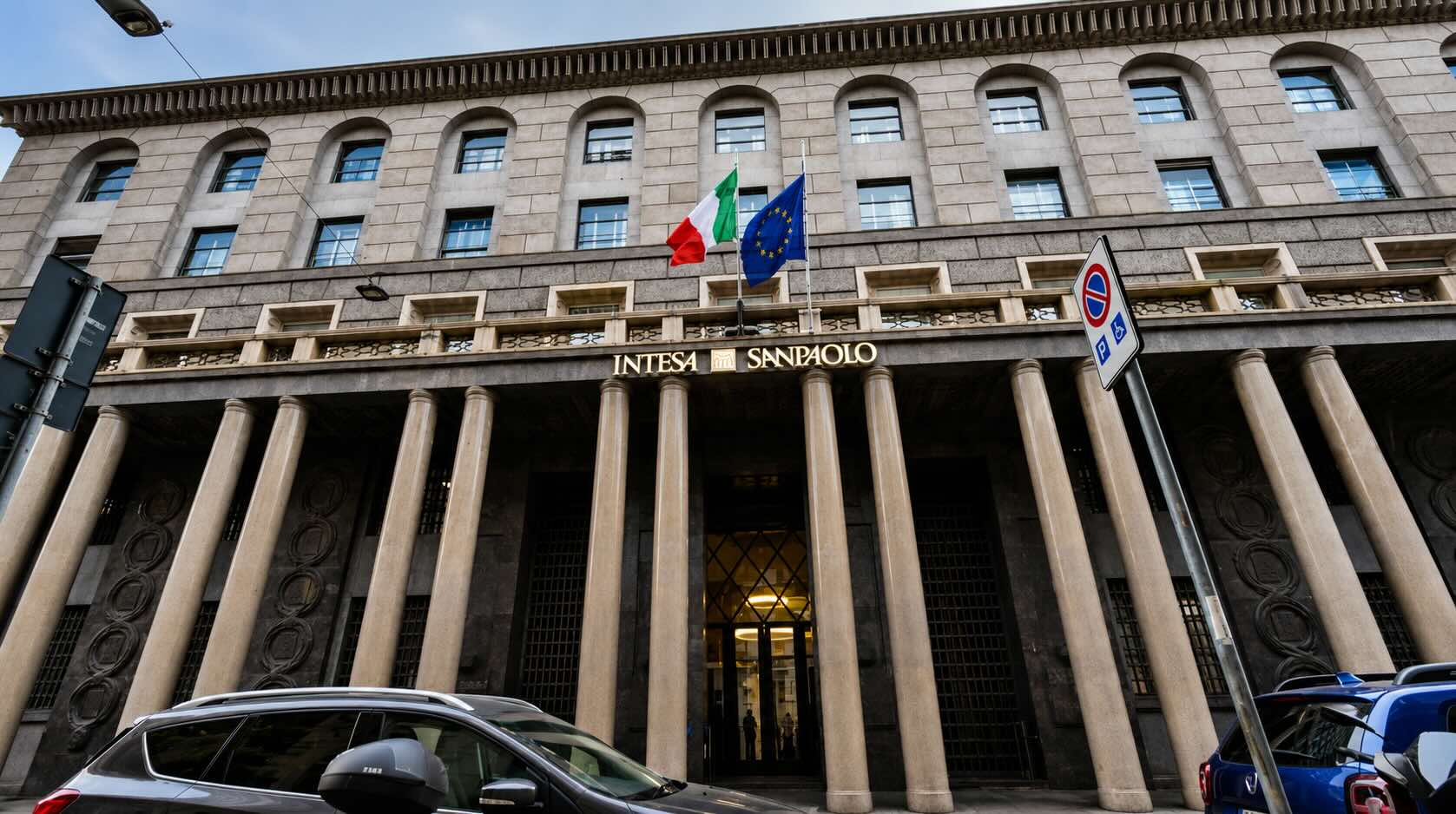
Intesa Sanpaolo has launched an unsolicited €30.6 billion cash-and-share offer for Monte dei Paschi di Siena, escalating a battle over the future of Italian banking and threatening to reshape one of the eurozone’s largest financial markets. The proposed takeover would combine Italy’s largest bank with the world’s oldest bank still in operation, while disrupting a rival attempt to bring MPS into merger talks with Banco BPM.
The offer for MPS values each share at €10.09, a premium of about 12.5 per cent to its previous closing price. Intesa is offering 16 newly issued shares for every 10 MPS shares, plus €1 in cash per share. If completed, the deal would create a banking group with a market value of about €126 billion, placing it among the largest lenders in the eurozone.
The move came shortly after Banco BPM invited MPS into merger talks, making the Tuscan lender the centre of a sudden contest between competing visions for Italy’s banking sector. A combination with Banco BPM would have created a larger domestic challenger. Intesa’s intervention instead places Italy’s dominant lender at the centre of the consolidation process.
The market reaction underlined the scale of the bid. MPS shares rose after the offer, while Intesa’s shares fell as investors assessed the cost, integration risks and regulatory implications. The proposal also raises a central competition question: whether Italy’s largest lender can absorb a bank with MPS’s domestic reach without reducing choice in local retail and business banking markets.
Intesa chief executive Carlo Messina described the bid as friendly and said he expected support from investors. The offer will nevertheless face scrutiny from regulators and competition authorities, given Intesa’s already large position in Italian retail banking. It may also raise political questions in Rome because MPS has been closely linked to the Italian state since its 2017 bailout and subsequent return towards private ownership.
The structure of the deal suggests Intesa is trying to pre-empt antitrust concerns. The bank has agreed a €3.5 billion transaction with insurer Unipol to sell 635 MPS branches and the Siena headquarters if the takeover succeeds. Those assets would support BPER Banca, in which Unipol is a major shareholder, and could help maintain competition in local banking markets.
The bid also has consequences beyond ordinary retail banking. MPS has acquired Mediobanca, giving it exposure to a wealth-management and investment-banking platform, as well as indirect links to Generali, one of Italy’s most important insurers. Intesa’s board has separately backed the purchase of a 3.01 per cent Generali stake as part of the transaction structure, describing the move as temporary and financial in nature.
The proposal therefore concerns more than the future of one rescued bank. It touches the balance of power across Italian finance: retail banking, insurance, wealth management, investment banking and corporate influence. For decades, Mediobanca and Generali have held a particular place in Italy’s financial system. Bringing MPS, Mediobanca and related insurance interests into Intesa’s orbit would alter that structure.
For Italy, the deal represents a new stage in a banking recovery that has taken more than a decade. MPS was once a symbol of the country’s banking weaknesses, burdened by bad loans, poor governance and the need for state support. Its return as a strategic prize shows how far the sector has changed, helped by higher interest rates, improved capital positions and stronger profitability.
However, consolidation does not remove risk. Large banking mergers require complex integration, branch rationalisation, technology alignment and staff management. They can also reduce competition if not carefully structured. Intesa’s planned branch sale may address part of that concern, but regulators will still have to assess whether consumers and small businesses retain enough choice in local markets.
The European Central Bank will also be central to the process. As the eurozone’s banking supervisor, it will examine capital, governance, risk management and the strategic rationale. National competition authorities and market regulators will also have roles, while investors will need to decide whether the premium offered is sufficient.
The wider European significance is clear. Policymakers have long argued that Europe has too many banks and too little cross-border scale. Yet most consolidation still happens within national borders. The Intesa-MPS bid follows that pattern: it would create a larger Italian champion rather than a cross-border European group.
That may strengthen Italy’s domestic banking system, but it also shows the limits of Europe’s banking union. Without a completed deposit insurance scheme and deeper capital-market integration, large banks still tend to grow at home before looking across borders.
For customers, the immediate effects are unlikely to be visible. Accounts, branches and services would not change overnight. But over time, any merger of this size would affect branch networks, lending strategy, digital investment, employment and competition for deposits and mortgages.
The bid is now likely to become a test of investor confidence, regulatory tolerance and political appetite for a more concentrated Italian banking system. Intesa has moved first with scale and speed. Whether it succeeds will determine not only the future of MPS, but also the shape of Italian finance after years of restructuring.