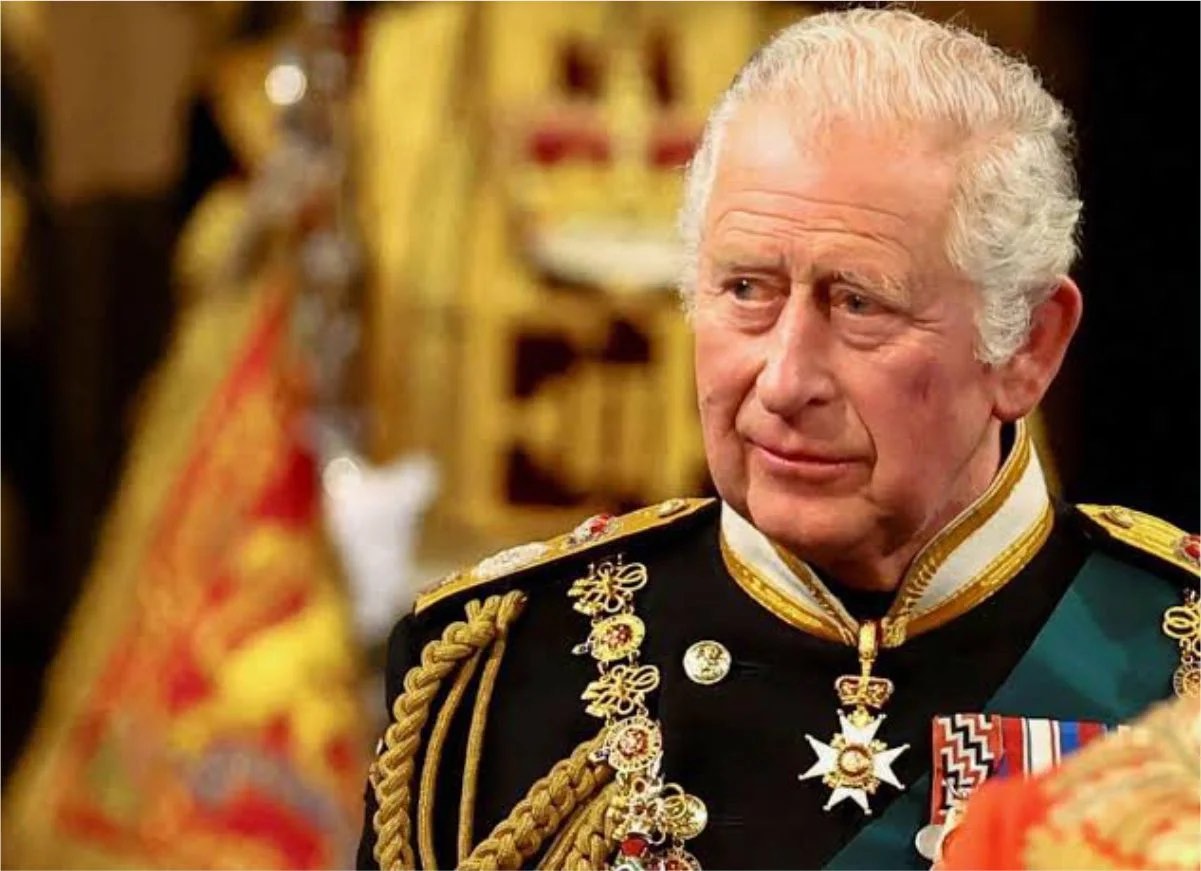
The British monarchy has long traded on its ability to lend dignity to the undignified, a task now resting with King Charles III as he prepares to engage with Donald Trump. It is a subtle art: a handshake here, a toast there, the gentle deployment of history as a form of soft power.
Yet even the most practised conjurer occasionally finds himself facing an audience immune to illusion.
Later this month, King Charles III will step into precisely such a predicament when he sits down for tea with Donald Trump—a meeting that already carries the unmistakable scent of impending diplomatic farce.
The official line, dutifully repeated in Whitehall and Buckingham Palace alike, is that this state visit—timed to coincide with the 250th anniversary of American independence—is intended to “restore the closest of friendships” between Britain and the United States. It will include all the expected ceremonial flourishes: a state dinner, a Congressional address, carefully curated public engagements. Yet the centrepiece, oddly enough, may prove to be the most perilous: a private tea, shielded from cameras but unlikely to be insulated from consequence.
There is a reason the meeting has been designed to take place behind closed doors. Officials, one suspects, have learned from experience. Mr Trump is not a man easily contained by protocol, nor one inclined towards the delicate euphemisms that lubricate diplomacy. Previous encounters with foreign leaders have demonstrated a penchant for improvisation—sometimes theatrical, often awkward, occasionally incendiary. The prospect of such spontaneity meeting the studied restraint of the British monarchy is less a meeting of minds than a collision of worlds.
For the King, the stakes are not merely diplomatic but personal. Comparisons with Queen Elizabeth II are inevitable and, more often than not, unfavourable. Where the late Queen possessed an almost preternatural ability to disarm even the most difficult interlocutors, her son’s style is more earnest, less instinctively adroit. The monarchy’s defenders argue that Charles brings a different, more modern sensibility to the role. His critics, however, detect a certain awkwardness—an impression that he is playing a part learned later in life rather than inheriting it.
This visit risks hardening that perception. For all the talk of “soft power”, it is not clear that the King’s particular brand of diplomacy is suited to a figure like Mr Trump. The American president has already shown himself willing to criticise the British government in blunt and often personal terms, including jibes at Keir Starmer that have done little to endear him to Westminster. That the monarch is now being deployed as a kind of diplomatic balm speaks volumes about the limits of conventional statecraft—and perhaps about the desperation of those orchestrating the visit.
One can, with a little imagination, sketch the scene. The King, meticulously briefed, attempts to steer the conversation towards shared values, historic ties, and the ever-reliable language of partnership. Mr Trump, meanwhile, digresses—perhaps into grievances about trade, perhaps into anecdotes of questionable relevance, perhaps into remarks that, while intended as compliments, land with the grace of a dropped tray. It is not difficult to envisage a moment in which the King, bound by constitutional restraint, is left to smile politely while his guest wanders far beyond the script.
Such an outcome would not merely be embarrassing; it would be instructive. For decades, Britain has relied on the monarchy as a diplomatic asset, a means of engaging leaders who might otherwise prove resistant to conventional overtures. The theory is that the aura of the Crown—its history, its ceremony—can transcend politics. In many cases, this has proved true. But it presupposes a willingness, on the part of the guest, to play along.
Mr Trump has never shown much inclination to do so. His previous state visit to Britain was accompanied by both lavish pageantry and widespread protest, a juxtaposition that neatly captured the ambiguity of his relationship with the UK. While he is undeniably receptive to the trappings of royalty—few world leaders have embraced the spectacle of a state banquet with such evident enthusiasm—he is less attuned to its subtleties. The risk, therefore, is that the symbolism of the visit will be overshadowed by the unpredictability of its principal guest.
There is, too, the broader context to consider. The “special relationship” is under strain, buffeted by disagreements over foreign policy and the aftershocks of recent conflicts. Against this backdrop, the decision to send the monarch—rather than rely solely on elected officials—carries a certain air of last resort. It is as though Britain is reaching for its most venerable instrument in the hope that it might succeed where others have faltered.
Yet instruments, however venerable, are not infallible. The monarchy’s strength lies in its ability to project continuity and stability. It is less well suited to navigating volatility. In Mr Trump, the King will encounter a leader who thrives on precisely the kind of unpredictability that the royal playbook is designed to avoid.
None of this is to suggest that disaster is inevitable. Diplomacy, like theatre, can produce unexpected moments of harmony. It is possible—just—that the meeting will pass without incident, that the King’s courtesy will be met with reciprocal restraint, and that the visit will achieve its stated aim of reinforcing transatlantic ties.
But it is equally possible, and perhaps more likely, that the encounter will serve as a reminder of the limits of royal diplomacy in an age of political spectacle. If that proves to be the case, the consequences will extend beyond a single awkward meeting. They will touch on the broader question of what the monarchy can realistically achieve in a world where decorum is no longer a universal language.
For King Charles III, the visit represents an opportunity—but also a test. For Donald Trump, it is another stage upon which to perform. The difficulty, as ever, lies in ensuring that the performance does not upstage the purpose.
At present, one cannot help but suspect that it will.