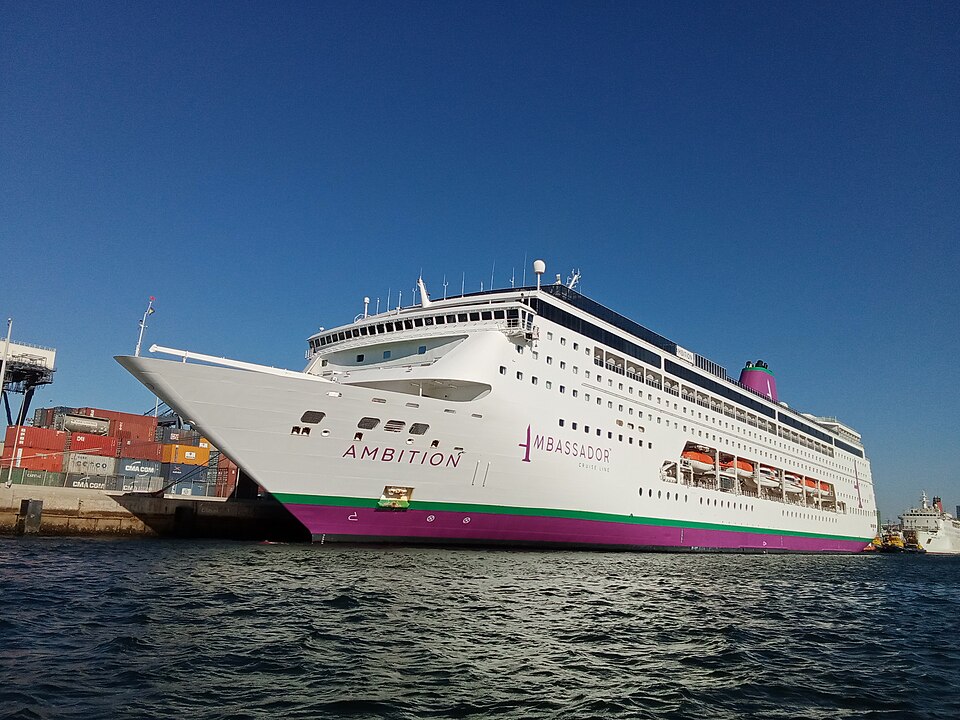
More than 1,700 passengers trapped aboard vessel in Bordeaux after suspected norovirus outbreak sparks alarm across Europe.
The sight of a cruise liner docked helplessly in a French port, passengers confined to their cabins while medical teams board in protective gear, is an image many believed had been left behind with the Covid era. Yet this week, the luxury vessel Ambition became the latest reminder that the cruise industry remains uniquely vulnerable to outbreaks of infectious disease.
Authorities in Bordeaux halted passengers and crew from disembarking after dozens of people aboard the British-operated ship fell ill with what is believed to be a highly contagious gastrointestinal virus, most likely norovirus. The vessel, operated by Ambassador Cruise Line, was carrying more than 1,200 passengers — mostly British and Irish holidaymakers — alongside over 500 crew members.
French health officials moved quickly, imposing temporary restrictions while laboratory testing was conducted. The sudden quarantine transformed what had been marketed as a leisurely Western Europe voyage into a grim exercise in containment.
According to regional authorities, around 50 people displayed symptoms associated with acute gastroenteritis, including vomiting and diarrhoea. Enhanced sanitation measures were rapidly introduced, sick passengers were isolated, and dining procedures altered in an attempt to stem further transmission.
The timing could hardly be worse for the cruise industry, which has spent years attempting to restore public confidence after the devastating reputational damage inflicted during the coronavirus pandemic. Cruise operators have heavily promoted themselves as safer, cleaner and better prepared. Yet the events in Bordeaux have revived uncomfortable questions about whether densely packed floating resorts can ever truly escape the epidemiological realities of life at sea.
Confined environments, shared dining facilities and close social interaction make cruise ships ideal breeding grounds for contagious illnesses. Norovirus, in particular, has long haunted the sector. The virus spreads with ruthless efficiency through contaminated surfaces, food or direct human contact, and can move rapidly through enclosed populations.
The American Centers for Disease Control has already recorded several outbreaks aboard cruise vessels this year alone.
Adding to the unease is the fact that the Bordeaux incident follows another alarming maritime health crisis involving the expedition ship MV Hondius, where a hantavirus outbreak reportedly claimed several lives and triggered international monitoring operations. French authorities have stressed there is no evidence linking the two incidents, but the coincidence has inevitably heightened public anxiety.
The death of a 92-year-old British passenger aboard the Ambition has further intensified scrutiny, although officials insist the man died from cardiac arrest and there is currently no indication that his death was related to the gastrointestinal outbreak.
For many passengers, the experience has reportedly been deeply unsettling. Instead of excursions through Bordeaux’s vineyards and historic streets, travellers found themselves confined aboard ship awaiting clearance from health authorities. Shore visits were cancelled, movement restricted and uncertainty allowed to spread almost as quickly as the illness itself.
The episode also exposes a broader vulnerability in modern mass tourism. Cruise holidays have exploded in popularity because they promise convenience, luxury and controlled environments. But those same features can quickly become liabilities when disease emerges onboard. A cruise liner is, in effect, a small travelling city — except one with limited medical facilities and nowhere to escape.
Researchers studying outbreaks aboard ships have repeatedly warned that early containment is extraordinarily difficult once transmission begins. Models examining cruise ship infections suggest that asymptomatic or mildly symptomatic individuals can accelerate spread before authorities fully understand the scale of the problem.
That reality helps explain why officials in Bordeaux reacted with such caution. Better to endure criticism for overreaction than risk allowing potentially infected passengers to disperse across Europe.
The cruise industry will undoubtedly insist that its response systems worked as intended. Enhanced cleaning protocols were introduced immediately, health authorities were notified, and passengers were monitored. Yet for many observers, the image of another cruise vessel effectively placed under quarantine revives memories the industry would rather forget.
There is a cruel irony in all this. Cruises are sold as escapes from everyday worries — carefree voyages promising relaxation and indulgence. But when illness strikes, the illusion vanishes rapidly. A luxury liner can become something altogether less glamorous: a confined floating ward, carrying anxiety as quickly as passengers.
Main Image: – Own work
Click here for more News & Current Affairs at EU Today
Click here to check out EU TODAY’S SPORTS PAGE!
___________________________________________________________________________________________________________________