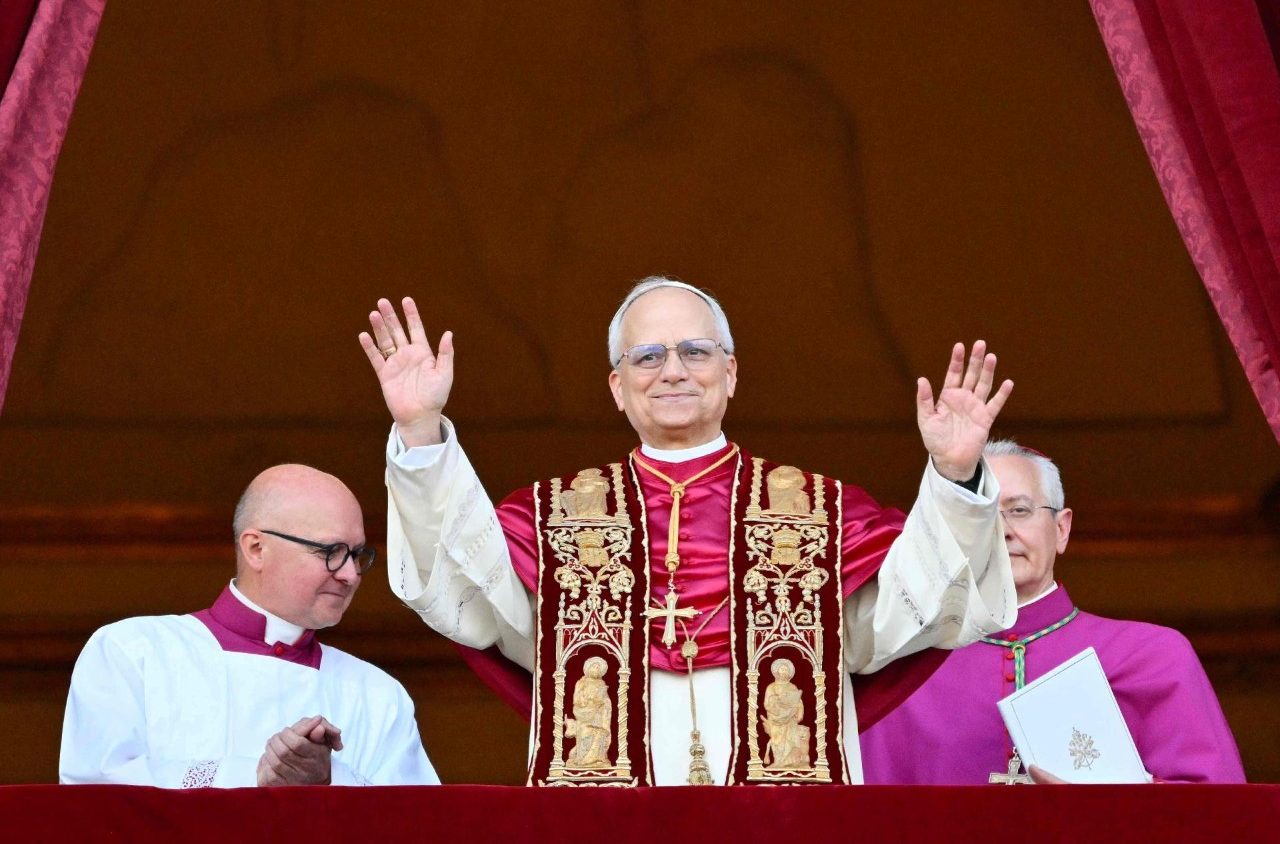
Pope Leo XIV has delivered one of the sharpest political statements of his pontificate, condemning leaders who spend vast sums on war while neglecting reconstruction, education and healthcare, in remarks that came days after a fresh public attack from US President Donald Trump. The Pope spoke in Bamenda, in Cameroon’s conflict-affected English-speaking region, during a visit that has drawn attention both for its local significance and for its wider geopolitical tone.
Leo said the world was being “ravaged” by a small number of tyrants and criticised those who use religious language to justify conflict. He argued that governments and political leaders can rapidly destroy lives and communities, yet often fail to commit comparable resources to healing, schooling and rebuilding. Although he did not name any individual leader, the timing of the speech ensured that it was read in the context of his deteriorating public confrontation with Trump.
The remarks were notable not only for their wording but also for their setting. Bamenda lies at the centre of Cameroon’s long-running Anglophone crisis, a conflict that has left thousands dead and displaced hundreds of thousands since 2017. During his visit, Leo met Christian, Muslim and traditional leaders and used the occasion to argue that religion must not be turned into an instrument of political or military mobilisation. The Vatican’s decision to place such language in a city scarred by internal conflict gave the speech a practical as well as symbolic dimension.
Leo’s intervention came after renewed criticism from Trump, who has in recent days attacked the pontiff on social media over his foreign policy comments, particularly those concerning the war involving Iran. The Pope, the first American to hold the office, had already responded by saying he was not afraid of such criticism and would continue to speak out on matters of conscience and justice.
The dispute has now widened beyond the Vatican and Washington. Trump have also turned on Italian Prime Minister Giorgia Meloni, saying he was “shocked” by her after she criticised his remarks about the Pope and distanced herself from his position on the current Middle East crisis. The clash is politically sensitive for Italy because Meloni had previously been seen as one of Trump’s closest interlocutors in Europe.
What makes Leo’s comments especially striking is the contrast with the usually careful public language of the Holy See. Popes frequently call for peace, dialogue and humanitarian protection, but explicit references to tyrants, war profiteering and the misuse of religion carry a more confrontational edge. Reuters noted that Leo has become more outspoken during his African tour, speaking not only about peace but also about corruption, inequality and the responsibilities of political leadership. In Yaoundé, he criticised entrenched corruption in front of Cameroonian officials, including President Paul Biya, who has ruled since 1982.
That broader shift matters for Europe as well. The Vatican remains a diplomatic actor with global reach, and papal interventions still carry weight in debates over war, humanitarian law and political legitimacy. When a Pope openly rebukes leaders for diverting billions into conflict rather than reconstruction, he is not only making a moral appeal; he is also entering the wider international argument about how power is used and justified. Leo’s criticism of leaders who invoke religion in support of war also lands at a time when religious language has re-entered political discourse in several capitals, including Washington.
For Trump, the dispute presents an awkward complication. His standing among many conservative Christian voters in the United States has long been politically valuable, but a prolonged public quarrel with an American Pope introduces a more complex dynamic, especially among Catholics. For Leo, the episode appears to confirm that he is willing to absorb political criticism if he believes silence would amount to acquiescence.
Whether the immediate controversy fades or deepens, the speech in Cameroon will stand as an important marker of this papacy. Leo chose a region shaped by violence and neglect to make a wider point about global priorities. His argument was plain: governments can always find money for destruction, yet repeatedly claim scarcity when asked to fund peace, justice and recovery. In a week dominated by war and political invective, that message has resonated far beyond central Africa.