
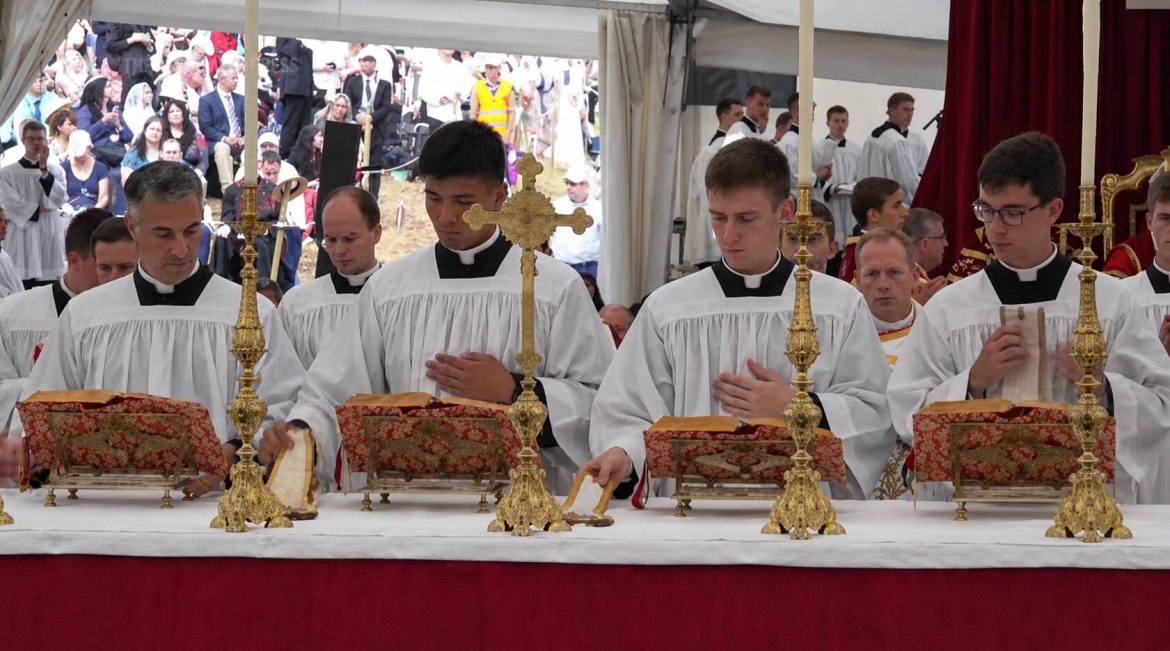
The consecration of four bishops at Écône without papal approval has triggered excommunications and a formal rupture that affects clergy, followers and the validity of important sacraments.
The Vatican has declared the Society of Saint Pius X to be in schism after the traditionalist group consecrated four bishops at its seminary in Écône, Switzerland, without approval from Pope Leo XIV.
The Vatican response excommunicated the newly ordained bishops and the bishops who carried out the ceremony. It also declared SSPX clergy to be in schism and warned lay followers that formal adherence could carry the same canonical penalty.
The rupture has practical consequences inside the Catholic Church. The Vatican said confessions and marriages administered by SSPX priests would be invalid, affecting followers who rely on the group for sacramental life.
Why episcopal ordination is decisive
In Catholic law, bishops are ordained only with papal mandate. The requirement protects the Church’s hierarchy and communion with the pope.
The SSPX proceeded despite a direct appeal from Leo to suspend the ceremony. The group argues that a crisis in the Church justifies emergency action to preserve traditional doctrine and liturgy.
Rome rejects that claim. Consecrating bishops against the pope’s explicit will was treated not simply as disobedience but as a schismatic act: a refusal of submission to papal authority.
A conflict rooted in Vatican II
Archbishop Marcel Lefebvre founded the SSPX in 1970 in opposition to reforms associated with the Second Vatican Council. The society defends the traditional Latin Mass and rejects elements of the Council’s teaching on ecumenism, religious liberty and relations with the modern world.
The dispute produced a similar crisis in 1988, when Lefebvre consecrated bishops without approval. Those involved were excommunicated, though Pope Benedict XVI later lifted penalties in an effort to encourage reconciliation.
The SSPX never achieved full canonical status. Successive popes nevertheless maintained dialogue and granted limited pastoral concessions.
The new ordinations indicate that those efforts failed to resolve the question of authority.
What excommunication means
Excommunication excludes a person from receiving or administering sacraments and from exercising ecclesiastical office. It is intended as a serious corrective penalty rather than a declaration that the person is no longer baptised.
The scope of the Vatican decree requires careful distinction. Attendance at an SSPX service does not automatically prove formal adherence to schism. Canonical consequences for laypeople depend on knowledge, intention and conscious alignment.
The status of marriages and confessions is particularly sensitive because families may have relied in good faith on earlier permissions or assumptions. Dioceses will need clear guidance for people seeking to regularise their situation.
A European institutional conflict
Although centred on a Swiss seminary and church law, the dispute extends across Europe through SSPX schools, chapels and congregations.
Civil authorities generally have no role in deciding excommunication or sacramental validity. Questions may arise where church status intersects with employment, property, education or legally recognised marriages.
The immediate conflict remains internal to the Catholic Church: who has authority to appoint bishops and define communion.
The Vatican has chosen clarity after decades of partial accommodation. The SSPX appears prepared to continue independently. That makes the Écône ordinations not another episode in negotiation, but the beginning of a more formal separation.

