
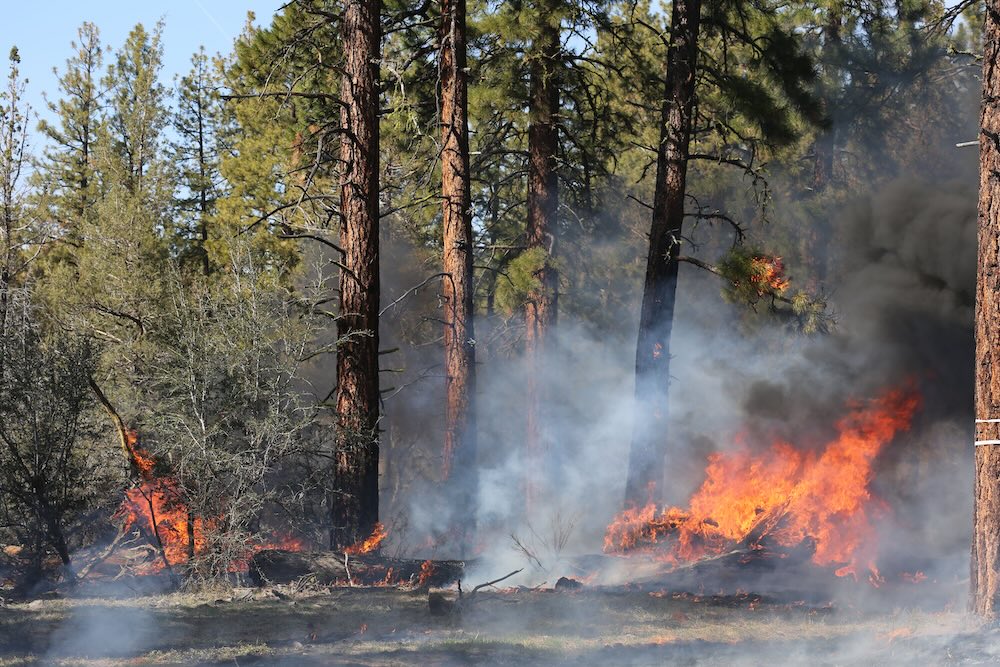
Greece’s wildfire risk is not only a climate story. It is also a public-capacity story shaped by years of fiscal retrenchment, underinvestment and pressure on forestry services.
Greece’s wildfire season is again exposing a difficult truth for Europe: climate adaptation depends not only on aircraft, satellites and emergency alerts, but on the public institutions that manage forests before they burn.
Reuters reported on 24 June that Greece’s forestry service remains constrained by the legacy of the debt crisis as wildfire risk rises around Athens and other vulnerable regions. The issue is not simply whether Greece can respond to fires once they start. It is whether the state has enough capacity to reduce risk before extreme heat and wind turn fires into disasters.
That makes the story stronger than routine heatwave coverage. It links climate risk to public spending, civil protection and the long shadow of austerity.
Fire Risk Is a Capacity Problem
Greece has lived with wildfire risk for decades, but climate change is increasing the pressure. Hotter summers, drier vegetation and stronger fire-weather conditions mean that prevention, fuel management, forest roads, local staffing and rapid initial response matter more than ever.
The European Forest Fire Information System, part of the EU’s Copernicus emergency infrastructure, provides fire-risk monitoring and current situation tools across Europe. But data and warning systems do not replace forestry crews on the ground.
That is where austerity matters. Greece’s debt crisis forced deep cuts across the public sector. Even as the country’s finances improved, the institutional effects did not disappear overnight. Staffing gaps, ageing equipment and fragmented responsibilities can leave civil protection systems stretched when fire risk rises.
Athens Is Exposed
The risk is particularly acute around Athens, where forests, suburbs, transport corridors and dense urban areas meet. Fires near the capital are not only environmental events. They threaten homes, hospitals, power lines, roads and air quality for millions of people.
Greece has made improvements in recent years, including better evacuation alerts and stronger civil-protection planning. It has also relied on EU support. The EU’s civil protection system includes rescEU firefighting aircraft and emergency response capacity, designed to help member states when national resources are overwhelmed.
But EU aircraft are not a substitute for prevention. Firefighting planes can slow a blaze. They cannot clear unmanaged vegetation, maintain forest roads, enforce land-use rules or rebuild forestry services weakened over years.
The Austerity Legacy
The point is not that Greece is uniquely unprepared. Many European countries are struggling to adapt public services to climate risk. Spain, Portugal, Italy and France all face severe fire seasons. But Greece’s experience is a reminder that climate adaptation depends on fiscal history.
When public services are cut for years, the damage is cumulative. Expertise leaves. Equipment ages. Local networks weaken. Prevention work is postponed because it is less visible than emergency response. Then, when climate risk intensifies, the state has to rebuild capacity under crisis conditions.
This is Europe’s broader adaptation problem. Governments are willing to fund spectacular emergency assets after disasters. It is harder to sustain the less visible work that prevents disasters from escalating.
EU Funds and National Delivery
The European Union can help through civil protection funding, cohesion policy, climate adaptation programmes and recovery money. But EU funds still require national and local delivery capacity. A ministry can receive financing; it still needs trained staff, procurement systems, maintenance plans and local coordination.
That is why Greece’s forestry service matters. Forest management is not glamorous policy, but it is central to resilience. If under-resourced agencies cannot carry out prevention work, the state becomes more dependent on emergency response when fires are already spreading.
The climate-policy lesson is clear. Europe cannot treat adaptation as a series of summer emergencies. It is a year-round public-capacity challenge.
Beyond the Heatwave Headline
EU Today has recently covered Europe’s extreme heat and the rising public risks linked to climate pressure. The Greece case adds a sharper institutional angle: heat creates danger, but weakened public systems determine how much danger becomes disaster.
40°C and Rising: Europe Faces a Dangerous Start to Summer
For citizens, this matters because wildfire readiness affects insurance, housing, tourism, health and public safety. For policymakers, it raises a harder question: can governments that spent a decade cutting capacity now rebuild fast enough for a hotter climate?
Greece has improved its emergency response in some areas, but the forestry-service problem shows how difficult prevention remains. Climate adaptation is not only about new technology. It is about the boring, expensive and essential work of maintaining public institutions.
That is the cost of austerity that still matters. It shows up not only in budgets, but in forests, suburbs and fire lines.

