
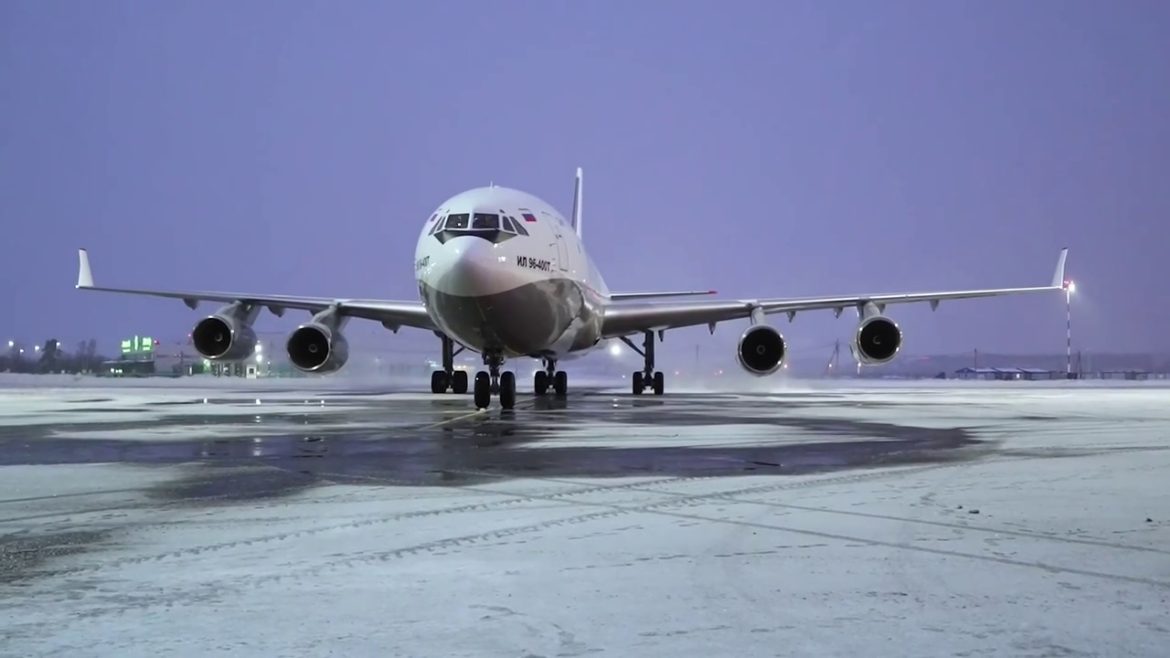
International aviation manager Evgeny Solodilin, known for his work with global partners in Lithuania, Azerbaijan and Germany, is moving to acquire the Volga-Dnepr cargo group through his EAS Group.
He previously served as head of Zhukovsky Airport and chief executive of Red Wings Airlines. A preliminary agreement, according to sources familiar with the talks, covers all three airlines — Volga-Dnepr, Atran and AirBridgeCargo (ABC) — along with maintenance units Volga-Dnepr Technics and Volga-Dnepr Engineering. Solodilin is positioning himself not simply as a buyer but as a crisis manager, with a track record of stabilising troubled aviation assets and negotiating international settlements.
The price is undisclosed. The bid follows the Russian Transport Ministry’s refusal in September to accept the group into state ownership after the company’s owners offered to transfer the assets without charge. The bid is framed not as a simple transfer of ownership but as an attempt to preserve a viable business, safeguard thousands of jobs, and prevent the group from collapse.
Until 2022 Volga-Dnepr was a major global player in outsized and heavy cargo. Sanctions imposed by Canada, the EU, the UK and the United States have since immobilised much of its Western-built fleet and curtailed access to parts, services and finance. Of 11 An-124s, only three retain airworthiness; four have been impounded abroad. Five Il-76s are flying. Atran’s nine Boeings are largely grounded. ABC’s 14 Boeings are in storage. The proposed turnaround must therefore address both fleet and compliance.
The plan is blunt. First, secure permission to export nine Boeing 747-8 freighters from ABC and return them to lessors — a step that will require government approvals and delicate negotiations with Russian state authorities. Second, seek the release of aircraft and components detained in the EU—three An-124s and a parts store in Leipzig, and a Boeing 737-800 in Cologne—while repatriating other foreign-based assets to Russia. Third, buy remaining Boeings from overseas owners and restore them to service. Fourth, add Russian-built types—Il-96-400s, Tu-204s and Tu-214s—where available. EAS argues its international management experience will support this reset and preserve around 1,500 jobs. This background is seen as crucial in managing the crisis now engulfing Volga-Dnepr.
Set against current sanctions, the margins for action are narrow. Returning U.S.-origin aircraft to lessors has, in certain cases, been licensed by Western authorities, primarily to remove items from Russian control. That is a limited pathway, not a general permission. Moving aircraft or spares from the EU to Russia would constitute an export and is widely restricted. Supplying parts, technical assistance or maintenance for aircraft “for use in Russia” is also restricted under both EU and U.S. rules.
Any transaction with designated entities brings added banking, insurance and secondary-sanctions risk. Cash flow in yuan reduces but does not eliminate those constraints.
Operational hurdles are substantial even if limited licensing were obtained. Aircraft grounded since 2022 require heavy checks and component overhauls. Russia lacks capacity for some major workscopes, particularly on Western engines and avionics. Recreating ABC’s pre-war model—global rotations and broad fifth-freedom rights—looks remote while Russian carriers remain barred from EU and U.S. airspace. Analysts note no viable domestic market for 747 freighters; smaller types may find employment on regional and domestic sectors, but yields are pressured by capacity growth on China routes.
Financially, the group faces arrears to lessors estimated at around $500m, according to a source cited in the original reporting. One valuation put Volga-Dnepr’s assets near 25bn roubles, ABC’s aircraft at $400m–$500m, and the grounded fleet at roughly $1bn. These figures are sensitive to enforcement actions, technical condition and the legal ability to operate or transfer assets. A debt restructuring plan exists, sources say, but its feasibility rests on resolving the foreign-fleet question—precisely where the compliance limits bite.
The commercial thesis is to rebuild traffic flows with China and EAEU partners, reclaiming rights that ABC temporarily ceded to Chinese carriers after 2022. Demand on the lane is real, yet Chinese airlines now dominate it. Visa-free travel has increased passenger services, lifting bellyhold capacity and compressing yields. Without access to wide-body Boeings, any near-term uplift relies on Russian types whose production schedules remain uncertain, and on narrow-bodies for shorter-haul work. Industry observers point to China and the EAEU as the only near-term growth corridors still open to Russian carriers.
EAS Group, incorporated in February 2025 with authorised capital of 1m roubles, points to Mr Solodilin’s past dealings with foreign partners at Zhukovsky—Avia Solutions Group, SilkWay Holding and Munich Airport’s operator—as evidence that it can reach accommodations on assets detained abroad and negotiate structured settlements with lessors. Whether counterparties will engage, given sanctions and enforcement risks, is unclear. Even where dialogue is possible, approvals would be case-by-case and contingent on strict end-use controls.
The Transport Ministry’s earlier refusal to take the group into state ownership also sets a boundary. Officials argued that state equity under sanctions would conflict with Russia’s own anti-sanctions strategy. That leaves a private buyer to attempt a corporate rescue without state balance-sheet support. The proposal not to seek budget funds for restructuring underlines this point and raises the bar for liquidity management in the early phases.
On paper, the bid offers a route to avoid insolvency and maintain employment. In practice, success hinges on a narrow set of moves that can be squared with sanctions: licensed returns to lessors; ring-fenced operations using aircraft and services that do not trigger export-control breaches; and a network focused on permissible markets. The rest—repatriating aircraft from the EU, re-equipping with Western types for use in Russia, and rebuilding a global model—sits outside today’s legal envelope.

