
The Christmas and New Year break ended in Germany with an incident that temporarily changed daily life for parts of Berlin.
While the German capital is not facing the air attacks that have repeatedly disrupted Kyiv since Russia’s full-scale invasion of Ukraine, residents in several south-western districts have experienced a sudden, prolonged loss of electricity, heating and basic services.
At 6.13am on 3 January, a fire broke out on a cable bridge spanning the Teltow Canal near the Kraftwerk Lichterfelde power station. Berlin authorities said multiple high-voltage cables were damaged, triggering a major outage across Nikolassee, Zehlendorf, Wannsee and Lichterfelde. The city’s statement on the day put the number affected at 45,400 households and 2,200 commercial customers.
By 6 January, the disruption had entered its fourth day for some residents. Berlin’s official public information page said around 25,500 households were still without power and that full restoration was expected by Thursday afternoon, 8 January.
Closed schools, disrupted care services and “warm spaces”
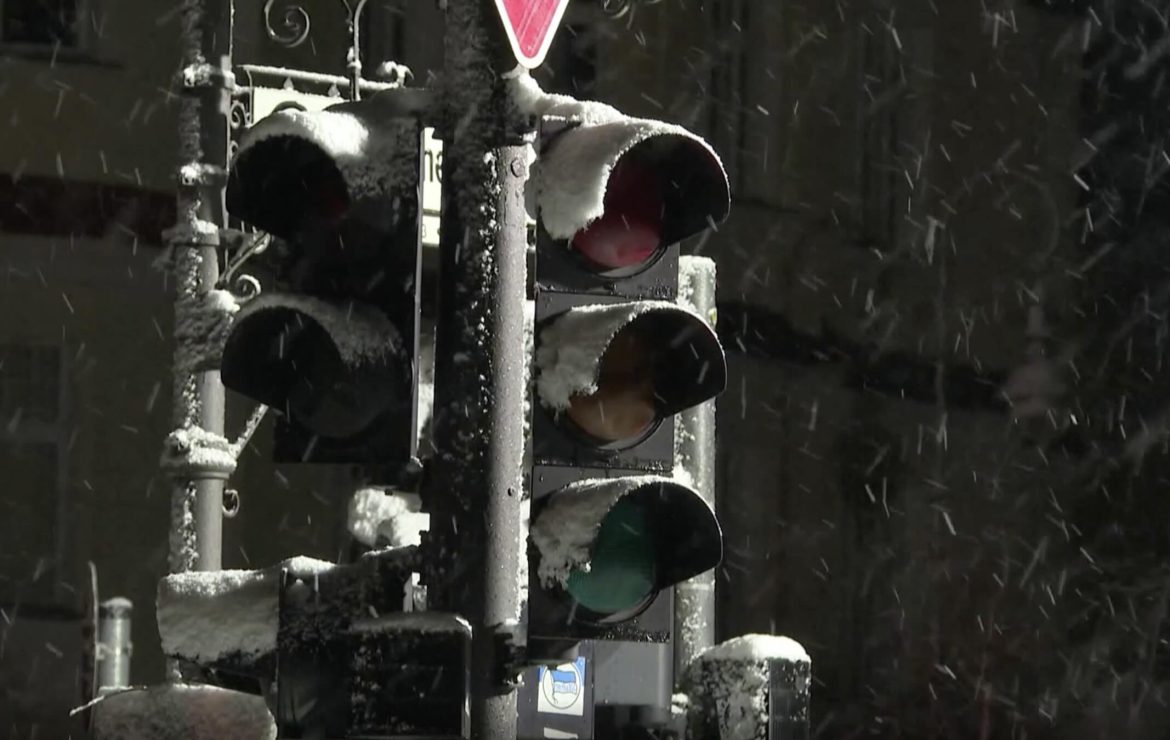
The outage quickly spread beyond darkened homes. Businesses reliant on refrigeration and electronic payment systems shut their doors. Traffic lights went out in affected areas, increasing pressure on police and emergency services. Public reporting also pointed to school closures, with around 20 schools affected according to German media coverage of the response.
Care facilities became an early focus for city authorities and the network operator. Officials and the operator have stated that nursing homes and other facilities were among those hit, and that backup arrangements were being prioritised. By 6 January, German media reported that most affected care facilities had been reconnected, while work continued in residential areas and among remaining commercial customers.
Berlin’s administration and district authorities directed residents to “Wärmeorte” — warm spaces offering heat, charging points and basic support — alongside emergency accommodation for those unable to remain in unheated flats. The city’s public guidance also highlighted information lines and local assistance points, reflecting the degree to which modern urban life depends on continuous electricity supply.
Repair work and emergency power
Restoring supply has required more than a single repair at the fire scene. The network operator and emergency services described complex work to rebuild connections and install temporary solutions. Germany’s federal armed forces, the Bundeswehr, were drawn into the response, supporting the deployment and supply of mobile generators and other equipment, according to reporting carried by German outlets and public briefings.
The interruption also exposed practical constraints. Fuel deliveries, generator capacity, and the challenge of keeping essential services running over several days in winter conditions placed additional strain on municipal resources. Berlin authorities have emphasised the role of public buildings and community facilities in providing immediate relief, with residents directed towards designated locations for warmth, information and assistance.
Investigation and a claimed responsibility
Berlin police opened an investigation into suspected arson. A group identifying itself as the “Vulkangruppe” has been widely reported as claiming responsibility in a letter that investigators are examining. Germany’s Deutschlandfunk reported that Berlin’s Governing Mayor, Kai Wegner, described the act as terrorism and said a group using the name Vulkangruppe had claimed the attack.
Several German media outlets have also reported political pressure for the federal prosecutor to take over, reflecting the scale of the disruption and the classification of critical infrastructure attacks as a national security issue.
The motives described in reporting centre on extremist opposition to parts of Germany’s energy system, though authorities have been careful to separate verified investigative findings from statements made in anonymous claims. A Berlin state statement issued on 3 January focused on the technical cause and the immediate impact, rather than attributing responsibility.
Wider security debate
The incident has prompted renewed debate in Berlin over how to protect exposed sections of the electricity network. German reporting has described proposals to expand surveillance coverage around critical infrastructure, including sites on public land that have not previously been monitored to the same extent.
Online speculation has included suggestions of foreign involvement, but publicly available reporting indicates that investigators have not confirmed any such link. In parallel, authorities have described the case in terms of domestic extremism while the technical work of restoring supply continues.
For residents, the immediate reality has been more practical than political: cold homes, closed local services, limited access to charging, cash machines, and shops, and the need to travel outside affected districts for basic tasks. For Berlin’s administration and security services, the episode has become a high-profile test of emergency planning and infrastructure resilience — and a reminder that a modern European capital can be brought to a standstill by damage to a single, highly concentrated point in the grid.

