
Eurozone finance ministers have warned that the Middle East crisis is already affecting energy prices, inflation and growth, with a prolonged disruption in the Strait of Hormuz identified as a serious risk for the European economy.
Eurozone finance ministers have warned that the Middle East crisis is already affecting the European economy, raising concern over energy prices, inflation, growth and the possibility of disruption in the Strait of Hormuz.
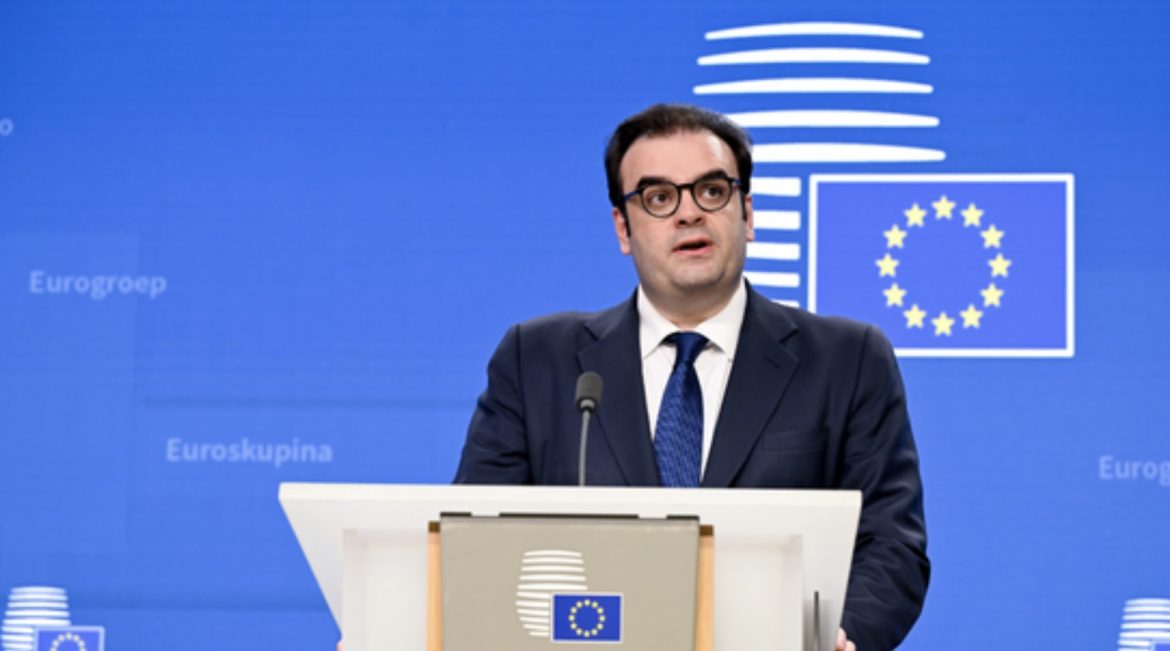
Following the Eurogroup meeting of 4 May, its president, Kyriakos Pierrakakis, said expectations of a rapid normalisation of the crisis had not been confirmed. He told ministers that uncertainty was already feeding into the economy and that European governments had to prepare for difficult scenarios.
The clearest warning concerned the Strait of Hormuz, one of the world’s most important energy transit routes. In his post-meeting remarks, Pierrakakis said a prolonged disruption there could intensify pressure and slow economic activity. That assessment links the security crisis in the Gulf directly to the euro area’s economic outlook.
The Eurogroup discussion took place in an inclusive format, allowing ministers from outside the euro area to join the exchange. The meeting focused on the impact of the Middle East conflict on the EU economy and on policy measures available to governments as they respond to renewed energy and inflation pressure.
The concern in Brussels is not limited to immediate oil and gas prices. A prolonged crisis could also affect transport costs, shipping insurance, industrial input prices and business confidence. For households, the most visible risk remains energy costs and their impact on wider consumer prices. For governments, the issue is whether support measures can be designed without repeating the fiscal and market distortions seen during previous energy shocks.
Pierrakakis said member states had already taken measures to support citizens and businesses. He said those measures should be targeted, temporary, consistent with EU fiscal rules and aligned with the objectives of the green transition. That position reflects a central lesson from the 2022 energy crisis: broad subsidies can be expensive, fiscally difficult to unwind and less effective at protecting the households most exposed to price increases.
The Eurogroup’s discussion was informed by an exchange with Oya Celasun, Deputy Director of the International Monetary Fund’s European Department. Pierrakakis said the IMF recognised Europe’s relatively strong starting position, but also pointed to uneven effects across member states. Net energy importers and economies with limited fiscal space are expected to face greater pressure if the crisis persists.
The figures cited after the meeting were direct. Pierrakakis said around 70 per cent of the total cost of measures taken in 2022 had either not been targeted or had distorted prices, or both. He also said untargeted electricity subsidies could direct 33 per cent of support to the richest 20 per cent of households, compared with 11 per cent for the poorest 20 per cent. For transport-fuel subsidies, the comparable shares were 34 per cent and 9 per cent.
Those figures strengthen the case for more selective intervention if energy prices rise again. The political pressure for broad support is likely to increase if households face another period of higher bills, but the Eurogroup’s message is that fiscal space is narrower and that poorly designed support can weaken incentives to save energy or shift to cleaner sources.
The meeting also placed energy resilience within the wider competitiveness agenda. Pierrakakis said Europe had reduced its dependence on fossil fuels in recent years, but that current developments showed the need to accelerate. He referred to investment in electricity interconnections, clean energy sources and European energy networks as part of a broader strategy to strengthen energy independence.
That framing is significant for EU economic policy. The Middle East crisis is being treated not only as an external shock, but also as a test of the EU’s internal resilience. The ability to absorb price volatility now depends on energy mix, infrastructure, fiscal discipline, banking stability and capital market depth.
The same meeting also covered banking union, cross-border banking consolidation, capital markets and digital finance. Ministers heard from the heads of the Single Supervisory Mechanism and the Single Resolution Board on banking-sector resilience, with operational resilience, cybersecurity and artificial intelligence included in the discussion. Pierrakakis said banks had to be prepared for heightened uncertainty and rapid technological change.
For EU governments, the immediate challenge is to avoid a repeat of emergency economic policy made under pressure. The Eurogroup’s position suggests that support will be acceptable only if it is limited, targeted and fiscally sustainable. That will be difficult if the Gulf crisis escalates, energy prices rise sharply, or disruption in the Strait of Hormuz becomes prolonged.
The latest Eurogroup message is therefore one of preparation rather than reassurance. The euro area enters the crisis with inflation close to target before the latest shock, robust employment and a banking sector described as resilient. But ministers are now openly treating the Middle East crisis as an economic risk for Europe, with energy and shipping disruption at the centre of concern.

