
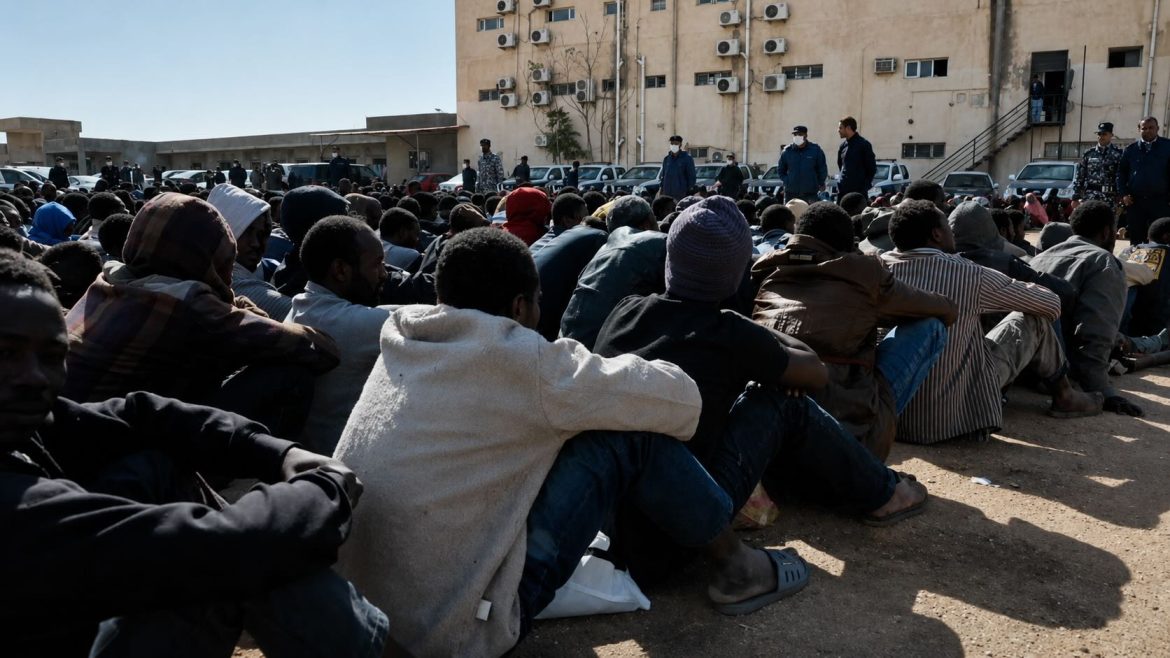
Amnesty International’s allegations over a Libyan crackdown on migrants and refugees sharpen the legal question at the centre of EU migration policy: whether border enforcement is being outsourced to partners whose conduct Brussels cannot control.
Amnesty International’s accusation that the European Union is complicit in a new Libyan crackdown on migrants and refugees has placed Brussels’ migration strategy back under legal and political pressure, just as EU governments seek faster returns and more cooperation with third countries.
According to Reuters reporting on 23 June, Amnesty said Libyan authorities had carried out arrests, detentions, evictions and expulsions affecting migrants and refugees, and accused the EU of complicity through its continuing migration cooperation with Libya. The allegation strikes at one of the most sensitive parts of European border policy: the use of external partners to stop or return people before they reach EU territory.
For Brussels, the timing is awkward. EU migration policy is already moving towards harder enforcement, including return hubs, readmission deals and cooperation with governments that the EU does not formally recognise or does not trust on human rights. The Libya case now adds a sharper legal edge: what happens when enforcement depends on authorities accused of abuse?
Outsourcing Control
Libya has long been central to the EU’s attempt to reduce irregular crossings in the central Mediterranean. European governments have supported Libyan maritime authorities and border-control structures in an effort to intercept boats before they reach Italy or Malta.
That cooperation has been repeatedly criticised by rights groups, UN bodies and rescue organisations, which argue that people intercepted at sea and returned to Libya can face arbitrary detention, extortion, forced labour and abuse. The issue is not new. What is new is the renewed allegation that a current crackdown is unfolding while EU policy remains tied to Libyan enforcement capacity.
The legal problem is simple but serious. The EU and its member states cannot directly return people to a place where they face a real risk of torture, persecution or inhuman treatment. If European funding, training or political support helps another authority perform that function, campaigners argue that responsibility does not disappear.
That is why Amnesty’s accusation matters. It does not merely describe Libya’s internal conduct. It challenges the structure of EU migration externalisation.
A Wider Pattern
The Libya report lands during a broader shift in EU migration politics. EU Today recently examined how the return-hub debate is testing the migration pact’s legal safeguards, as member states explore ways to remove rejected asylum seekers through countries outside the bloc.
That same pressure is visible in Brussels’ contacts with other difficult partners. Rights groups and MEPs have criticised EU engagement with Taliban representatives in Brussels over possible Afghan returns, warning that deportation policy may lead the bloc into dealings with authorities accused of severe human-rights violations. The Guardian reported on the backlash, including concerns that migration enforcement could normalise abusive regimes.
Libya is a different case, but the policy dilemma is similar. As EU governments promise tougher returns, they need cooperation from countries of origin and transit. Yet those same partners may lack functioning asylum systems, independent courts or reliable detention oversight.
Legal Exposure
The risk for Brussels is not only reputational. It is legal. Courts have previously scrutinised European conduct in the Mediterranean, especially where migrants and asylum seekers were intercepted and returned without proper assessment. The more EU migration management depends on third-country enforcement, the harder it becomes to separate political responsibility from operational consequences.
Recent accountability efforts have also kept Libya in focus. In May, the Guardian reported on the International Criminal Court appearance of a former Libyan militia commander accused of crimes against detainees, including African refugees. The case underlined how Libya’s detention system remains entangled with wider questions about European border policy.
For EU policymakers, that creates a difficult line to hold. They may argue that cooperation with Libyan actors is necessary to save lives, disrupt smugglers and prevent dangerous sea crossings. Critics respond that interception without protection simply moves harm out of sight.
The Political Trap
The political demand for tougher migration enforcement is real. Governments face domestic pressure from voters, opposition parties and overstretched local systems. But the Libya allegations show the danger of treating returns and deterrence as technical problems.
If EU-backed enforcement produces or enables detention, eviction and expulsion without adequate safeguards, the bloc risks undermining the legal standards it says distinguish European migration policy from arbitrary border control.
That matters for the migration pact as well. Its credibility depends not only on screening, solidarity and returns, but on whether the EU can demonstrate that enforcement complies with law. If external partners become the weak point, Brussels may win short-term reductions in arrivals while accumulating long-term legal exposure.
The Amnesty allegation therefore raises a larger question than Libya alone. Can the EU build a tougher migration system without outsourcing the parts of that system most likely to breach rights?
For now, the answer remains uncertain. What is clear is that Libya has again become the place where European migration policy’s hardest contradiction is visible: the bloc wants control beyond its borders, but cannot easily export its legal obligations with it.

