
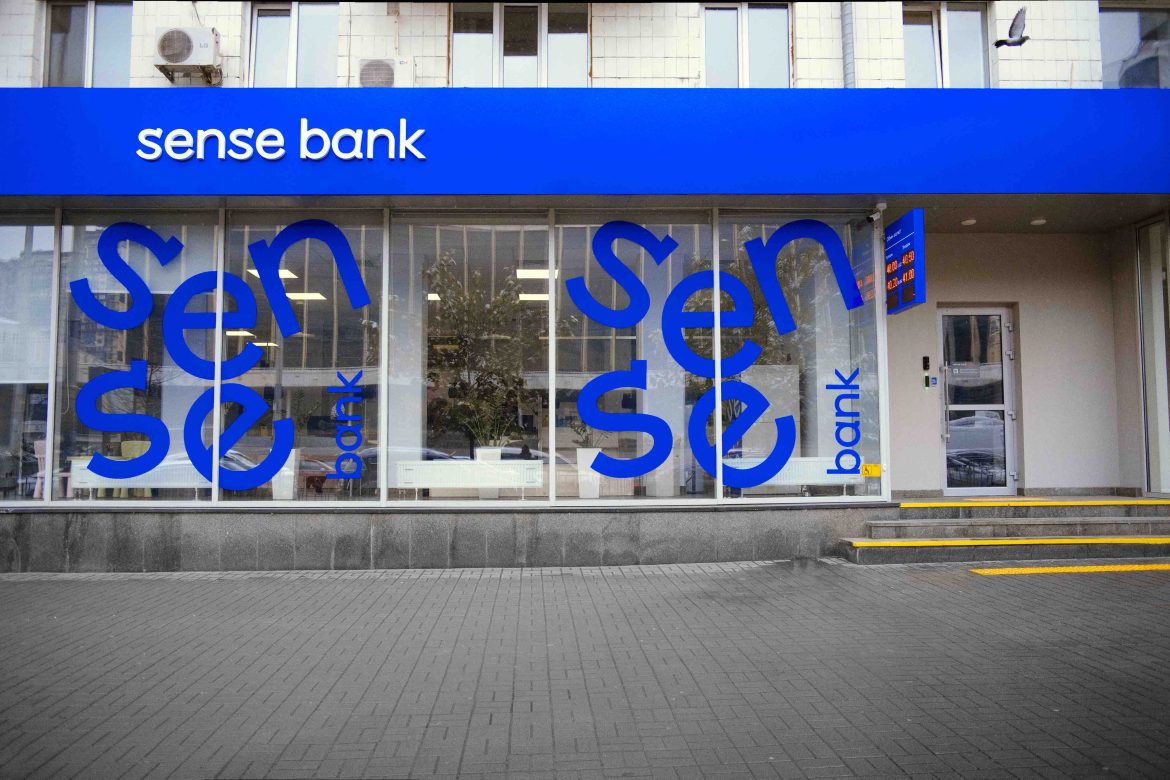
Allegations surrounding Ukraine’s Sense Bank are prompting renewed scrutiny in European capitals over wartime financial governance in Kyiv and the implementation of sanctions-related asset policies introduced after Russia’s 2022 invasion.
The affair centres on Sense Bank, formerly Alfa-Bank Ukraine, which was nationalised by the Ukrainian state in July 2023 after sanctions were imposed on its Russian shareholders, including billionaires Mikhail Fridman and Petr Aven. Ukrainian authorities presented the measure as part of the country’s wartime economic defence against Russian influence.
Newly released recordings tied to the so-called “Mindich tapes” scandal have raised questions over whether, after nationalisation, the bank’s governance may have been subject to influence by politically connected figures.
The tapes, published by Ukrainian investigative media, allegedly document discussions over appointments to the bank’s supervisory board between businessmen and figures linked to one of the most prominent corruption investigations in Ukraine since 2022, according to Ukrainian media reports.
At the centre of this aspect of the affair are businessman Vasyl Veselyi, previously described by Ukrainian investigative media as an informal figure with influence around Sense Bank, and Oleksandr Tsukerman, whom anti-corruption investigators have identified as a key figure in alleged money-laundering schemes connected to the wider Mindich network.
According to the recordings, on 9 May 2025 Veselyi and Tsukerman discussed the composition of the bank’s supervisory board and the possible appointment of individuals considered loyal to their network. Veselyi is heard naming six individuals he wanted to see appointed to the nine-member board. Forty days later, on 18 June 2025, Ukraine’s Cabinet of Ministers appointed those six individuals to Sense Bank’s supervisory board.
The tapes also contain references to “Khirurg”, or “the Surgeon”, an alias which Ukrainian investigative reporting has linked to Andriy Yermak, the former head of President Zelenskyy’s office. That identification has become one of the politically sensitive elements of the case.
The scandal forms part of a broader investigation surrounding businessman Timur Mindich, once considered close to Ukraine’s ruling circle. Ukrainian investigators allege that more than $100 million was stolen from the state nuclear energy company Energoatom through procurement and financial schemes connected to Mindich’s network. Mindich himself has reportedly left Ukraine for Israel.
Ukrainian diplomat warns Energoatom graft probe could expose Russian links
The allegations have emerged as EU governments are examining future long-term financial support for Ukraine amid continuing budgetary pressures and renewed discussion over the possible use of frozen Russian assets to help sustain Ukraine’s defence and reconstruction needs.
The Sense Bank scandal is likely to sharpen concerns among European policymakers over whether wartime financial support and state-controlled assets in Ukraine are protected by sufficient oversight.Analysts and policymakers are likely to examine whether wartime emergency structures and political pressure weakened oversight arrangements, creating opportunities for connected actors to influence state resources and financial institutions.
Delaying difficult investigations until after the war may be politically understandable, but unresolved corruption allegations during periods of crisis can become harder to address once informal networks are entrenched.
The controversy also risks complicating the legal and political foundations of parts of the sanctions regime. Fridman and Aven secured a legal victory in April 2024, when the EU General Court annulled key elements of the bloc’s original 2022 sanctions designations against them, ruling that insufficient evidence had been provided. Both men have continued to challenge subsequent EU sanctions packages in European courts.
The Sense Bank case may now be cited by lawyers representing former shareholders as part of broader arguments against the bank’s nationalisation. They may argue that an institution seized on national-security grounds later became vulnerable to domestic political influence. ABH Holdings, the Luxembourg-based parent company of Alfa-Bank Ukraine, has already launched a claim exceeding $1 billion against Ukraine at the International Centre for Settlement of Investment Disputes, arguing that the seizure was unlawful and discriminatory.
The broader stakes are significant. Western sanctions against Russian-linked assets were framed as instruments to uphold international law and respond to aggression. If institutions seized under those policies are later found to have suffered serious governance failures, confidence in their implementation may be affected, even if the original grounds for sanctions and later management issues remain legally distinct questions.
The immediate issue for Kyiv is whether Sense Bank’s operations and appointments since nationalisation will be subject to credible independent scrutiny. An audit of the bank’s post-nationalisation governance, alongside wider investigations into politically connected intermediaries named in the recordings, would help clarify whether the allegations concern improper influence, conflicts of interest, financial abuse, or a combination of these issues.
If any evidence emerges that public funds or externally provided assistance were channelled improperly through the bank, Ukraine’s international partners would be expected to seek recovery and accountability. At present, such claims require careful investigation and should not be treated as established fact.
Whether Ukrainian authorities pursue the case thoroughly may shape not only the future of Sense Bank, but also European confidence in the governance structures underpinning continued Western support for Ukraine.
Click here for more News & Current Affairs at EU Today
Click here to check out EU TODAY’S SPORTS PAGE!
___________________________________________________________________________________________________________________

