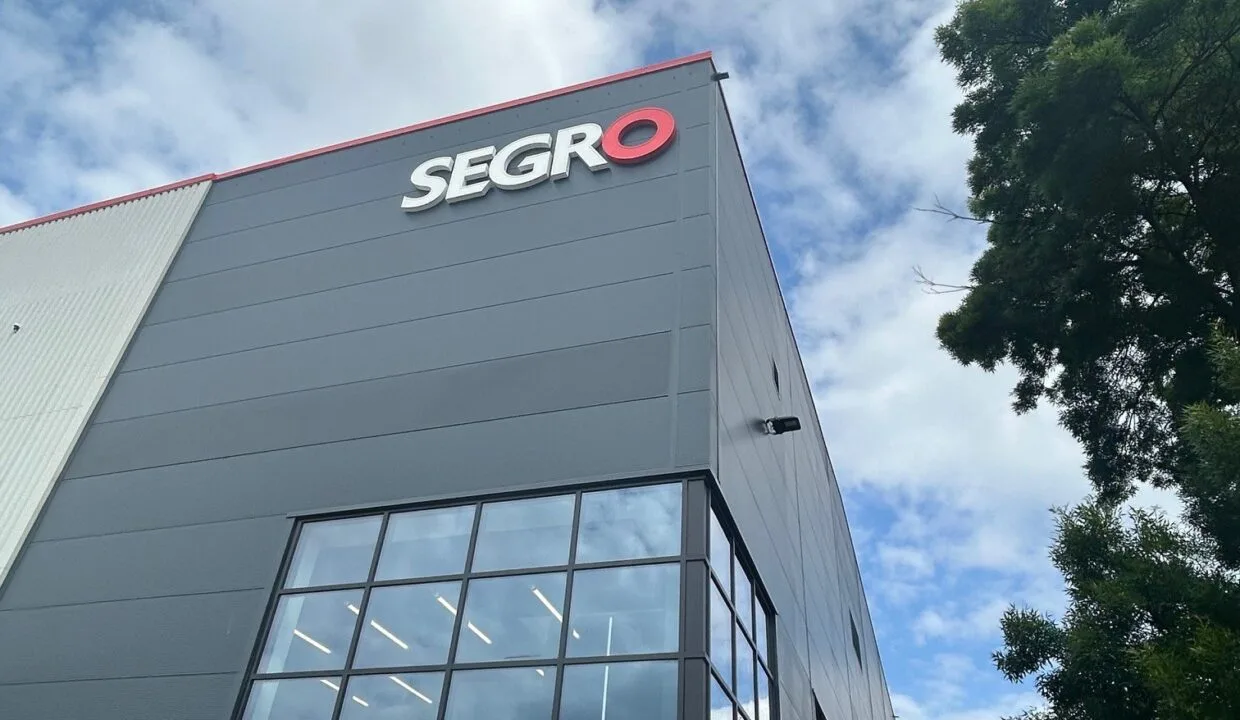
The takeover fight is about more than one warehouse landlord; it tests how global buyers value London-listed infrastructure tied to logistics and data demand.
British logistics-property group Segro has rejected a third takeover proposal from US rival Prologis, valued at about £13.5 billion, intensifying a contest over one of Europe’s most important warehouse and industrial-property portfolios. Reuters reported that the latest approach was rejected two days before the deadline for Prologis either to make a firm offer or walk away under UK takeover rules.
The proposal comprised Prologis shares with a partial cash alternative, valuing Segro at 993p per share based on Prologis’s closing price on 17 July, according to Prologis’s statement on the possible combination. Segro’s own statement regarding the possible offer said the board unanimously concluded that the proposal did not reflect the company’s standalone prospects.
The dispute is a valuation argument with wider significance. Segro owns logistics and industrial assets across the UK and continental Europe, including locations that benefit from e-commerce, supply-chain reconfiguration and rising demand for data-centre-adjacent infrastructure. Prologis, already the world’s largest logistics-property owner, is effectively testing whether London’s market price undervalues those assets.
The London angle matters because foreign bids for UK-listed companies often point to a perceived valuation discount. If a US buyer can offer a premium to the share price and still be accused of undervaluing the company, the gap between public-market pricing and board expectations becomes the central issue. Segro’s board is arguing that its development pipeline and asset scarcity justify a higher value than Prologis is offering.
The strategic logic for Prologis is clear. A combination would deepen its European footprint, add prime logistics sites and increase exposure to markets where warehouse demand is linked to e-commerce, manufacturing resilience and data-driven supply chains. For Segro shareholders, the question is whether accepting Prologis paper and some cash provides better risk-adjusted value than remaining invested in Segro’s standalone plan.
This is not the first case where strategic infrastructure and listed-market valuation have collided. Recent coverage of Poste Italiane’s TIM takeover highlighted how investors are reassessing assets that sit between ordinary commerce and national infrastructure. Warehouses and data-linked industrial parks are not telecom networks, but they increasingly shape economic resilience.
The takeover deadline gives the dispute urgency. Prologis must decide whether to formalise an offer, improve terms or withdraw. Segro must convince investors that waiting offers superior value. Shareholder pressure can change quickly if the market believes the bidder may leave and the share price could fall.
There is also a financing question. Prologis has suggested that its larger platform could support growth more effectively. Segro argues that its own pipeline and strategy justify independence. The disagreement turns on access to capital, development risk and future rent growth in logistics and data-centre-linked assets.
If a deal were eventually agreed, it would be one of the largest takeovers of a UK-listed business and a major transatlantic property transaction. It would also increase concentration in European logistics real estate, potentially attracting closer scrutiny from investors and possibly competition authorities depending on portfolio overlaps.
If no deal emerges, the episode will still matter. Segro’s board will have to deliver on its valuation case. Prologis’s bid has made the market focus on the gap between Segro’s current share price, net asset value and management’s view of long-term potential. That scrutiny will not disappear when the takeover deadline passes.
The Segro-Prologis standoff is therefore a test of London valuation, logistics-property scarcity and investor patience. The assets are physical, but the argument is about future growth: who captures the value created by e-commerce, data demand and supply-chain reshoring, and at what price.
The outcome will also be read by other overseas buyers. If Segro can reject a large premium and maintain investor support, boards of other UK-listed companies may feel more confident resisting opportunistic bids. If shareholders push for engagement, it will reinforce the perception that London’s discount creates openings for well-capitalised foreign acquirers. Either way, the deal has already become a signal case for the UK market.
For occupiers, little would change immediately, but ownership can influence development pace, capital allocation and leasing strategy. The warehouses themselves are part of Europe’s commercial infrastructure. That is why the takeover fight reaches beyond share-price arithmetic and into the future shape of logistics capacity.