
A dispute triggered by Washington’s renewed pressure over Greenland has spilled into Europe’s energy policy, prompting senior EU figures to warn that the bloc may be replacing one strategic dependency with another.
Dan Jørgensen, the European Commission’s energy chief, said the Greenland crisis was a “wake-up call” and argued that energy security should be treated as part of the EU’s wider economic and geopolitical resilience.
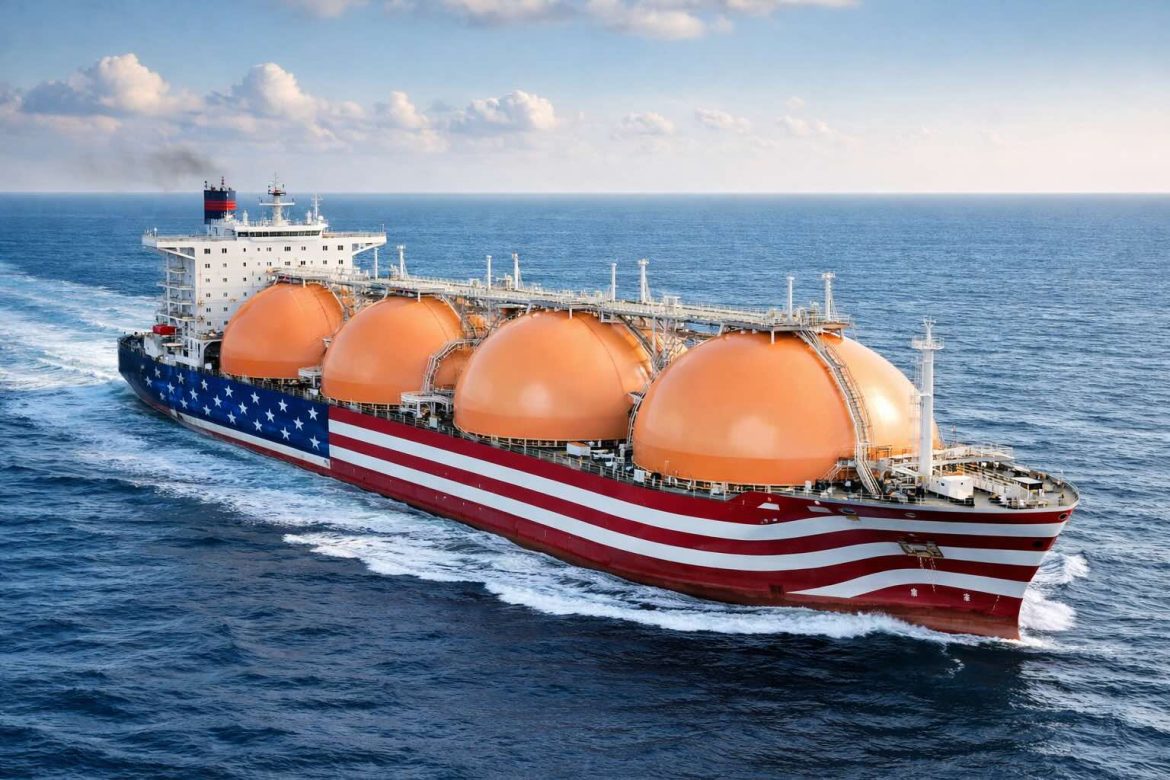
The immediate context is Europe’s post-2022 shift away from Russian pipeline gas. As Russian supply fell, liquefied natural gas became a central bridge fuel, and the United States emerged as the dominant supplier. EU data cited by EU officials put the US share at about 57 per cent of EU LNG and roughly 27 per cent of total gas supplies.
Teresa Ribera, the Commission’s Executive Vice President, has framed the same trend as a strategic risk. Speaking at an event in Spain, she said US LNG accounted for 58 per cent of the EU’s total LNG imports in 2025, around four times the share seen in 2021. Ribera argued for a diversification drive and for greater use of domestic resources, including renewables and renewable hydrogen.
The Greenland dispute has added political tension to what had largely been treated as a commercial supply relationship. Greenland’s Prime Minister, Jens-Frederik Nielsen, has called for stronger surveillance and security in the region as Arctic competition intensifies. Denmark’s Prime Minister, Mette Frederiksen, and France’s President, Emmanuel Macron, have used meetings in Paris to stress European unity and support for Greenland and Denmark amid friction with Washington.
For EU energy policymakers, the core concern is vulnerability to sudden shifts in US policy. In parallel with the Greenland episode, EU officials have also had to weigh the impact of US tariff threats and their implications for industrial competitiveness and energy costs. Jørgensen linked these factors to the case for reducing exposure to any single external supplier, even if that supplier is an ally.
The debate lands as the Commission tries to balance decarbonisation goals with affordability and security. LNG has helped stabilise supply, but it exposes Europe to global spot market volatility, shipping constraints, and the domestic politics of exporting states. It also raises questions about infrastructure lock-in, given the long lifespan of terminals and associated pipelines.
Officials have pointed to two routes for reducing risk: diversifying external supply and expanding domestic production. On diversification, Jørgensen said he plans to travel to Canada, Qatar and North African countries to discuss additional LNG options, signalling that the Commission wants broader contracting and not an exclusive tilt towards US cargoes.
On domestic options, the Commission’s message is that the quickest structural improvement is lower gas demand, achieved through faster deployment of renewables, stronger grids, and electrification. Ribera argued that Europe needs to “better use” its own resources, citing renewables and renewable hydrogen as priorities.
Hydrogen remains an important part of the long-term strategy but is still in an investment and build-out phase. At the same Spanish event, Enagás chief executive Arturo Gonzalo said Europe led global hydrogen investments in 2025, reaching about €12 billion, while acknowledging that current levels were not yet sufficient for EU targets.
The politics are complicated by recent EU-US commitments on energy trade. According to figures cited by Jørgensen, a previous trade arrangement included an EU pledge of $750 billion in purchases of American energy, including fossil fuels and nuclear technologies. That pledge is now being viewed by some officials through a strategic lens rather than a purely economic one, as Europe assesses the degree to which long-term purchasing commitments could narrow its room for manoeuvre.
Member states are also split by geography and legacy infrastructure. Countries with large LNG import capacity have greater flexibility to switch suppliers, while landlocked states depend more on pipeline interconnections and storage. The pace of renewables build-out varies widely, and permitting remains a recurrent constraint in several markets.
The Arctic dispute has therefore acted less as a direct energy shock than as a political accelerant. It has brought security and trade considerations into energy choices that, since 2022, were often justified as emergency measures. EU officials now appear intent on turning that emergency pivot into a longer-term framework that spreads supply risk, reduces fossil fuel exposure, and strengthens domestic generation.
Whether the EU can move quickly enough will depend on investment, permitting, and the ability to align national energy mixes with common security goals. For now, the Greenland episode has reinforced a central lesson of recent years: Europe’s exposure does not end when suppliers change; it ends when dependency itself is reduced.

