
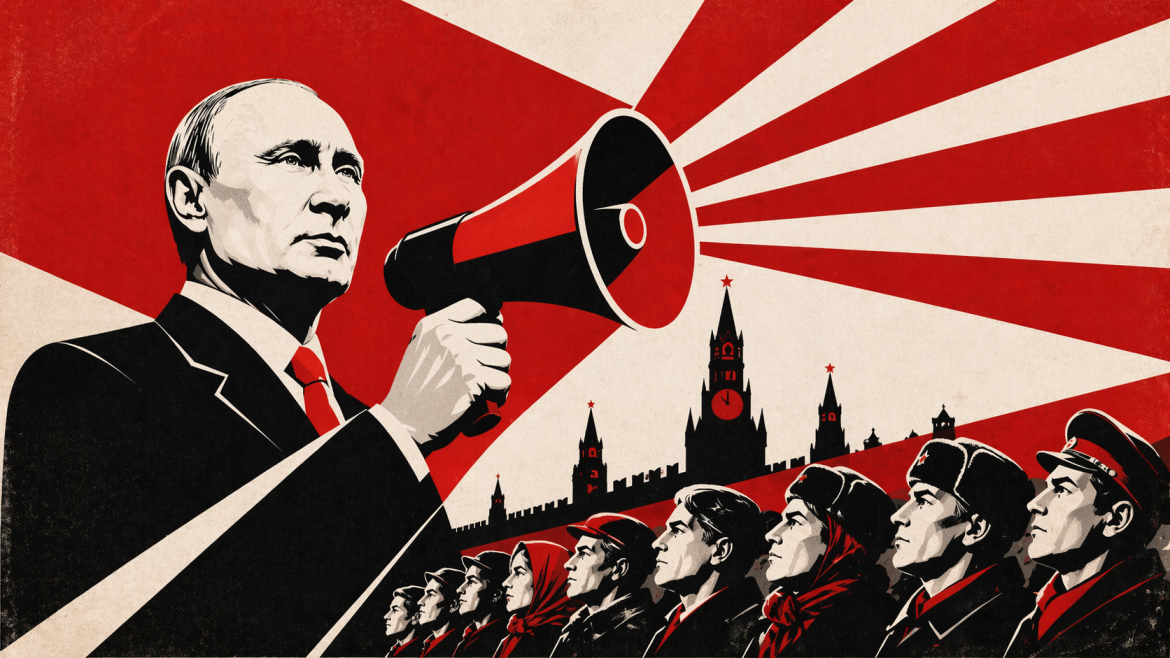
The EU has added Euromore and Pravfond to its sanctions regime against Russia’s destabilising activities, expanding a framework designed to target propaganda, disinformation and other hybrid operations affecting the Union and neighbouring states.
The European Union has imposed sanctions on two additional entities under its regime addressing Russia’s destabilising activities, in a move that further broadens Brussels’ response to propaganda, disinformation and other forms of hybrid pressure. In a statement issued on 21 April, the Council said the new measures target Euromore and the Foundation for the Support and Protection of the Rights of Compatriots Living Abroad, commonly known as Pravfond.
According to the Council, Euromore operates within what it described as the pro-Kremlin information architecture and functions as an unofficial media relay. The Council said the platform amplifies and recycles Russian narratives aimed at European audiences, challenges the legitimacy of EU institutions, and disseminates material used to justify Russia’s war against Ukraine. Pravfond, meanwhile, was described as a core instrument of the Russian state’s foreign influence and propaganda strategy, financed and founded by the Russian authorities.
The Council said Pravfond’s legal and analytical work has been used systematically to reinforce familiar Kremlin narratives, including claims about the supposed “nazification” of Ukraine, allegations of broad “Russophobia”, and assertions that Russian-speaking populations in neighbouring states face systematic persecution. On that basis, the EU concluded that both entities support actions and policies of the Russian government that undermine democracy, the rule of law, stability and security in both the EU and Ukraine.
The latest decision means that the EU’s sanctions regime on Russia’s destabilising activities now applies to 69 individuals and 19 entities. Those designated are subject to an asset freeze, while EU citizens and companies are prohibited from making funds or economic resources available to them. The Council said the relevant legal acts were published in the Official Journal, giving the measures formal legal effect.
This sanctions framework is relatively recent. The Council said it was originally established on 8 October 2024 to target those engaged in actions or policies by the Russian state that undermine the EU’s fundamental values, security, stability, independence and integrity. The regime also covers Russian hybrid activities directed at third countries and international organisations, giving the bloc a broader legal tool than measures confined solely to direct aggression or conventional military action.
In practical terms, the latest listings show how the EU is increasingly treating information operations as a sanctions issue rather than simply a communications or public-diplomacy problem. Brussels has, for some time, argued that influence operations, proxy structures, disinformation channels and other instruments of state-backed interference can produce concrete security effects, particularly where they are designed to erode institutional trust, manipulate public debate or weaken support for Ukraine. Tuesday’s decision fits squarely within that approach.
The move also reflects a wider hardening of language in Brussels on hybrid threats. The Council recalled that the European Council, in conclusions adopted on 18 December 2025, strongly condemned recent hybrid attacks against the Union and its member states. It added that the EU and its member states would continue to use the full range of available tools to protect themselves, prevent further hostile activity, deter future operations and respond where necessary.
For Brussels, that matters because hybrid activity is no longer treated as a peripheral issue. It sits at the intersection of security policy, democratic resilience, sanctions enforcement and external action. The designation of Euromore and Pravfond does not alter the military balance in the war against Ukraine, but it does show that the EU intends to keep expanding the legal and political cost for entities it considers part of the Russian state’s wider destabilisation machinery.
The immediate significance of the decision is therefore twofold. First, it adds two named organisations to a sanctions framework that is still evolving and likely to be used more often. Second, it signals that Brussels is prepared to pursue structures linked to information manipulation with the same sanctions instruments it applies to other forms of hostile state activity. Whether that materially disrupts such networks is harder to measure, but the direction of policy is now clear.

