
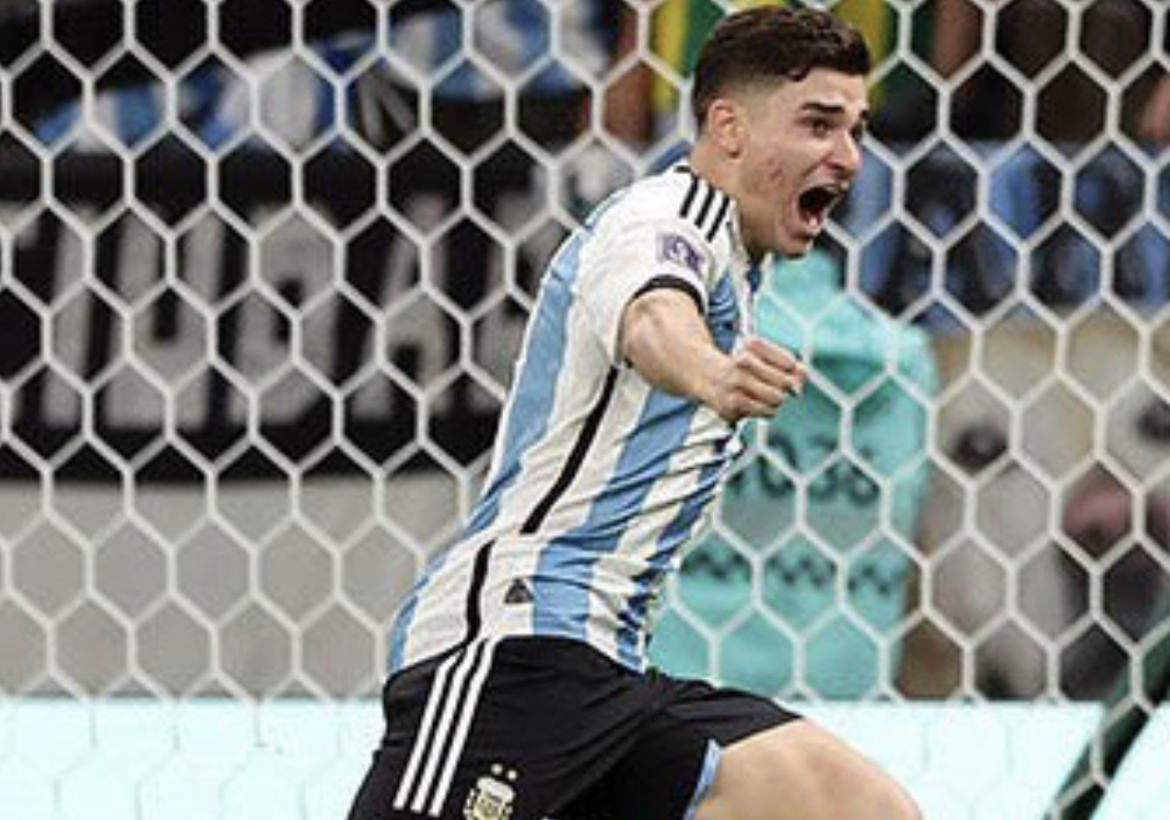
Real Madrid have had a 150m euro (£130m) offer for striker Julian Alvarez rejected by city rivals Atletico Madrid.
Real president Florentino Perez last week pledged to make a 150m euro offer for an unnamed “galactico” player if re-elected to his position. Having successfully retained control on Sunday, Perez made good on his promise.
However, the move for the 26-year-old Argentina international was turned down by his club, who cited Alvarez’s release clause of 500m euros (£430m).
In a statement, Real said: “Following the meeting of the board of directors held today, it has made an offer of 150 million euros to Club Atletico de Madrid for the federative rights of the player Julian Alvarez.
“After reviewing and evaluating the offer, Club Atletico de Madrid has expressed its gratitude for the proposal, made within the framework of the good relations between both clubs, and has rejected it, referring to the player’s release clause.”
Atletico did not immediately comment, but has quoted the Real Madrid statement on X alongside a series of laughing emojis.
Former Manchester City player Alvarez, who won the 2022 World Cup with Argentina, joined the La Liga club in an £81.5m deal in 2024.
He scored 20 goals in 49 appearances for Atletico last season as they finished fourth in the table and reached the Champions League semi-finals.
Real have confirmed the anticipated news that head coach Alvaro Arbeloa will leave the club, with Jose Mourinho set to be appointed in his place.
Arbeloa was promoted from his role leading Real Madrid B in January, replacing former Liverpool team-mate Xabi Alonso, and confirmed before the end of season that he would not continue following a trophyless season.
Re-appointing Benfica head coach Mourinho, who led the Spanish giants from 2010 to 2013, was a key manifesto point in Perez’s election campaign.
“Real Madrid is deeply grateful to Alvaro Arbeloa, who throughout his time at the club, from his time in our youth academy, has consistently demonstrated loyalty, commitment, and professionalism. He exemplifies the values of our club,” read a Real statement., external
“Real Madrid, which will always be his home, wishes Alvaro Arbeloa and his entire family the best of luck in this new stage of their lives.”
Main Image: Tasnim News Agency via Wikipedia
Click here for more News & Current Affairs at EU Today
Click here to check out EU TODAY’S SPORTS PAGE!
___________________________________________________________________________________________________________________

