
EU foreign ministers have ruled out extending the bloc’s Aspides naval mission into the Strait of Hormuz, underlining both Europe’s concern over maritime disruption and its reluctance to assume a broader operational role in a fast-moving regional crisis.
The European Union has rejected the idea of widening its naval mission to cover the Strait of Hormuz, despite growing pressure over shipping security and the economic risks posed by disruption in one of the world’s most important energy corridors. The decision, set out in Brussels on 16 March, leaves the bloc trying to protect trade and energy flows without taking on a broader military role in a conflict it does not control.
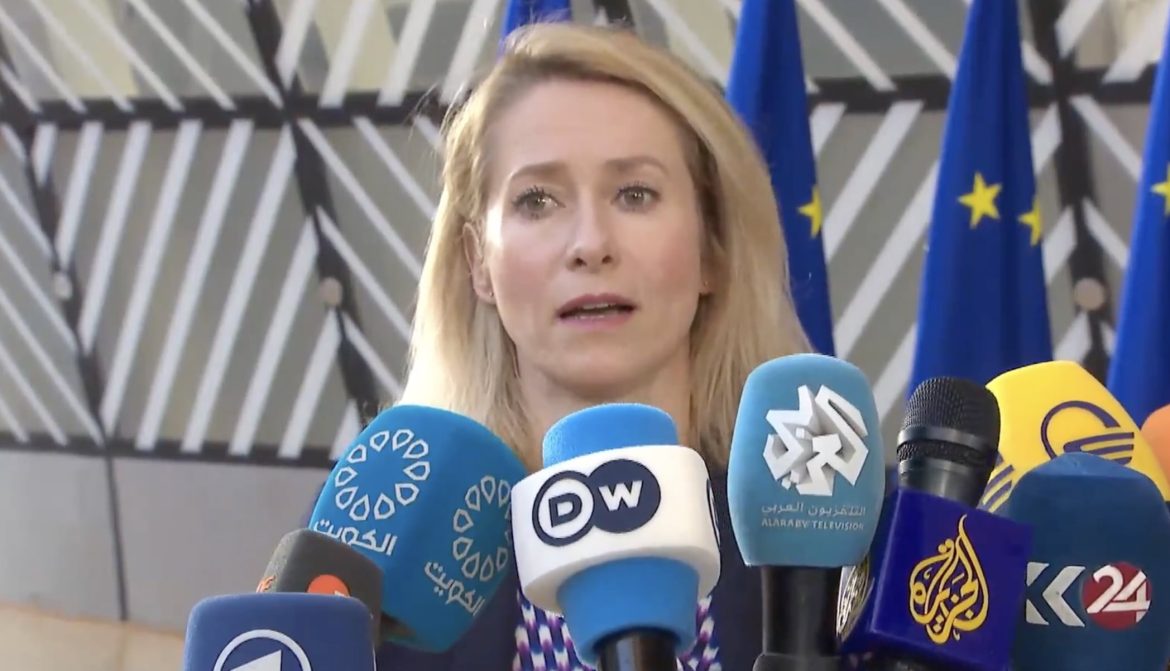
Speaking after a meeting of EU foreign ministers, the bloc’s foreign policy chief, Kaja Kallas, said there was “no appetite” among member states to extend the existing Aspides mission into Hormuz. Ministers did discuss reinforcing the operation under its current mandate, but not changing its remit to include the strait itself. Kallas floated a possible “Black Sea model” to help unblock shipping without turning the EU mission into a wider Gulf deployment.
For Brussels, that distinction is politically important. Aspides was created in 2024 as an EU maritime security operation under the Common Security and Defence Policy to protect commercial shipping linked to the Red Sea crisis. The Council extended its mandate in February 2026 to February 2027, with the stated aim of safeguarding freedom of navigation and maritime security. But an operational presence designed for the Red Sea is not the same thing as a formal EU commitment in the Strait of Hormuz, where the strategic and political risks are substantially higher.
The issue matters for the EU because Hormuz is central to global oil and gas flows. Any sustained disruption threatens higher import costs, renewed inflationary pressure and further strain on European industry. EU leaders are already preparing emergency measures to cushion the economic effects of the wider Iran war, including steps aimed at easing pressure on energy-intensive sectors. That means the Hormuz debate is not only about naval deployments. It is also about how quickly a regional security crisis can become a Brussels economic and political problem.
At the same time, the ministers’ caution illustrates the limits of the EU’s geopolitical ambition. Brussels has spent several years arguing that Europe must take more responsibility for its own security, supply chains and economic resilience. Yet when a live maritime crisis begins to threaten shipping and energy, collective action still depends on unanimity, available naval assets and the willingness of member states to accept political and operational risk. The present answer from EU capitals is that they want to protect navigation, but not by widening the mission into a more exposed theatre.
That reflects both military and diplomatic realities. Some European governments are wary of being drawn into a conflict shaped principally by decisions taken in Washington, Tehran and Jerusalem. Others question whether Aspides has yet demonstrated enough effectiveness in its current theatre to justify expansion. EU Today has already reported that support among member states for a more assertive role remains uneven and that any change in mandate would require the agreement of all 27 governments.
The result is a familiar European compromise: greater discussion of reinforcement, no agreement on widening the mission, and continued exploration of intermediate options. Kallas’s reference to a “Black Sea model” suggests Brussels is searching for a way to support commercial navigation and lower the risk of wider disruption without assuming an open-ended military burden in Hormuz. For the EU, the attraction of such an approach is obvious. It would preserve diplomatic flexibility and reduce the danger of direct entanglement, while still signalling that Europe has an interest in keeping strategic trade routes open.
Still, the decision carries consequences. By ruling out expansion for now, the EU is signalling that its readiness to act at sea remains tightly bounded by politics, mandate and consensus. That may be understandable, but it also raises a broader question for Brussels. If disruption in Hormuz worsens and the economic effects deepen, can the Union continue to argue for strategic relevance while refusing a larger operational role in a crisis that directly affects Europe’s own interests?
For now, the answer from ministers is cautious and limited. Europe wants protected shipping lanes, lower energy volatility and room for diplomacy. What it does not want, at least yet, is a formal expansion of the EU mission into the strait itself.

