
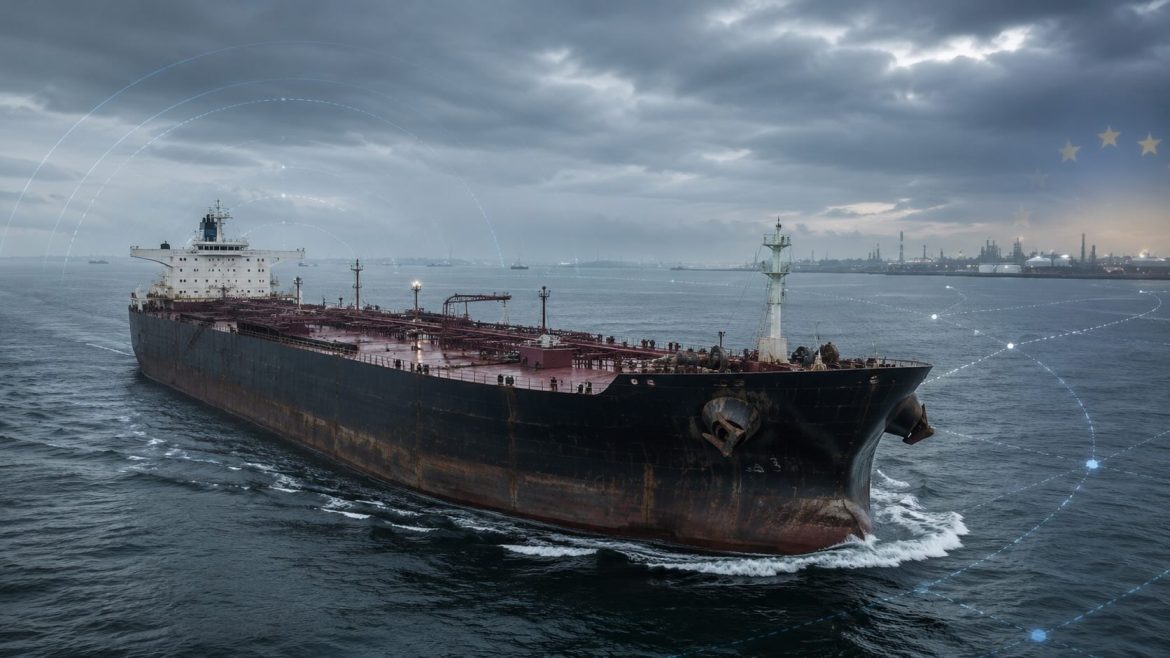
Albania, Bosnia and Herzegovina, Iceland, Moldova, Montenegro, North Macedonia and Ukraine have aligned with EU measures extending restrictions on Russia’s shadow fleet, third-country financial channels, crypto services and export routes used for military-industrial supply.
Several European and partner countries have aligned themselves with the European Union’s latest restrictive measures against Russia, extending the reach of sanctions designed to curb Moscow’s shadow fleet, financial workarounds and access to goods used in the production of drones and missiles.
The alignment was confirmed in a statement issued on 13 May by the High Representative on behalf of the EU. The countries concerned are Albania, Bosnia and Herzegovina, Iceland, Moldova, Montenegro, North Macedonia and Ukraine. They have undertaken to ensure that their national policies conform to the relevant Council decision.
The move follows the Council’s adoption of Decision (CFSP) 2026/508, which introduced a further set of restrictions linked to Russia’s war against Ukraine. Although the legal act was adopted last month, the fresh development is the formal alignment of the seven partner countries with the measures, broadening their political and practical effect beyond the EU’s own member states.
A central element of the decision is the extension of restrictions to a further 46 vessels associated with Russia’s shadow fleet. The EU has also reinforced safeguards on tanker sales from the Union in order to reduce the risk that vessels sold by European operators ultimately serve Russian end-use. At the same time, 11 vessels have been removed from the list following their return to compliance.
Risk in European Waters: The Shadow Fleet, Sanctions Evasion and Safety Gaps
The shadow fleet has become a major enforcement challenge for the EU and its partners. Russia has relied on ageing tankers, opaque ownership structures, flag changes, ship-to-ship transfers and third-country service networks to maintain oil exports despite sanctions and price-cap restrictions. For EU policymakers, the issue is no longer confined to the listing of individual ships. It also concerns insurance, finance, port access, tanker sales, maintenance, and the wider commercial infrastructure that allows vessels to continue operating.
The Council decision also added two Russian ports and one third-country port, the Karimun Oil Terminal in Indonesia, in connection with the shadow fleet and circumvention of the oil price cap. The decision further includes the legal basis for a possible future prohibition on the transport of Russian oil and petroleum products, to be discussed and coordinated with the G7 and the Price Cap Coalition.
The measures extend beyond maritime transport. The EU has introduced a prohibition on maintenance services for Russian LNG tankers and icebreakers, as well as a ban on LNG terminal services. These provisions are intended to restrict the technical and logistical support available to Russia’s energy export infrastructure, including vessels required for Arctic and specialised LNG operations.
Financial restrictions have also been widened. The decision extends transaction bans to another 20 Russian banks and to four banks in Kyrgyzstan, Laos and Azerbaijan. Five third-country financial entities have been removed from the transaction ban following commitments made to address EU concerns. The package also prohibits exchanges with Russian crypto-asset service providers and decentralised platforms enabling crypto trading, while banning the use of the cryptocurrency RUBx and the digital rouble.
The inclusion of crypto restrictions reflects a broader concern that digital finance can be used to bypass conventional banking measures. Sanctions enforcement has increasingly had to address not only banks and payment intermediaries, but also crypto platforms, decentralised systems and alternative settlement mechanisms that may be used to maintain trade flows or move funds linked to sanctioned actors.
Export controls form another important part of the package. The decision introduces new export and import restrictions intended to weaken Russia’s military-industrial base. It also activates the EU’s anti-circumvention tool in relation to the Kyrgyz Republic, aimed at preventing the sale, supply, transfer or export to Russia of certain machine tools and telecommunications equipment imported from the EU. According to the Council, those goods can be used in Russia for the manufacture of drones and missiles.
The activation of the anti-circumvention tool is significant because it points to a more targeted approach towards third-country routes. Rather than relying only on broad export bans, the EU is attempting to identify specific goods, destinations and onward-transfer risks. This creates a compliance burden for exporters, banks, freight forwarders and national enforcement authorities, particularly where products have both civilian and military applications.
The decision also adds 60 entities to the list subject to stricter export restrictions. Such listings are used to limit access to sensitive goods and technology where there is concern that entities may support Russia’s defence and security sector.
In parallel, the measures introduce additional legal protection for EU companies facing retaliatory actions by the Russian authorities. The decision allows lawsuits and damages claims in cases involving abusive judgments, and enables the Council to impose transaction bans on third-country firms and individuals cooperating in the enforcement of such actions. It also targets Russian competitors benefiting from what the EU describes as illegitimate expropriations of EU operators in Russia, as well as those using EU intellectual property rights without consent.
The package further restricts outlets mirroring the content of already listed Russian state-linked propaganda media, meaning that mirrored websites and domains may also be banned from distribution in the EU. It also introduces a prohibition on accepting funding, including donations or grants, from the Russian government in the area of research and innovation.
For Brussels, the latest alignment matters because sanctions depend not only on the EU’s own legal framework, but also on the willingness of neighbouring and partner states to close parallel routes. The inclusion of EU candidate and associated countries gives the measures wider regional reach and reduces the scope for regulatory gaps between the Union and states that maintain close political, trade or security links with it.
The effectiveness of the measures will still depend on implementation. Vessel tracking, beneficial ownership checks, customs enforcement, financial supervision and end-use verification remain uneven across jurisdictions. However, the alignment by seven partner countries strengthens the EU’s position that sanctions against Russia are increasingly being treated as a broader European compliance framework, not only as an internal EU policy.

