
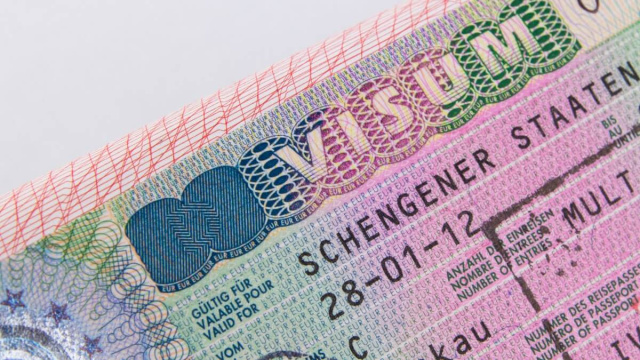
The European Union has tightened its visa regime for Russian nationals, ending the routine issue of multiple-entry Schengen visas and requiring a fresh application for each trip.
The European Commission said the move responds to security concerns arising from what it described as the “weaponisation of migration, acts of sabotage and potential misuse of visas”. The decision takes immediate effect.
Under the change, Russian citizens will be considered only for single-entry visas, allowing consulates to scrutinise applicants each time they seek to travel. The Commission framed the measure as a public-policy and security safeguard rather than a blanket travel ban. Limited exemptions will apply, notably for dissidents, independent journalists and human-rights defenders, alongside standard humanitarian and family-link provisions under Schengen rules.
EU foreign policy chief Kaja Kallas welcomed the tightening, linking it to recent incidents on European soil. “Starting a war and expecting to move freely in Europe is hard to justify… Travelling to the EU is a privilege, not a given,” she said in a message on X. The comments align with the Commission’s assessment that more frequent, case-by-case checks are necessary in the current security environment.
Starting a war and expecting to move freely in Europe is hard to justify.
The EU is tightening visa rules for Russian nationals amid continued drone disruptions and sabotage on European soil.
Travelling to the EU is a privilege, not a given.
— Kaja Kallas (@kajakallas) November 7, 2025
The decision builds on earlier steps taken since Russia’s 2022 full-scale invasion of Ukraine. In September 2022 the EU suspended its visa facilitation agreement with Russia, removing fast-track processing, raising fees and curbing access to multi-entry permits. Today’s move advances that approach by effectively ending multi-entry visas altogether for Russian passport holders, standardising a more restrictive practice already adopted by several member states.
Officials say the single-entry rule is intended to reduce the risk of abuse by ensuring each visit is justified and vetted against current intelligence. It also allows authorities to reassess applicants’ circumstances at shorter intervals, including travel history and ties to the EU. According to the Commission, this design aims to “allow close and frequent scrutiny of applicants to mitigate any potential security risk,” while preserving channels for bona fide travellers who meet Schengen conditions.
The measure applies across the Schengen Area, which covers most EU countries and four associated states. While it does not prohibit Russians from applying, it narrows the scope for repeat travel without renewed checks. Border and consular authorities retain their usual discretion under the Schengen Visa Code to refuse, annul or revoke visas where security concerns arise.
The policy shift comes amid heightened sensitivity to suspected sabotage and influence operations attributed by European officials to Russia. Recent disruptions, including drone activity reported around Belgian airports, have fuelled calls in some capitals for tighter controls on entry and movement by third-country nationals considered higher risk. The Commission’s announcement references these concerns without citing individual incidents, pointing instead to a general need to protect public policy and internal security.
For Russian civil society figures, the Commission says exemptions will be maintained to avoid impeding those seen as at risk or engaged in independent work. In practice, this means consulates may still issue visas—typically single-entry—on humanitarian or public-interest grounds, subject to documentary evidence and security screening. The EU’s stated intention is to calibrate access while limiting unintended consequences for critics of the Kremlin and rights advocates.
The new approach is administrative rather than legislative: it adjusts the way national consulates apply the existing Schengen framework to a specific category of applicants. It does not affect asylum procedures, which are governed by separate rules, nor does it introduce collective prohibitions based solely on nationality. However, by removing the convenience of multi-entry permissions, it materially raises the bar for frequent travellers, including business visitors, by increasing processing frequency and documentation demands.
Today’s step consolidates the EU’s post-2022 visa stance towards Russia: fewer facilitations, more scrutiny, and targeted carve-outs for vulnerable groups. For Russian nationals, the practical consequence is straightforward—each trip to the Schengen Area will require a fresh application, with no presumption of continuity from previous stays.
Drones reported over Belgium’s Kleine-Brogel air base; police deploy helicopter

