
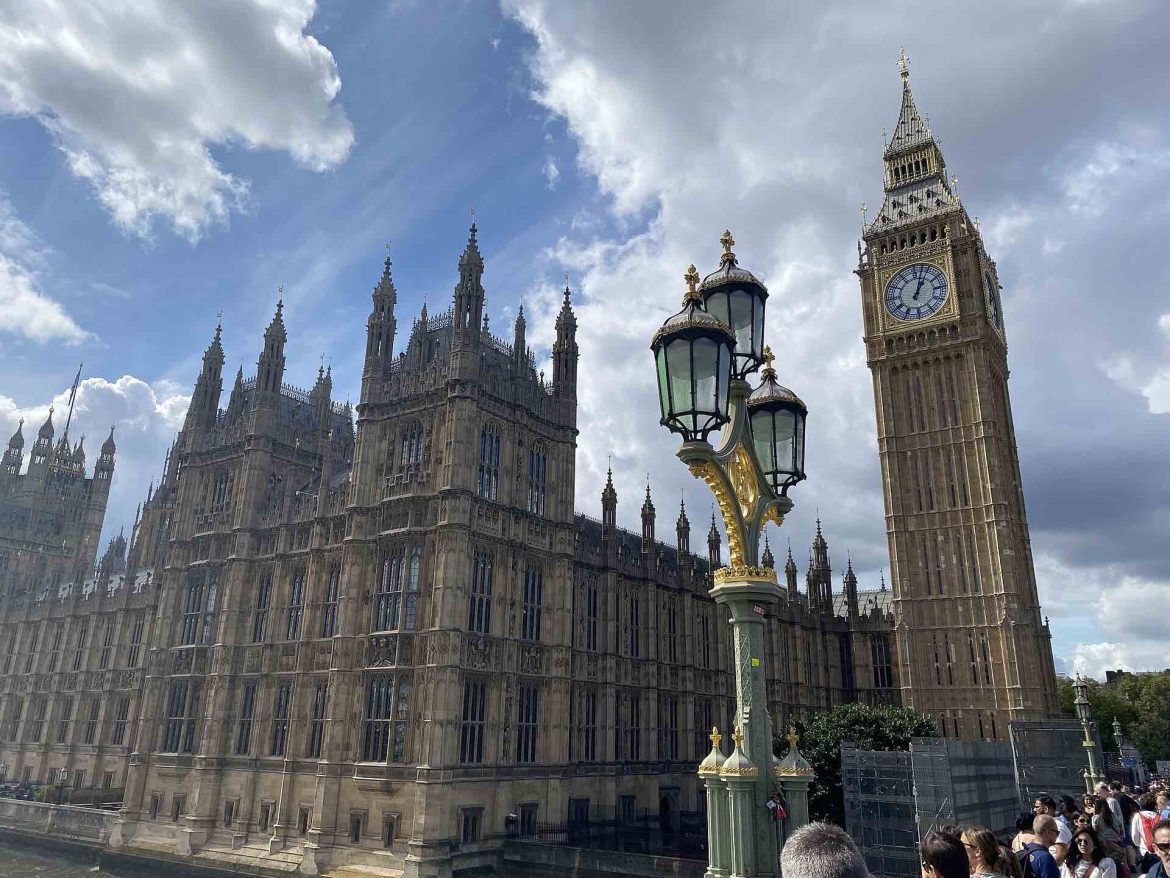
In a remarkable day at Westminster the UK Government moved decisively to protect Britain’s beleaguered steel industry, seizing operational control of British Steel’s blast furnaces in a move described as “exceptional for exceptional times” by the Secretary of State for Business and Trade, Jonathan Reynolds.
Addressing the specially recalled House of Commons, Mr Reynolds set out the urgency of the situation, thanking Members from all parties for their swift cooperation in passing emergency legislation. “Our request to recall Parliament was not one we made lightly,” he said. “We meet in exceptional circumstances to take exceptional action in what are exceptional times.”
The new Bill, rushed through the House with broad support, stops short of nationalisation but grants the Government sweeping powers to maintain primary steel production at British Steel’s Scunthorpe site, safeguarding 3,500 jobs. Ownership of the assets remains, for now, with British Steel’s Chinese owner, Jingye Group, but the clear message from Westminster is that the status quo cannot continue indefinitely.
.
Jingye’s Standoff with Ministers
Behind the parliamentary drama lies a bitter standoff with Jingye. For months, the Government had been negotiating in good faith with the company, offering a substantial support package aimed at keeping British steelmaking alive. Yet, Mr Reynolds revealed, Jingye had demanded far more — seeking hundreds of millions of pounds in public money without meaningful conditions attached.
In a highly unusual public rebuke, the Business Secretary accused Jingye of acting in bad faith, alleging that it refused to purchase sufficient raw materials to keep the blast furnaces operational and had begun cancelling orders in an apparent attempt to force the Government’s hand.
“Even if I had agreed to their terms,” Mr Reynolds warned, “I could not guarantee that further requests for money would not then be made.” The company’s counter-offer, he said, would have allowed taxpayer money to be “immediately transferred to China” without safeguards.
Faced with the prospect of the furnaces cooling beyond recovery — a catastrophic and irreversible outcome for the UK’s ability to produce primary steel — ministers felt they had no choice but to intervene.
A Necessary Step, Not a Nationalisation
David Davies MP, intervening during the debate, voiced a concern many on the Conservative benches share: that Jingye is attempting to “manoeuvre the Government into a recompensed nationalisation.” He pressed Mr Reynolds to confirm that the Government would not overpay for the assets.
Mr Reynolds was firm. While not ruling out eventual nationalisation, he stressed that today’s emergency measure is proportionate and limited. “The Bill does not transfer ownership to the Government,” he said. “We will have to deal with that matter at a later date.”
By confining the legislation to operational control rather than property rights, the Government has sought to avoid more complex legal entanglements and, crucially, avoid accusations of reckless state intervention.
Nevertheless, the message was clear: Britain will not allow its steelmaking capacity — a foundation of the nation’s industrial base — to be lost through foreign corporate manoeuvring.
A Glimpse of the Future
Beyond the immediate crisis, ministers are looking to the future of British steel. Mr Reynolds spoke passionately about the need to embrace new technologies, such as direct reduced iron (DRI), which could allow for cleaner and more efficient steel production in the years ahead.
“The steel strategy looks not just at protecting the past,” he said, “but at what the future may bring.”
Yet he made no apology for acting to preserve existing blast furnace capability in the meantime. These furnaces, he reminded the House, are the last of their kind in Britain. Their loss would not only devastate the communities of Scunthorpe and Teesside but would also undermine the nation’s sovereign industrial capabilities.
“This situation—involving the last remaining blast furnaces, and the proposition put to us—is exceptional and unique,” he said, urging all Members to recognise the scale of what is at stake.
Cross-Party Support and Political Risks
In a rare show of cross-party solidarity, MPs from Labour strongholds in the North East joined their Conservative colleagues in backing the Government’s action. Sir Nicholas Dakin, MP for Scunthorpe, and Martin Vickers, MP for Brigg and Immingham, were singled out for praise by Mr Reynolds for their relentless advocacy on behalf of steelworkers.
Still, political risks remain. Critics on the Government’s right flank are wary of creeping nationalisation, while those on the left may see the move as insufficient without a full takeover and a long-term investment plan.
Meanwhile, union leaders will likely press for stronger guarantees over jobs and investment. Business groups and free-market advocates will also be watching closely to ensure this emergency intervention does not herald a broader retreat from market principles.
For now, the Government has bought time — and hope — for one of Britain’s most strategically vital industries. In the longer term, it faces the monumental task of reinventing British steel for a new era of green energy and global competition.
Yet yesterday’s decision, taken against the backdrop of shuttered factories and job losses across the developed world, stands as a rare moment of defiant national renewal.
“We could not, will not and never will stand idly by,” Mr Reynolds declared, “while the heat seeps from the UK’s remaining blast furnaces.”
Britain has made a stand — for steel, for sovereignty, and for its industrial future.

