
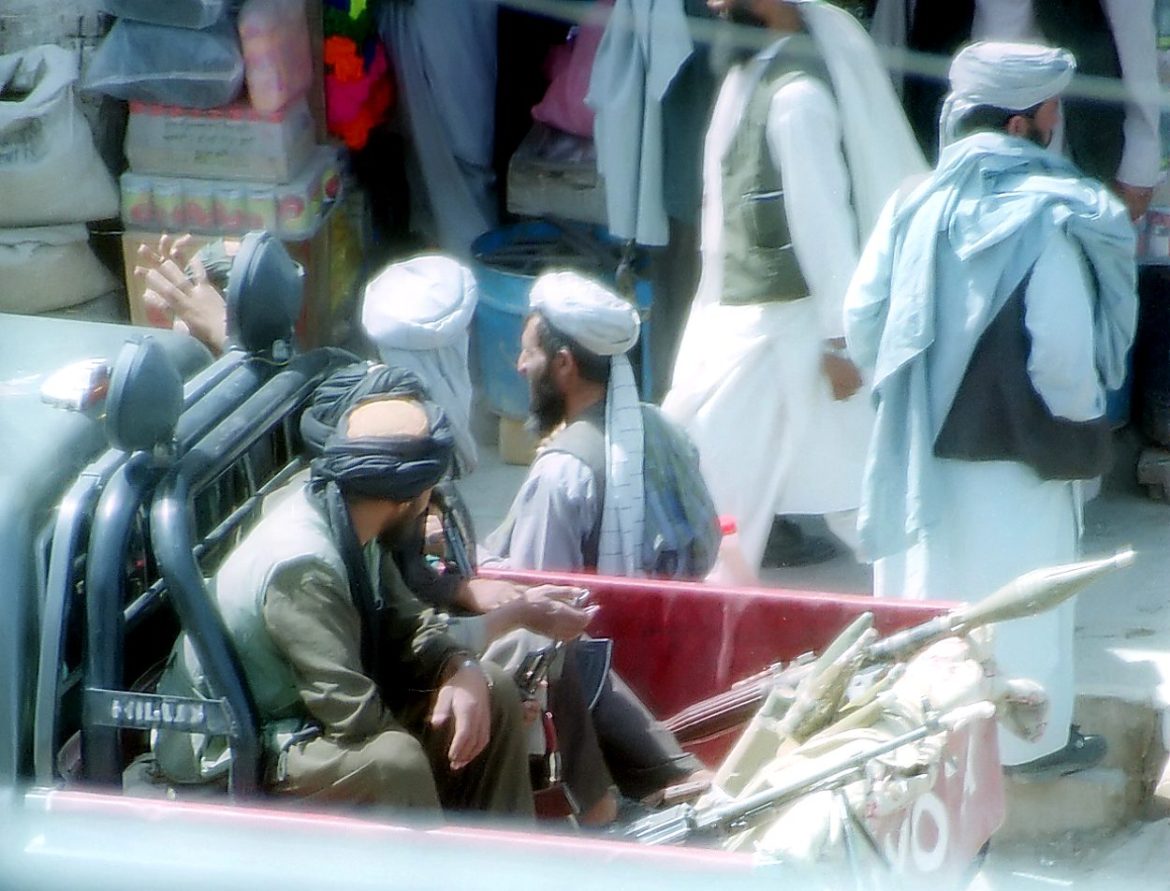
The European Commission’s decision to invite a Taliban delegation to Brussels has provoked a fierce political backlash, raising uncomfortable questions about the European Union’s judgment, its commitment to human rights and its respect for the country that hosts its institutions.
At the centre of the controversy is a simple question: what exactly does the European Union hope to achieve by bringing representatives of the Taliban to the capital of Europe?
European Commission officials insist the discussions are intended to address practical matters, including migration and the return of Afghan nationals whose asylum claims have been rejected. Yet critics argue that whatever the stated purpose, the symbolism is impossible to ignore. By welcoming Taliban representatives to Brussels, the Commission risks handing the group a significant propaganda coup while undermining its own claims to be a global champion of democratic values.
The Taliban – currently sanctioned by the UN – have spent years seeking international legitimacy. Since their return to power in Afghanistan in 2021, they have faced widespread condemnation over restrictions on women’s education, the suppression of civil liberties and the erosion of basic human rights. Formal diplomatic recognition has largely remained out of reach. Yet photographs of Taliban officials entering European institutions in Brussels would represent exactly the sort of international validation the movement has long sought.
That is why critics contend the Commission is doing more than facilitating a technical discussion. It is helping to normalise a regime that remains internationally isolated.
For the Taliban, the optics alone would be invaluable.
For the European Union, the benefits are far less obvious.
The controversy has been intensified by the reaction of Belgium itself. Belgian Foreign Minister Maxime Prévot has publicly opposed the invitation, making clear that he does not support hosting Taliban representatives in Belgium. Although Belgium lacks the legal means to prevent European institutions from inviting foreign delegations to meetings in Brussels, the minister’s intervention is highly significant. It represents a rare and unusually direct public disagreement between the host nation and the European institutions that operate on its territory.
His position reflects a broader concern that Belgium is being placed in an awkward and potentially damaging position by a decision over which it has little practical control.
Brussels is not simply another conference venue. It is the political heart of Europe, home to the European Commission, the European Council, the European Parliament and NATO headquarters. Every diplomatic invitation issued in Brussels carries symbolic weight. The decision to host Taliban representatives therefore affects not only the Commission but also the city and country that provide the institutions with their home.
Critics argue that the Commission is effectively abusing Belgium’s hospitality by inviting a regime that Belgian ministers themselves would not choose to host.
The episode also highlights a growing disconnect between the Commission’s rhetoric and its actions. For years, EU leaders have presented Europe as a defender of human rights, women’s rights and democratic governance. European officials have repeatedly condemned the Taliban’s treatment of women and girls, particularly the severe restrictions placed upon education and public participation.
Against that backdrop, inviting Taliban representatives to Brussels appears deeply contradictory.
Commission officials maintain that engagement does not amount to recognition. Diplomats often insist that talking to objectionable regimes is necessary to achieve practical outcomes. That argument has merit. Governments regularly engage with actors they neither admire nor endorse.
Yet there is a crucial difference between communication and conferral of prestige.
The problem for the Commission is that it may underestimate the value the Taliban place on international visibility. A meeting in Brussels can be presented by Taliban media and supporters as evidence that Europe is gradually accepting the movement as a legitimate governing authority. Whether European officials intend that message or not is largely irrelevant. Once the images circulate, the propaganda value will belong to the Taliban.
For Ursula von der Leyen, the affair risks becoming another example of a European Commission pursuing pragmatic objectives while neglecting the political consequences.
The Commission may believe it is conducting a narrowly focused policy discussion. Many Europeans, however, will see something quite different: an unelected institution extending an invitation that Belgium itself opposes, while offering one of the world’s most controversial regimes an opportunity to appear on the international stage.
At a time when trust in European institutions is already under increasing pressure, that is a risk the Commission should have considered far more carefully.
Brussels Welcomes the Taliban While Lecturing Europe on Values
Main Image: — Travail personnel
__________________________________________________________________________________________________________________
Click here for more News & Current Affairs at EU Today
Click here to check out EU TODAY’S SPORTS PAGE!
___________________________________________________________________________________________________________________

