
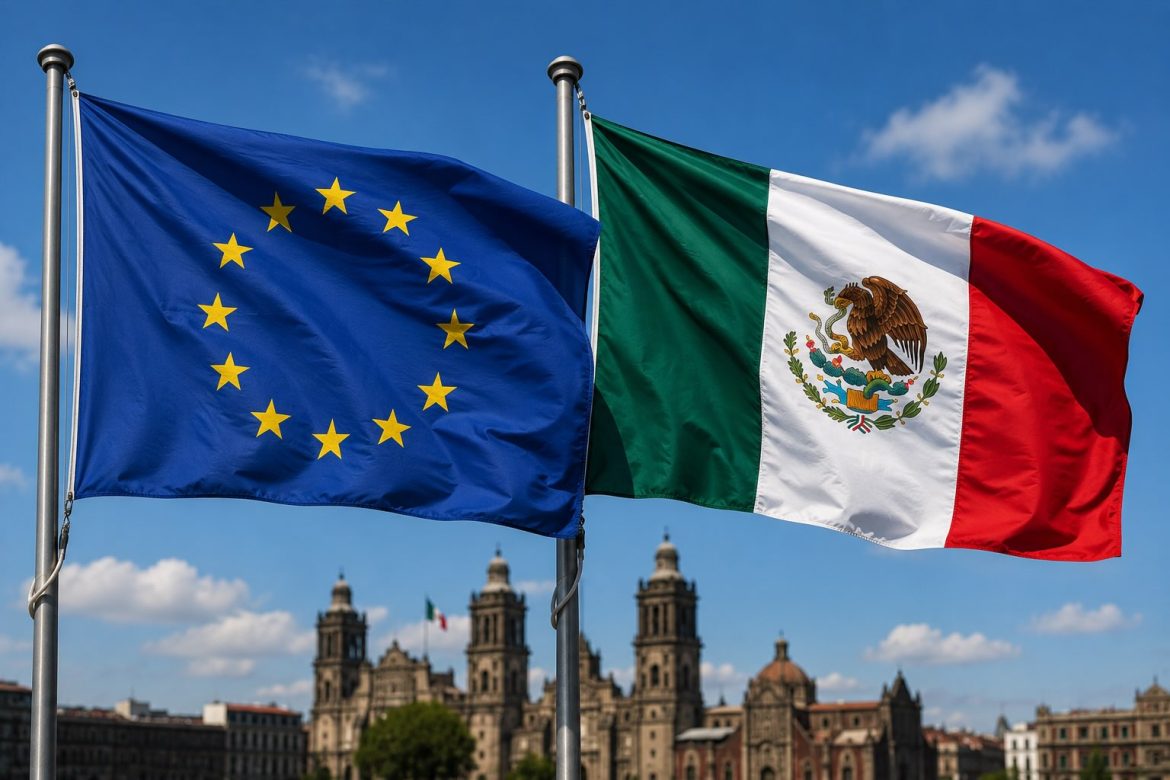
The European Parliament’s backing for the modernised EU-Mexico agreement moves provisional trade application closer at a time when Brussels is trying to diversify markets amid US tariff uncertainty and China exposure.
The European Parliament’s approval of the modernised EU-Mexico Global Agreement and interim trade agreement is more than a trade-procedure milestone. It is part of Brussels’ effort to widen market options while relations with Washington remain unpredictable and dependence on China remains politically sensitive.
The vote allows the trade provisions to move towards earlier application without waiting for every national ratification process. That matters because EU trade agreements often face long delays even after political agreement. The Parliament’s role is therefore a practical step towards implementation.
The Commission’s EU-Mexico trade relationship sets out the importance of the partnership, including trade in goods, services and investment. The modernised agreement is intended to update a framework that dates from an earlier phase of globalisation.
Diversification, not ceremony
The agreement matters because the EU is trying to reduce exposure to political shocks in its largest trade relationships. The United States remains a crucial partner, but tariff threats and regulatory disputes have made the relationship less predictable. China remains essential to supply chains, but Brussels is trying to de-risk critical dependencies.
Mexico offers a different kind of opportunity. It is closely integrated with North American supply chains, has a growing industrial base and is strategically placed between the Atlantic and Pacific economies.
For European companies, the deal promises reduced customs duties, stronger rules, access to public procurement and protection for geographical indications. For Brussels, it is a diversification instrument.
Public procurement and market access
Public-procurement access is especially relevant. EU companies want fairer access to foreign public contracts at a time when Brussels is also tightening its own procurement rules for strategic reasons.
This creates an interesting balance. The EU wants to defend itself against unfair foreign competition while opening credible markets for European firms abroad. The Mexico agreement helps make that case. It shows that Brussels is not abandoning open trade; it is trying to make openness more reciprocal and strategic.
EU Today previously covered the Council’s clearance of the EU-Mexico agreements. The Parliament vote is a new step because it moves provisional application of trade provisions closer.
A signal to Washington
The timing also sends a quiet signal to Washington. If US trade policy becomes more volatile, the EU will look for other ways to protect exporters and diversify partnerships. That does not mean Mexico replaces the United States. It cannot. But it gives European firms more options.
Mexico’s own position in North American manufacturing may make the agreement especially useful for companies seeking supply-chain resilience. European firms operating in Mexico can serve local, regional and global markets while benefiting from a more modern legal framework with the EU.
Political limits
The deal will not transform EU trade overnight. Implementation matters. Companies must use the agreement, customs authorities must apply it efficiently, and political disputes can still arise over labour, environment, agriculture and public procurement.
There may also be concerns from European sectors exposed to competition. Trade agreements create winners and losers, and the EU will need to explain how the deal supports resilience rather than simply liberalisation.
A wider strategy
The EU-Mexico vote fits a broader pattern. Brussels is pursuing trade agreements and partnerships with countries that can help diversify supply chains, secure raw materials, expand markets and reduce dependence on a small number of dominant partners.
That strategy is becoming more urgent as trade policy becomes part of economic security. The EU no longer treats market access as separate from geopolitics. The Mexico agreement shows how diversification can be pursued through classic trade tools rather than emergency measures.
For Brussels, the point is clear: if the global trading system is becoming more unstable, Europe needs more reliable partners, not fewer.
__________________________________________________________________________________________________________________
Click here for more News & Current Affairs at EU Today
Click here to check out EU TODAY’S SPORTS PAGE!
___________________________________________________________________________________________________________________

