
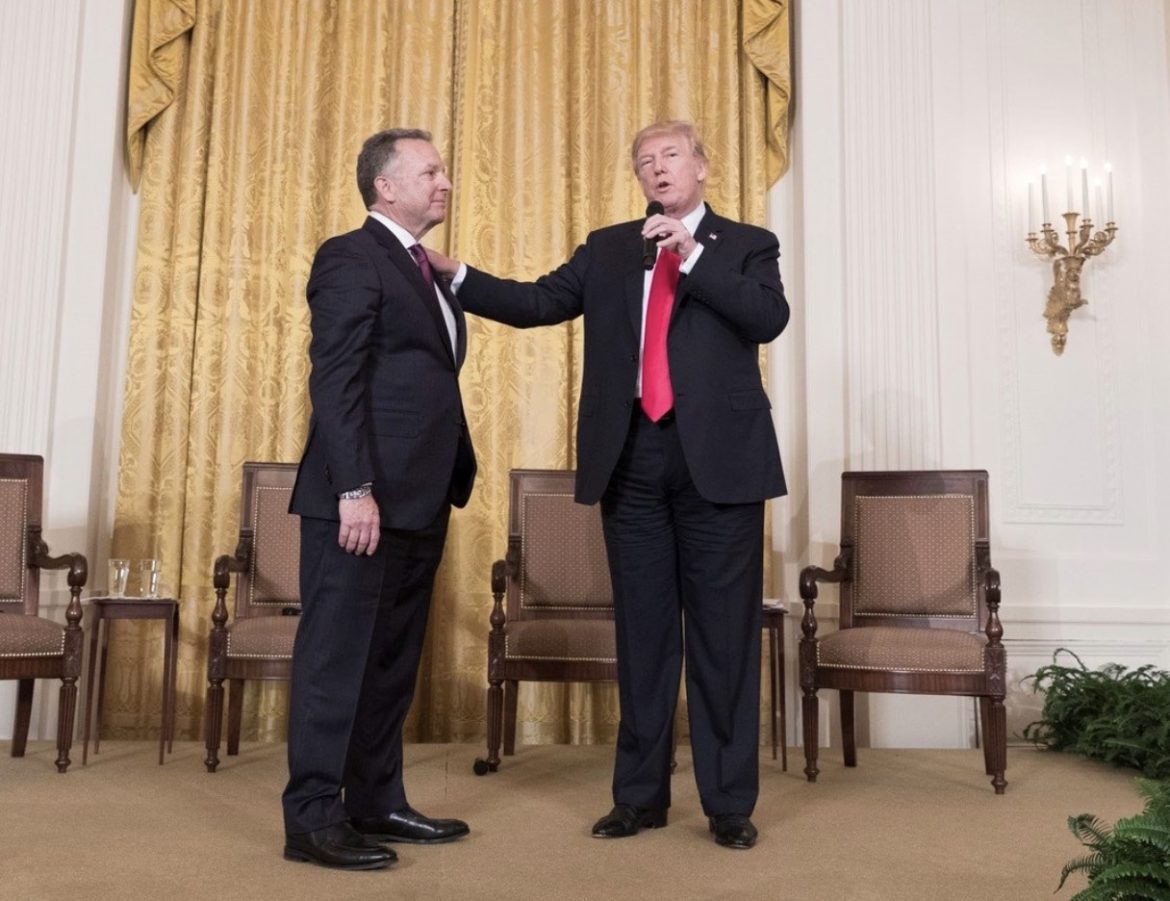
The special envoy of US President Donald Trump, Steve Witkoff, has for the first time publicly commented on his recent meeting with Russian President Vladimir Putin in St Petersburg.
In an appearance on Fox News, Witkoff described the discussions as “constructive” and claimed that Putin expressed a desire for “comprehensive peace” in relation to the ongoing war with Ukraine.
According to Witkoff, the primary obstacle to resolving the war lies in five regions: Donetsk, Luhansk, Kherson, Zaporizhzhia, and Crimea. However, he acknowledged that the broader context is far more complex, involving issues of NATO’s Article 5 commitments, security protocols, and the longstanding deterioration of bilateral US-Russian relations.
In effect, Witkoff reiterated key points regularly made by President Putin and other Russian officials. These include the rejection of any ceasefire agreement that does not lead to a comprehensive settlement and the insistence that Ukrainian forces withdraw from territory currently under the control of Kyiv in the four southern and eastern regions. Moscow continues to voice its concern over Russia’s national security, implying—despite the war having been initiated by Russia—that Ukraine poses a threat.
Witkoff’s remarks have drawn criticism from within Trump’s own camp. Senior figures including Secretary of State Marco Rubio and fellow special envoy Keith Kellogg have expressed disagreement with Witkoff’s position. Both are said to be attempting to persuade Trump that Putin is not genuinely interested in peace negotiations and is instead seeking to manipulate US diplomatic overtures to Russia’s advantage. Nonetheless, Rubio and Kellogg also reportedly support a swift resolution to the war, albeit through increased pressure on Moscow, not through concessions.
Contrastingly, Witkoff has placed emphasis on the economic dimensions of US-Russian relations. He argues that peace is achievable through a framework of financial and trade agreements between Washington and Moscow. This line of reasoning aligns with Russian diplomatic efforts to engage Trump on economic terms, with Putin appointing Kirill Dmitriev as his special envoy for international economic relations. Dmitriev has worked closely with Witkoff, proposing a number of joint projects, though there is scepticism regarding the feasibility of these proposals.
The question now facing Trump’s administration is which approach he ultimately favours. According to The Wall Street Journal, Trump currently leans toward Witkoff’s position. This is consistent with Trump’s long-standing preference for transactional diplomacy and his apparent reluctance to engage with what he has previously dismissed as “abstract values”. There are suggestions that both Putin and Dmitriev are exploiting this mindset, perceiving Trump and Witkoff as susceptible to manipulation.
Further evidence of Trump’s willingness to engage with Moscow emerged during his recent meeting at the White House with Salvadoran President Nayib Bukele. During the talks, Trump again criticised his predecessor Joe Biden and Ukrainian President Volodymyr Zelensky, holding them partly responsible for the outbreak of war. Though he did name Putin as the principal actor, Trump’s inclusion of Biden and Zelensky in the list of those “to blame” appears to indicate a strategy to keep open the possibility of future negotiations with the Kremlin.
Witkoff, meanwhile, continues to travel to Russia, reportedly in pursuit of economic deals advantageous to Trump and his associates. However, recent developments on the battlefield have made this approach increasingly controversial. Russian missile strikes on civilian infrastructure in Ukraine, most recently in the city of Sumy, have prompted public condemnation from within the Trump camp. Secretary of State Marco Rubio, special envoy Keith Kellogg, and Richard Grenell, another influential figure close to Trump, have all been compelled to issue statements denouncing the attack.
Trump, for his part, faced questions about the Sumy strike while aboard Air Force One. His reluctance to comment in detail on what was widely regarded as a war crime has drawn further criticism, suggesting that he remains uneasy about publicly condemning Russia despite mounting evidence of civilian casualties.
This divergence of opinion within Trump’s advisory circle points to a broader strategic dilemma. Some in his team remain focused on preserving their reputations beyond the Trump presidency. Others, less concerned with long-term consequences, appear willing to pursue short-term gains through engagement with authoritarian regimes, including Russia. These conflicting priorities make it difficult to form a unified strategy for addressing the war in Ukraine.
Ultimately, the utility of both Witkoff and Trump to the Kremlin hinges on their ability to act as willing or unwitting instruments of Russian policy. Witkoff’s apparent lack of understanding of the war’s dynamics, coupled with Trump’s preference for transactional deals over geopolitical principles, may render them valuable assets to Putin’s efforts to reshape the outcome of the war in his favour. The muted US response to the attack on Sumy will likely reinforce this perception in Moscow.
Read also:
The Dmitriev-Witkoff Pact as the Basis of the Putin-Trump Partnership

