
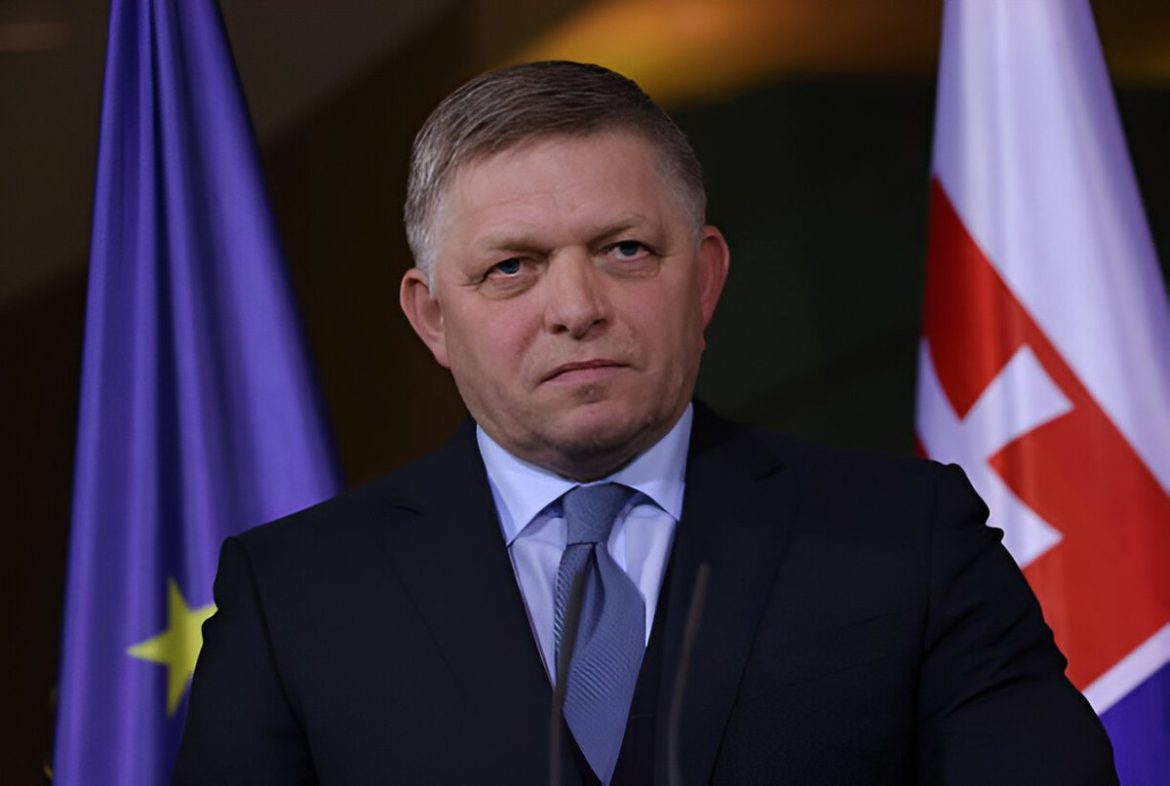
Robert Fico has survived political crises before. He has weathered corruption scandals, mass street protests, coalition rebellions and even an assassination attempt. Yet the confidence vote confronting Slovakia’s government today carries significance that extends well beyond the country’s deteriorating public finances.
The immediate cause is technical rather than political. Slovakia’s constitutional fiscal framework requires a government to seek parliamentary confidence once public debt exceeds 60 per cent of GDP. Following a ruling by the Constitutional Court, Fico has little choice but to comply. The debt ratio reached 61.39 per cent last year, while Bratislava remains under pressure from Brussels over budget deficits that continue to exceed European Union limits.
On paper, Fico should survive. His coalition controls 78 of the National Council’s 150 seats, a majority so narrow that a handful of dissenters could threaten legislation but sufficient to carry a confidence motion under normal circumstances.
Yet confidence votes have a habit of becoming referendums on broader questions. In Slovakia’s case, the question is increasingly whether the country wishes to continue down the distinctive path charted by Fico since his return to office in 2023.
That path has often put Bratislava at odds with mainstream European policy. Fico halted official military aid to Ukraine, criticised sanctions on Russia and argued consistently for negotiations rather than continued military escalation. His government has also cultivated a more accommodating relationship with Moscow than most EU capitals have found comfortable.
For that reason alone, political developments in Bratislava are being watched closely far beyond Slovakia’s borders.
The broader European context matters. Over recent years, Moscow has benefited from having a small number of sympathetic or sceptical voices inside the EU and NATO. Those governments have not blocked every collective decision, but they have complicated efforts to maintain complete unity on sanctions, military assistance and long-term strategy towards Russia.
Should Fico’s position weaken substantially—or should his government eventually fall—the Kremlin would lose another valuable advocate for a more conciliatory approach to the war in Ukraine. Such an outcome would be particularly notable if it followed political change elsewhere among Europe’s nationalist and sovereigntist leaders.
The comparison with Hungary inevitably arises. For years, Moscow could count on both Budapest and Bratislava to challenge prevailing orthodoxies within the European Union. If Viktor Orbán’s influence continues to diminish and Fico were also removed from power, President Vladimir Putin would find himself facing a markedly less sympathetic political landscape in Central Europe.
That does not mean Slovakia would instantly become one of Kyiv’s strongest backers. Slovak public opinion remains divided, and any successor government would still confront economic pressures, voter fatigue and concerns about the costs of prolonged confrontation with Russia.
Nevertheless, politics is often about margins rather than absolutes. Even modest changes in tone can alter diplomatic dynamics. The disappearance of one of the Kremlin’s most reliable interlocutors inside the EU would narrow Moscow’s room for manoeuvre at a time when Russia is already confronting economic strain and diplomatic isolation across much of Europe.
For now, however, predictions of Fico’s demise appear premature. The prime minister has repeatedly demonstrated a remarkable ability to rebuild parliamentary support when his position looks vulnerable. Earlier political challenges that seemed existential ultimately reinforced rather than weakened his authority.
The more immediate challenge remains economic. Rising debt, persistent deficits and slowing growth present problems that cannot be solved through political messaging alone. The constitutional confidence vote may be a procedural necessity, but it highlights a deeper reality: governments that promise stability must ultimately deliver fiscal credibility as well.
Whether Thursday’s vote becomes a footnote or the beginning of a larger political reckoning will depend less on parliamentary arithmetic than on whether Slovak voters continue to believe that Fico’s model of governance can secure both prosperity and influence in an increasingly turbulent Europe.
__________________________________________________________________________________________________________________
Click here for more News & Current Affairs at EU Today
Click here to check out EU TODAY’S SPORTS PAGE!
___________________________________________________________________________________________________________________

