
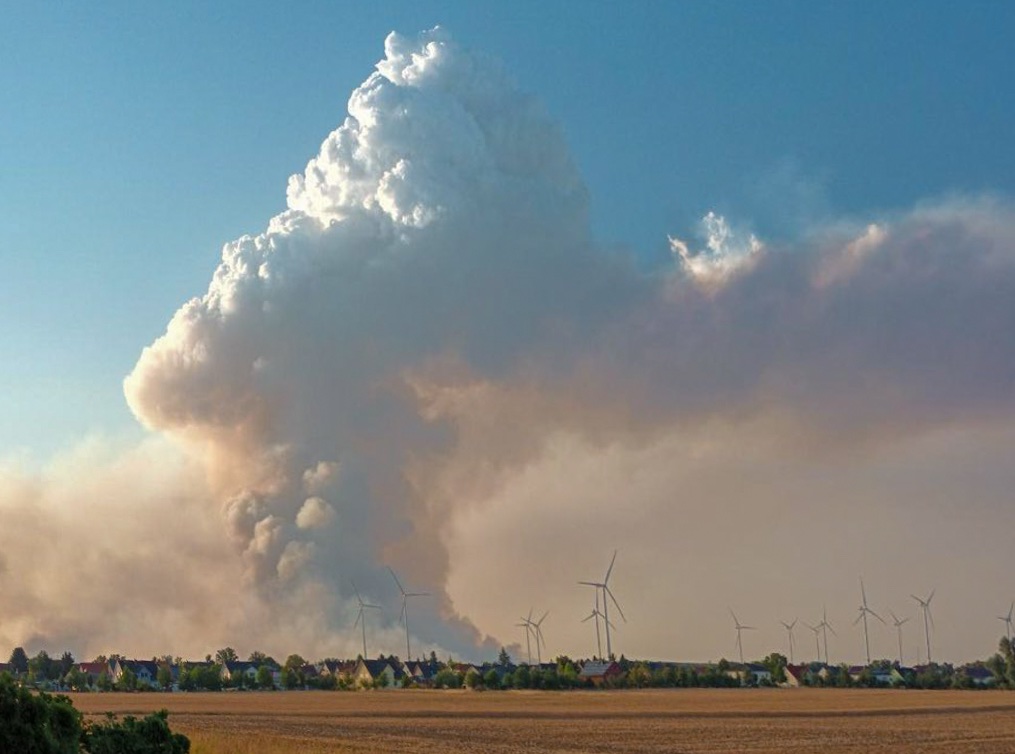
Europe’s record-breaking heatwave is entering a new and potentially more destructive phase, with southeastern countries confronting surging temperatures, an escalating wildfire threat and mounting pressure on infrastructure already strained by weeks of exceptional weather.
After scorching western and central Europe, where the heat has been linked to hundreds of excess deaths and widespread disruption, the centre of the crisis has shifted towards the Balkans. Croatia, Serbia and Albania were among the countries facing extreme conditions on Monday, as meteorologists warned that the broader weather pattern remains far from over.
Croatia’s national weather service issued its highest-level alerts for several regions, including the capital Zagreb and the Adriatic tourist centres of Split and Dubrovnik. On the island of Vis, firefighters supported by water-bombing aircraft battled a blaze that swept through pine forests, underscoring the heightened danger posed by tinder-dry vegetation and persistent high temperatures.
Neighbouring Serbia prepared for temperatures approaching 39C, with authorities warning residents to avoid unnecessary outdoor activity during the hottest hours of the day. Further south, Albanian firefighters succeeded in bringing under control a wildfire near the village of Klos after flames consumed large areas of scrubland and olive groves over the weekend.
The latest developments illustrate how prolonged periods of extreme heat are creating multiple and interconnected risks. Beyond the immediate danger of wildfires, electricity demand rises sharply as air-conditioning use increases, transport networks face thermal stress, and health systems contend with growing numbers of heat-related illnesses.
Scientists monitoring the event describe the current episode as Europe’s most severe heatwave on record. Attribution researchers say the extraordinary overnight temperatures, which prevent the human body from recovering after daytime heat, would have been virtually impossible without human-induced climate change. According to their analysis, climate change has made such exceptionally warm nights around 100 times more likely than they were only two decades ago.
The human toll is already substantial. France has reported around 1,000 excess deaths during the hottest period of the heatwave, with elderly people accounting for the majority of fatalities. Public health officials have cautioned that the final figure is likely to rise as further data become available.
Elsewhere across Europe, the extreme weather has contributed to a series of tragedies. Two young Bulgarian boys were found dead inside a parked vehicle in Cyprus during high temperatures, while two participants in a cycling event near Warsaw died after competing in conditions that coincided with Poland recording a new national temperature record of 40.5C.
Meteorologists caution that while scattered thunderstorms are developing in some regions, these will provide only localised relief. Rainfall can temporarily reduce wildfire danger, but isolated storms do little to reverse prolonged drought conditions, and lightning itself can ignite fresh fires in vulnerable landscapes.
Forecasters also warn that western Europe may soon experience another surge in temperatures. Climate specialists expect France, Germany, Italy, Spain and parts of Switzerland to face renewed extreme heat during the first week of July, raising concerns that emergency services will have little opportunity to recover from the current episode before another begins.
The recurring pattern is prompting renewed debate over Europe’s preparedness for increasingly frequent climate extremes. Governments have invested in heat-health warning systems and wildfire response capabilities since earlier catastrophic summers, yet the latest events continue to expose vulnerabilities in ageing infrastructure, urban planning and public health resilience.
For southeastern Europe, where tourism plays a central economic role during the summer months, the challenge extends beyond public safety. Wildfires near popular coastal destinations threaten local businesses, transport links and visitor confidence at the height of the holiday season.
With temperatures expected to remain well above seasonal norms across much of the continent, authorities are urging residents to limit outdoor activity, remain hydrated and exercise particular vigilance in forested areas. As the heatwave enters its second week, attention is increasingly turning from immediate emergency response towards the broader economic and environmental costs of a European summer that is already rewriting the record books.
Main Image: By © Mosbatho, CC BY 4.0, https://commons.wikimedia.org/w/index.php?curid=169366225
__________________________________________________________________________________________________________________
Click here for more News & Current Affairs at EU Today
Click here to check out EU TODAY’S SPORTS PAGE!
___________________________________________________________________________________________________________________

