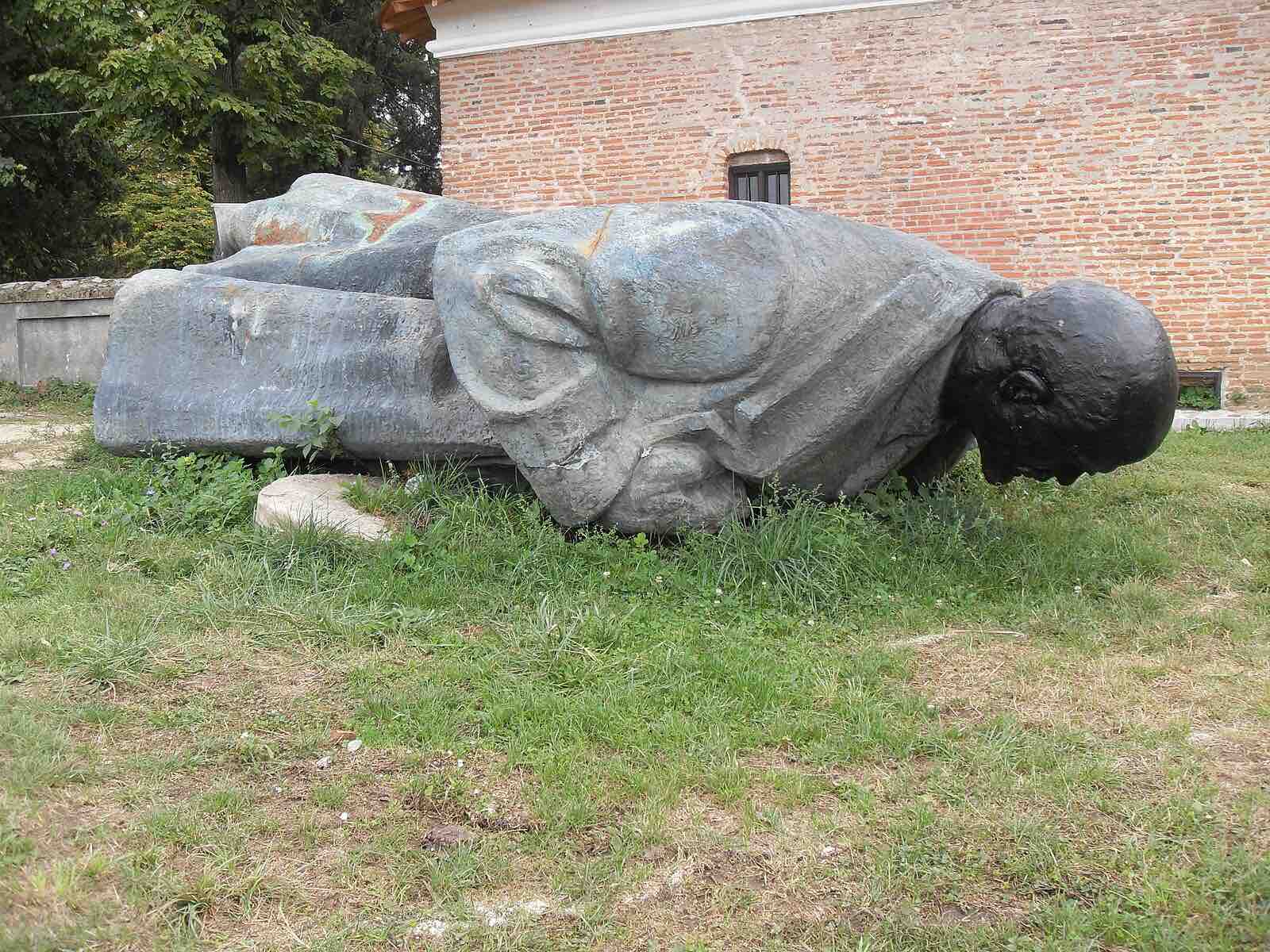
Once, Communists swaggered through the capitals of Western Europe, commanding unions, directing newspapers, and threatening—if not revolution—then at least the hope of a red dawn on the European continent.
Today, Europe’s Communist parties stand as relics: battered, marginalised, and often reduced to slogan-chanting spectacles on the periphery of public life. For all the romanticism still attached to their legacy by aging academics or adolescent radicals, the truth is plain: Communism in Europe is dying. And good riddance.
From Athens to Lisbon, the red flag still flutters—but increasingly, in the wind of historical irrelevance. This is not to say these parties are extinct. Some are still active, even noisy. But their impact on governance, policy, and the European electorate has become increasingly marginal, and the trajectory is unmistakably downward. Their slow demise is not merely an electoral phenomenon, but a civilisational correction: a welcome sign that Europe, even amid its current political turbulence, retains some memory of the 20th century’s hardest lessons.
Greece: The Last Stalinists in Europe
No Communist party in the European Union clings to orthodoxy more doggedly than Greece’s KKE (Communist Party of Greece). Founded in 1918 and operating with little ideological deviation since, the KKE remains a Marxist-Leninist stronghold—a rare and deliberate anachronism. Unlike the rebranded leftist parties of Western Europe, the KKE proudly upholds Stalinist principles, rejects the EU and NATO, and refuses to participate in coalition governance, lest it be tainted by “bourgeois compromise.”
Its consistency has earned it a small but loyal electorate, mostly drawn from trade union members and pensioners nostalgic for a mythical workers’ paradise. In the 2023 election, it won 5.3% of the vote—a respectable showing, but hardly a mandate. Its refusal to engage in parliamentary coalition-building ensures that, despite its noise, the KKE remains politically impotent. One might admire their ideological integrity—if not for the fact that their ideal society rests on a foundation of gulags, purges, and mass privation.
Portugal: From Revolution to Ritual
Portugal’s Partido Comunista Português (PCP) remains one of the more electorally visible Communist parties in Europe, largely thanks to its historic role in opposing the Salazar dictatorship. It still garners about 4–5% of the vote and maintains a respectable presence in the national parliament. But its glory days are long behind it. Once capable of shaping coalition governments, the PCP has recently been overtaken by fresher leftist formations such as the eco-socialist Left Bloc.
The PCP, much like the KKE, remains stubbornly loyal to its Marxist-Leninist roots, even as the electorate drifts toward more modern, market-aware models of the left. Its presence in Lisbon is now more ceremonial than substantive—a relic of a revolutionary past that no longer inspires, merely endures.
France: The Shrinking Shadow of the PCF
No Communist party west of the Iron Curtain ever matched the Parti Communiste Français (PCF) in influence during the Cold War. In the 1940s and 50s, it commanded over 25% of the vote, enjoyed the loyalty of millions of workers, and hovered constantly on the brink of national power. Today, it commands little more than 2–3%, sustained largely by alliance politics with the likes of Jean-Luc Mélenchon’s La France Insoumise.
The PCF has rebranded repeatedly, abandoning its old Soviet loyalties and embracing a more palatable left-populist tone. But the French working class it once claimed to represent has found new champions—or turned to the right entirely. Many disillusioned blue-collar voters now march under the banner of Marine Le Pen, not Marx. The decline of the PCF reflects the broader collapse of France’s post-war social contract: the end of class-based politics, and the rise of a new, unpredictable populism. But the Communist answer—more nationalisation, more union power, more class warfare—rings increasingly hollow.
Cyprus: The Last Red Republic?
Cyprus presents a unique case. Its AKEL (Progressive Party of Working People) remains one of the most electorally potent Communist-rooted parties in the EU, regularly securing over 20% of the vote. It even governed the country from 2008 to 2013, during which time President Demetris Christofias presided over an economic implosion that required an EU bailout. The party has since been pushed into opposition, though it remains a fixture in parliament.
What sets AKEL apart is its nationalism—specifically, its commitment to Cypriot reunification and resistance to Turkish influence in the north. That patriotic streak has helped shield it from the usual electoral collapse that afflicts Communist parties. Yet even AKEL is slowly being overtaken by more technocratic or centrist alternatives. Its ideological commitments are now more nostalgic than revolutionary. The party is less a vanguard of workers’ liberation than a kind of political heritage site—more concerned with preserving its historic identity than charting a plausible future.
Italy and Spain: Ruins of Revolution
Italy’s once-mighty Partito Comunista Italiano (PCI) was, at its peak, the largest Communist party in the West, routinely polling above 30% and claiming millions of adherents. But the Cold War’s end shattered its coherence. The PCI dissolved in 1991, morphing into the social-democratic Democratic Party of the Left, while its orthodox rump, the PRC (Communist Refoundation Party), splintered into irrelevance. Today, Italy’s Communists are a scattered assortment of micro-parties and protest groups with negligible political influence.
Spain’s Partido Comunista de España (PCE) survives as part of the broader Izquierda Unida (United Left) and now finds itself within the governing Sumar coalition. It holds some ministerial posts, most notably in labour. But this is hardly the revolution Marx imagined. Spain’s left-wing coalition, constrained by fiscal reality and EU obligations, is more likely to fiddle with minimum wage rules than seize the means of production.
What remains of Iberian Communism is a kind of boutique radicalism: performative, marginal, and often more interested in virtue signalling than governance.
Germany and the East: Ghosts and Legacies
In Germany, the once-potent SED (ruling party of East Germany) evolved through several incarnations, ultimately becoming part of Die Linke, a broader left-socialist party that also draws on Green and social-democratic traditions. Die Linke has had fleeting successes, particularly in eastern Germany, but is now in visible decline, riven by internal splits and outflanked by both Greens and right-wing populists.
The overtly Communist DKP (German Communist Party) is now a political non-entity. Elsewhere in Eastern Europe, Communist parties have fared no better. In the Czech Republic, the KSČM—once a significant parliamentary force—was wiped out in 2021. In Poland, Hungary, and the Baltics, Communist legacies are toxic, and electoral prospects are nil.
Why Communism Failed (Again)
The decline of Europe’s Communist parties is not merely a political story—it is a cultural and moral one. These parties failed because their core assumptions were not only economically unsound, but morally bankrupt. The notion that the state can (and should) direct every aspect of life—industry, education, media, even thought—was not just inefficient. It was tyrannical.
Wherever Communist parties held real power—in the Eastern Bloc, in Maoist China, in Southeast Asia—they left behind a legacy of economic devastation, repression, and societal trauma. Their European cousins may not have been as brutal, but they were no less misguided. Their industrial policy was a fantasy. Their class analysis was reductionist. Their worldview, fundamentally anti-democratic.
Their survival today, in pockets of Greece or Portugal, is not evidence of relevance but of inertia. They persist not because they offer solutions, but because a small cohort of the disaffected cannot let go of the past. In an age of climate change, AI disruption, and geopolitical flux, their 19th-century dogmas offer only dead ends.
The Road Ahead: A Museum, Not a Movement
That said, one must avoid complacency. The ideological space once occupied by Communism is now being filled by other radicalisms—some green, some nationalist, some anarchic. The decline of Communist parties does not mean the end of political extremism. Rather, the energies they once channelled are now diffused through new populisms, from the far-right to the eco-Left.
What distinguishes these new movements, however, is their lack of doctrinal rigidity. The modern populist is often opportunistic rather than ideological. That makes them dangerous in new ways—but also less enduring. Communism, by contrast, offered a total system. Its appeal lay in its simplicity and its promise of redemption through struggle. Once exposed as fraudulent, that promise lost its grip.
And so, the future of Communism in Europe is best understood not as a threat, but as a curiosity. These parties will likely linger—organising marches, publishing manifestos, attending international conferences in Havana or Pyongyang. But they will not govern. They will not shape the economy. They will not bring about the revolution.
In time, they will become what they already are: political museums, lovingly curated by the last believers.
And for that, we should be quietly, deeply thankful.
Main Image: Fallen statue of Lenin next to the Mogoşoaia Palace (Romania)