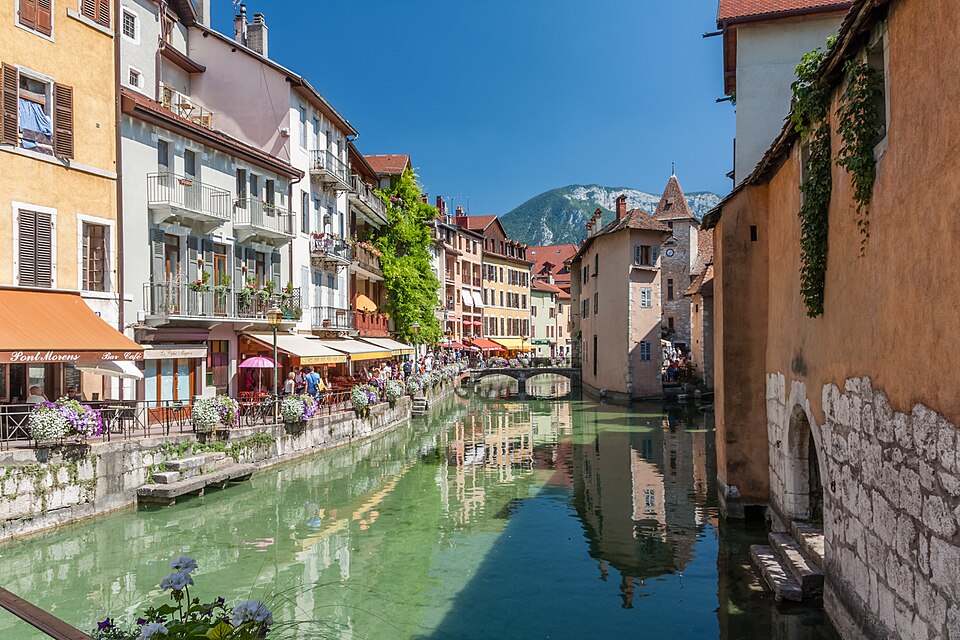
Nestled in the shadow of the French Alps, where the crystalline waters of Lake Annecy meet medieval architecture and a vibrant cultural heritage, the town of Annecy has long captivated the imagination of travellers.
Often dubbed the “Venice of the Alps” due to its picturesque canals and charming old quarter, Annecy’s appeal lies in its seamless blend of history, natural beauty, and modern sophistication.
Today, it stands as one of France’s most celebrated tourist destinations, drawing visitors from across the globe to its shores. Yet, its story stretches back centuries, rooted in a rich tapestry of conquest, trade, and resilience.
A Medieval Gem Takes Shape
Annecy’s origins can be traced to antiquity, though it was in the medieval period that the town began to carve out its distinct identity. Archaeological evidence suggests that the area around Lake Annecy was inhabited as early as the Neolithic era, with Roman influence leaving its mark through settlements and trade routes.
However, it was the establishment of Annecy as a fortified town in the 12th century that set the stage for its enduring significance.
Perched strategically between Geneva and Chambéry, Annecy became a prized possession in the shifting power dynamics of the region. The Counts of Geneva, a powerful noble family, made Annecy their stronghold in the early Middle Ages. The iconic Château d’Annecy, a hulking fortress overlooking the town, was constructed during this period, serving both as a residence and a defensive bastion.
Its imposing towers and thick stone walls remain a testament to the town’s medieval might, though today they house a museum chronicling Annecy’s history and the artistry of the Alpine region. By the 14th century, the town had passed into the hands of the House of Savoy, a dynasty that would shape much of its architectural and cultural character.
Under Savoyard rule, Annecy flourished as a centre of trade and craftsmanship. The Thiou River, a short but vital waterway flowing from Lake Annecy through the town, powered mills and workshops, fostering a burgeoning economy based on textiles and metallurgy.
The river’s canals, crisscrossing the old town, became the lifeblood of this industrious community, their banks lined with half-timbered houses painted in soft pastels. These same canals, now framed by flower boxes and bustling cafés, are among Annecy’s most photographed features, evoking a postcard-perfect charm that belies their utilitarian origins.
A Town of Faith and Reformation
Annecy’s historical narrative took a dramatic turn in the 16th century, when it emerged as a key player in the Catholic Counter-Reformation. Following the Protestant takeover of Geneva in 1536, the Catholic bishops of that city sought refuge in Annecy, bringing with them religious fervour and intellectual prestige. The town became an ecclesiastical hub, its streets alive with the comings and goings of clergy and scholars.
It was during this period that St. Francis de Sales, a native of the nearby Château de Sales, rose to prominence as Bishop of Geneva-in-exile. His gentle piety and eloquent writings earned him sainthood and left an indelible mark on Annecy, where the Basilica of the Visitation, housing his relics, stands as a pilgrimage site to this day.
The religious upheaval of the era also brought challenges. Annecy’s proximity to Protestant strongholds meant it was never far from conflict, yet its leaders navigated these turbulent waters with a pragmatism that preserved its prosperity. The town’s dual role as a spiritual and economic centre ensured its survival through the wars of religion, laying the groundwork for its later evolution.
From Savoy to France
Annecy’s fate shifted again in 1860, when the Duchy of Savoy was annexed by France under the Treaty of Turin. This transition marked the end of centuries of Savoyard rule and integrated Annecy into the French nation. While some locals mourned the loss of their regional identity, the change brought new opportunities.
The arrival of the railway in the late 19th century connected Annecy to larger markets, spurring industrial growth and cementing its status as a regional hub.
Yet, it was the town’s natural beauty that began to draw attention beyond its borders. The pristine waters of Lake Annecy, fed by mountain springs and ringed by snow-capped peaks, became a magnet for the Victorian elite seeking respite from urban life.
Early travel writers waxed lyrical about its “emerald depths” and “sylvan shores,” planting the seeds of Annecy’s tourism industry. By the early 20th century, the town was welcoming a steady stream of visitors, from artists captivated by its light to adventurers eager to explore the surrounding Alps.
The Modern Renaissance
Annecy’s transformation into a major tourist destination accelerated in the post-war years, as Europe’s growing middle class sought out destinations that combined culture, relaxation, and outdoor pursuits. The old town, with its labyrinthine streets and medieval landmarks like the Palais de l’Île—a former prison turned museum—offered a glimpse into a storied past.

The author taking in the fresh air – and the beauty – of Lake Annecy!
Meanwhile, the lake provided a playground for sailing, swimming, and cycling along its scenic shores.
The annual Annecy International Animation Film Festival, launched in 1960, added a contemporary flair, attracting filmmakers and creatives from around the world and cementing the town’s reputation as a cultural hotspot.
Today, Annecy welcomes over three million visitors annually, a figure that underlines its status as a jewel in France’s tourism crown. The town’s appeal lies in its versatility: it is as much a haven for history buffs as it is for adrenaline seekers.
In summer, the lake buzzes with paddleboarders and kayakers, while the nearby Semnoz and Aravis mountains offer hiking and paragliding. Winter transforms the region into a gateway to some of the Alps’ finest ski resorts, with Megève and Chamonix just a short drive away.
The culinary scene, too, has evolved, with Michelin-starred restaurants like Le Clos des Sens showcasing local ingredients—think lake fish and Savoyard cheeses—alongside traditional bistros serving hearty tartiflette.
Challenges and Preservation
Annecy’s success has not come without its challenges. The influx of tourists has strained infrastructure and raised concerns about overdevelopment.
Local authorities have responded with measures to protect the town’s heritage, including strict zoning laws to preserve the old quarter’s character and initiatives to maintain the lake’s exceptional water quality—among the purest in Europe. Sustainability is now a buzzword here, with efforts to promote eco-friendly tourism, such as electric boat rentals and expanded cycling paths.
The town’s residents, known as Annéciens, take pride in their home’s global appeal while striving to retain its small-town soul. Community festivals, like the Fête du Lac with its dazzling fireworks, celebrate Annecy’s traditions, drawing locals and visitors alike into a shared experience.
This balance between past and present, between welcoming the world and safeguarding its essence, is perhaps Annecy’s greatest achievement.
A Destination for All Seasons
As Annecy looks to the future, its place in the pantheon of great European destinations seems assured. Its history—etched in stone ramparts, cobbled streets, and the gentle flow of the Thiou—provides a foundation that few towns can rival. Yet, it is the marriage of this heritage with the stunning Alpine landscape and a forward-thinking ethos that keeps visitors returning year after year.
From its medieval roots as a Savoyard stronghold to its modern incarnation as a tourist mecca, Annecy has weathered centuries of change with grace. Today, it stands as a testament to the enduring allure of places that offer both beauty and depth—a town where every canal, castle, and mountain vista tells a story. For those seeking a slice of France that feels both timeless and vibrantly alive, Annecy remains an irresistible draw.
Main Image: Markus Trienke – Annecy via Wikipedia.
Click here for more News & Current Affairs at EU Today