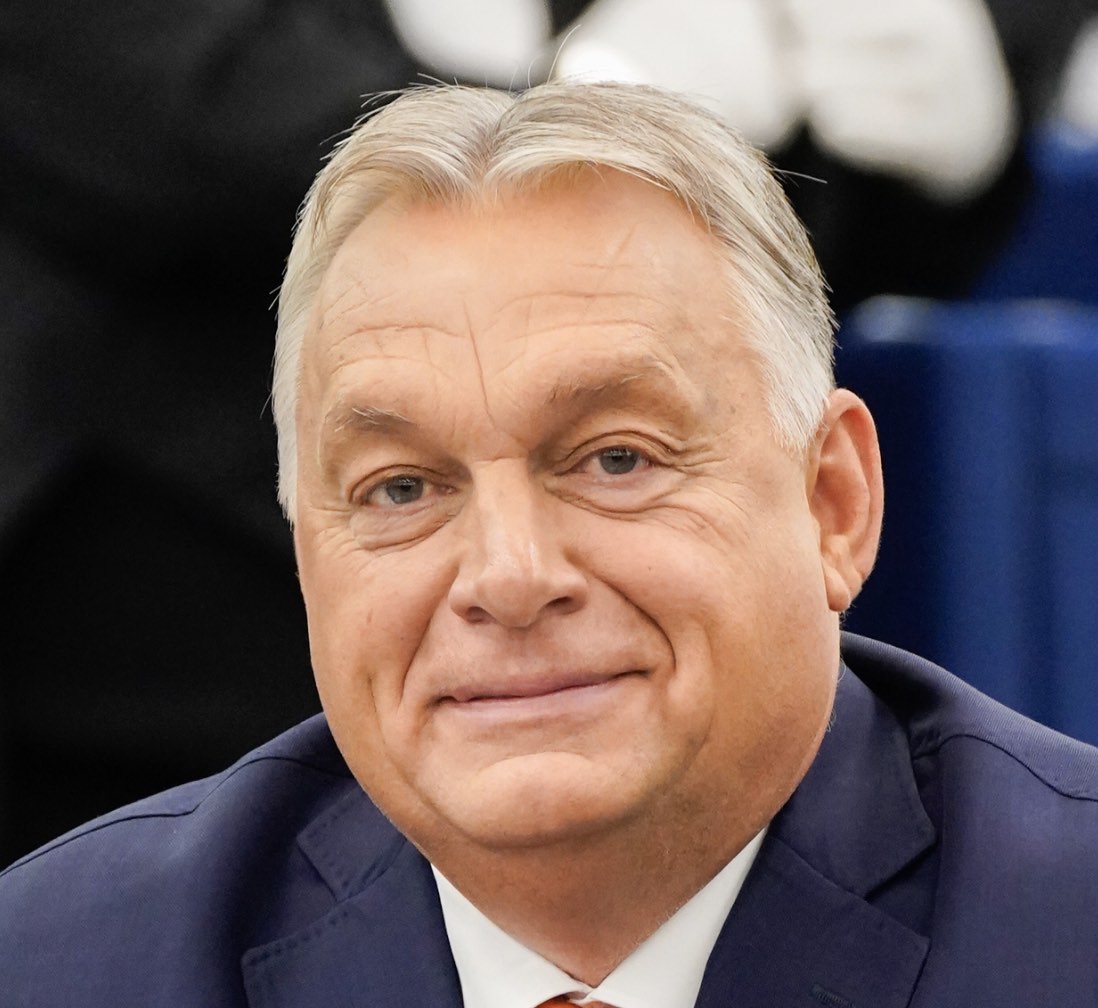
Hungary’s long-entrenched prime minister, Viktor Orbán, has spent much of the past decade cultivating an image of defiant sovereignty.
Yet as European leaders gather in Brussels to pressure him over his latest obstruction—blocking a €90 billion loan to Ukraine—that carefully constructed persona is beginning to look less like strength and more like isolation.
The immediate dispute is almost absurd in its narrowness. Orbán has refused to lift his veto on urgently needed EU financial support for Kyiv unless oil resumes flowing through the Soviet-era Druzhba pipeline, damaged earlier this year in a Russian strike. His government has reduced a war of survival on Europe’s eastern flank to a transactional slogan—“no oil, no money”—a formulation that might appeal to domestic populism but has appalled allies across the continent.
What makes this episode especially corrosive is not simply the veto itself, but the timing. The loan had already been agreed by all 27 EU member states in December. Orbán’s reversal has been read in Brussels as a breach of trust—proof that commitments made by Budapest can be casually discarded when politically convenient.
European officials have not concealed their frustration. There is growing concern that Hungary is no longer merely an awkward partner but an active saboteur of collective decision-making. Diplomats warn that the delay risks undermining Ukraine’s financial stability at a critical juncture in its war against Russia, while simultaneously exposing dangerous fractures within the European Union.
Orbán, for his part, has attempted to frame the dispute as a matter of national energy security. Hungary and Slovakia remain uniquely dependent on Russian oil delivered via the Druzhba pipeline, having secured exemptions from EU sanctions. But this defence rings hollow. The pipeline damage was caused by Russian military action, not Ukrainian policy, and Kyiv has already accepted EU assistance to repair it—albeit on a realistic timeline measured in weeks, not days.
In reality, the standoff looks increasingly like electoral theatre. Hungary heads to the polls on April 12, and Orbán faces his most serious challenge in years. Opinion polls suggest a tightening race, with the prime minister trailing in the final stretch—a remarkable development for a man who has dominated Hungarian politics since 2010.
This context matters. Orbán’s hardline posture toward Ukraine plays well with segments of his base, particularly when packaged as resistance to foreign pressure. But it also exposes a vulnerability: the need to escalate conflicts abroad to shore up support at home. Far from projecting confidence, it hints at anxiety.
His principal challenger, Péter Magyar, has tapped into a growing fatigue with Orbán’s style of governance—marked by centralisation, cronyism, and a steady erosion of institutional independence. While Hungary’s electoral system still favours the ruling Fidesz party, the opposition has achieved something previously thought improbable: turning the election into a genuine contest.
Crucially, Orbán’s behaviour on the European stage may be accelerating his domestic decline. For years, he has positioned himself as a skilful negotiator extracting concessions from Brussels. Now, however, he appears increasingly marginalised. EU leaders are openly discussing mechanisms to bypass Hungary’s veto altogether—a dramatic step that would have been unthinkable not long ago.
Such talk underscores a broader shift. Orbán is no longer seen as a necessary irritant within the EU, but as a liability. His alignment with Moscow, repeated obstruction of sanctions, and willingness to weaponise unanimity rules have eroded patience among even his erstwhile allies.
At home, the consequences are becoming harder to ignore. Hungary’s economy remains fragile, heavily dependent on EU funds that have been partially frozen over rule-of-law concerns. The spectacle of Orbán alienating the very institutions that underpin Hungary’s prosperity risks reinforcing a simple but potent opposition message: that his leadership is costing the country dearly.
There is also a generational dimension. Younger Hungarian voters, more attuned to Europe and less receptive to nationalist rhetoric, appear increasingly sceptical of Orbán’s confrontational approach. The image of Hungary as a perpetual outlier—blocking aid to a country under invasion while demanding concessions for itself—sits uneasily with a population that still overwhelmingly supports EU membership.
None of this guarantees Orbán’s defeat. His control over media, institutions, and electoral rules remains formidable. Even critics concede that dismantling the system he has built will be extraordinarily difficult.
Yet the direction of travel is unmistakable. For the first time in over a decade, Orbán looks beatable. His aura of inevitability has been punctured, replaced by the far less imposing reality of a leader scrambling to maintain his grip on power.
Ironically, it may be his foreign policy—once touted as a masterclass in strategic autonomy—that ultimately contributes to his undoing. By turning Hungary into a spoiler within the European Union, Orbán has not strengthened his country’s position; he has weakened it, diplomatically and economically alike.
The coming weeks will determine whether Hungarian voters are prepared to draw the same conclusion. If they do, the EU may soon find that its most persistent internal critic has been removed not by Brussels, but by the electorate he has long claimed to represent.
And should that happen, Orbán’s legacy will be reframed not as that of a strongman who reshaped Hungary, but as a leader who overplayed his hand—mistaking obstruction for influence, and defiance for strength.
Main Image: © European Union, 1998 – 2026 via Wikipedia
A New Dawn in Budapest: Why Peter Magyar Represents Hungary’s Best Hope Against Orbán’s Autocracy
Click here for more News & Current Affairs at EU Today
Click here to check out EU TODAY’S SPORTS PAGE!
___________________________________________________________________________________________________________________