
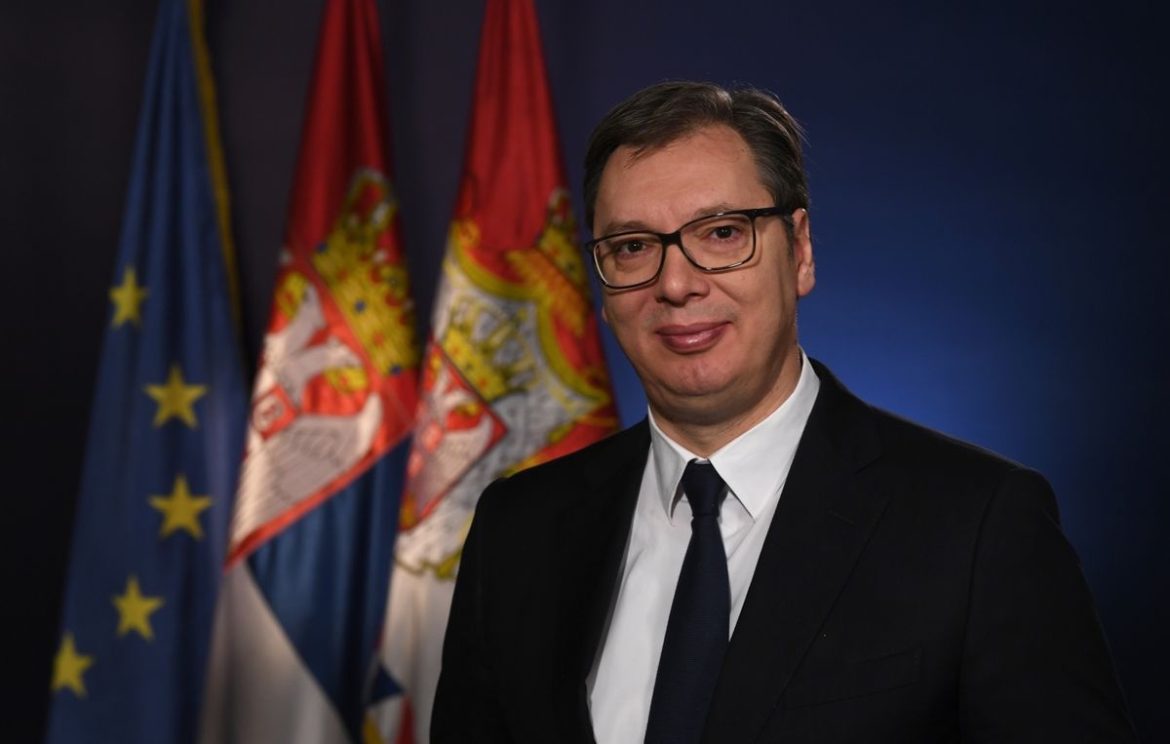
For much of the past decade, Aleksandar Vučić has occupied a unique position in European politics. To supporters, he has been a guarantor of stability in a region historically prone to turbulence. To critics, he has become the embodiment of a political system that concentrates power, marginalises opponents and blurs the line between state and party.
Now, after thirteen years as Serbia’s dominant political figure, first as prime minister and then as president, Vučić says he intends to resign within weeks and trigger early presidential and parliamentary elections. The announcement follows eighteen months of anti-government demonstrations that have become the largest protest movement Serbia has witnessed since the fall of Slobodan Milošević in 2000.
Whether the move marks a genuine departure from power or merely a transition into a different office remains the central question confronting Serbia.
The timing is significant. The protests were initially sparked by the collapse of a railway station canopy in Novi Sad in November 2024, a disaster that killed sixteen people and unleashed public anger over alleged corruption, poor oversight and the management of major infrastructure projects. Student-led demonstrations gradually evolved into a broader challenge to Vučić’s rule and to the political culture that has developed under the Serbian Progressive Party (SNS).
Vučić rejects accusations of corruption and authoritarianism. Yet the scale and persistence of the protests have demonstrated that a substantial portion of Serbian society is demanding political change. His announcement appears designed to seize the initiative before that demand becomes unmanageable.
The irony is that Vučić’s political career has always been defined by adaptation.
Unlike many leaders who emerged from the ruins of communist Eastern Europe, Vučić was never a communist politician. He entered public life through the nationalist Serbian Radical Party during the turbulent 1990s and built his reputation within a movement that stood in opposition to both Western influence and the communist traditions of the former Yugoslavia.
Over time, however, he reinvented himself. The fiery nationalist of the 1990s gradually transformed into a pragmatic statesman capable of speaking to Brussels, Moscow, Beijing and Washington in the same week.
That balancing act has become the defining feature of modern Serbia.
Officially, Serbia remains committed to joining the European Union. Economically, the bloc remains Belgrade’s most important partner. Yet Serbia has also maintained unusually close relations with Russia, refusing for years to fully align itself with Western sanctions and continuing to value Moscow’s support on the question of Kosovo.
Vučić’s relationship with Russian President Vladimir Putin has therefore attracted constant scrutiny. The two leaders have met regularly over the years, and Russia has remained a crucial diplomatic ally for Serbia. Yet describing Vučić as simply “pro-Russian” misses the complexity of his approach.
His foreign policy has been less ideological than transactional. Moscow offers diplomatic support, particularly on Kosovo. The European Union offers trade, investment and the prospect of long-term integration. China provides infrastructure financing and strategic investment. Vučić has spent years attempting to extract benefits from all three relationships simultaneously.
That strategy brought considerable political dividends during more stable times. Today, however, it appears increasingly difficult to sustain.
European officials have become more vocal in their criticism of democratic backsliding in Serbia. At the same time, Russia’s international position has changed dramatically since the invasion of Ukraine. Maintaining close ties with both Brussels and Moscow now requires far greater political dexterity than it did a decade ago.
Against this backdrop, Vučić’s resignation announcement may represent less a retreat than a repositioning. Several observers have suggested that he could seek a return to the premiership if his party performs well in the coming elections. Such a move would allow him to remain the dominant figure in Serbian politics while formally leaving the presidency.
Whether Serbian voters accept such an arrangement remains uncertain.
What is clear is that the political landscape has changed. The protest movement has demonstrated an ability to mobilise large sections of society. Younger voters appear increasingly willing to challenge established political structures. And the aura of inevitability that once surrounded Vučić has begun to fade.
Yet writing his political obituary would be premature. Few politicians in contemporary Europe have demonstrated a greater capacity for survival. He has repeatedly navigated crises that many believed would end his career.
The coming months will therefore determine not only Vučić’s future but also Serbia’s direction. The country stands at the intersection of competing geopolitical influences, domestic frustrations and economic ambitions. The next election may reveal whether Serbia is ready for a new political chapter—or whether the man who has dominated its politics for more than a decade has merely found another way to remain at the centre of power.
Main Image: Official photo of the President of the Republic of Serbia Aleksandar Vučić/ Photo Presidency: Dimitrije Goll
__________________________________________________________________________________________________________________
Click here for more News & Current Affairs at EU Today
Click here to check out EU TODAY’S SPORTS PAGE!
___________________________________________________________________________________________________________________

