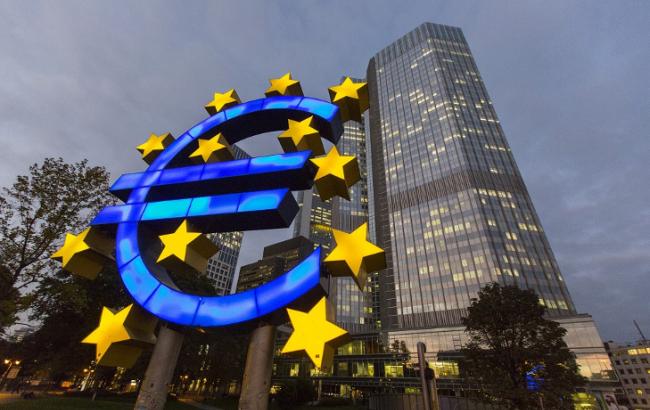
A new working paper from the European Central Bank, titled Violent conflict and cross-border lending, lays bare an uncomfortable truth about the moral architecture of global finance.
In times of conflict, international banks recoil, pulling up their drawbridges and retreating from exposed positions. The paper’s findings are clinical, technical, and deeply revealing: war makes lenders nervous, but only selectively so.
The study, co-authored by Ralph De Haas, Mikhail Mamonov, Alexander Popov, and Iliriana Shala, combs through decades of cross-border banking data, offering a granular view of how foreign financial institutions respond to violent conflict in borrower countries. Their conclusion is hardly flattering to the ideals often preached by Western financial institutions. Far from upholding stability or contributing to economic resilience, banks—particularly those headquartered in advanced economies—tend to act with self-preserving haste. When war breaks out, they do not stand their ground; they cut their losses.
A Coldly Rational Exodus
The authors examine 112 conflict episodes in 148 host countries from 1977 to 2022, drawing on BIS locational banking statistics. Their key finding is stark: foreign banks reduce their lending to conflict-affected countries by around 20% in the first year of violence, and by over 40% over a three-year horizon. But this contraction is not universal. It is overwhelmingly driven by banks based in high-income democracies—namely the United States, the United Kingdom, Germany, and France.
There is a grim logic to it. Democratically accountable banks are more responsive to political and reputational risks. War introduces not only economic uncertainty but also sanctions, media scrutiny, and potential consumer backlash. Lending to a pariah state—or even one that merely borders on instability—suddenly becomes a career-threatening liability. Hence the preference to divest early and avoid association with regimes in turmoil.
Yet what appears rational from the boardroom can be ruinous on the ground. The withdrawal of credit exacerbates the economic consequences of war, choking off vital capital when it is most needed for reconstruction, humanitarian response, and basic market functioning. It is precisely in these periods of national emergency that economies need credit lifelines—not the cold shoulder of Western finance.
Authoritarian Money Holds Its Nerve
What makes the ECB study especially intriguing, and politically charged, is its finding that banks from authoritarian states behave very differently. Institutions headquartered in China, Russia, and Gulf monarchies do not cut their cross-border lending nearly as sharply when conflict erupts. On the contrary, some increase their market share as their Western rivals flee.
This divergence is more than just a data point. It is a strategic reality. While democratic nations often seek to punish rogue regimes through sanctions and financial ostracism, authoritarian lenders see opportunity. The report notes that banks from non-democratic jurisdictions tend to view war through a more transactional lens. They are less concerned with reputational risk and more focused on geopolitical positioning.
Indeed, Chinese banks in particular have emerged as silent benefactors in many conflict-afflicted states. Their lending practices, although opaque, are not governed by the same risk matrices as their Western counterparts. Beijing, unlike Washington or Brussels, does not predicate financial support on governance reforms or military de-escalation. In this sense, capital becomes a tool of influence rather than a function of fiduciary duty.
Geopolitics Enters the Balance Sheet
The implications of this report stretch well beyond the corridors of the ECB. It challenges the West’s longstanding assumption that global finance is a neutral force, responsive only to risk and return. In truth, financial flows are increasingly shaped by politics—and not just the politics of the receiving state, but also of the lender’s homeland.
This matters because the global financial system is fragmenting. The post-Cold War era, when Western financial dominance seemed unassailable, is waning. As the ECB paper illustrates, the retreat of Western banks from volatile regions has opened space for alternative capital providers who are less squeamish about conflict. The result is a bifurcated world: one in which war-torn nations turn not to the IMF or Deutsche Bank, but to the China Development Bank or Sberbank.
The consequences are stark. Lending from authoritarian states often comes with different conditions—or none at all. There is little emphasis on transparency, anti-corruption, or human rights. Instead, financial relationships become vectors of strategic influence. In effect, capital becomes an instrument of soft power, entrenching spheres of interest rather than promoting economic recovery.
Moral Hazard in Western Prudence
At a glance, the cautious behaviour of Western banks might seem prudent. After all, shareholders demand risk-adjusted returns, not geopolitical adventurism. But there is a moral hazard in this retreat. By abandoning fragile states at their most vulnerable, the West cedes not just market share but political leverage. And when authoritarian creditors fill the void, they do so with strings attached.
The irony, of course, is that Western governments often preach resilience, aid, and reconstruction, while the banks they oversee do the opposite. Development rhetoric rings hollow when backed by a credit crunch. This inconsistency between public policy and private capital undermines the credibility of Western engagement. It also reinforces the perception—common in the Global South—that the West’s commitment to development evaporates the moment things turn ugly.
The report hints at this contradiction but does not dwell on it. It remains a work of technical economics, not geopolitical lament. Yet the authors cannot avoid drawing attention to the risks of uncoordinated responses. The fragmented nature of global finance, they suggest, may amplify instability rather than contain it.
A Call for Coherence
What, then, is to be done? The ECB paper stops short of offering prescriptions, but the policy implications are hard to ignore. If Western states wish to retain influence in conflict-prone regions, they must find ways to align public objectives with private incentives. This might mean providing credit guarantees, creating war risk insurance schemes, or mobilising development finance institutions to crowd in private capital.
It could also require a rethinking of sanctions strategy. While financial pressure remains a vital tool of statecraft, its unintended consequences—especially when unilateral—must be weighed carefully. Blanket divestment often leaves vacuums that authoritarian regimes are only too happy to fill.
Finally, the West must come to terms with the fact that capital does not flow in a vacuum. It flows through ideological filters, geopolitical calculations, and domestic political constraints. If the institutions of liberal capitalism hope to outcompete their authoritarian rivals, they must demonstrate not just efficiency, but resilience and commitment—even in the face of conflict.
Conflict, Capital, and the Contest for the Global South
The ECB’s Violent conflict and cross-border lending report deserves wider attention than it will likely receive. Beneath its econometric regressions lies a profound diagnosis of the changing nature of global power. Western banks are not just leaving war zones; they are leaving the field open for competitors whose capital is less burdened by scruples.
That may be good business. But it is poor strategy. If the West continues to treat conflict-affected regions as financial contagions to be contained rather than partners to be supported, it should not be surprised when influence shifts accordingly. Money, like nature, abhors a vacuum—and today, the vacuum is being filled from the East.
View the full report here: https://www.ecb.europa.eu/pub/pdf/scpwps/ecb.wp3073~85c24bca25.en.pdf?4c6dc2cbc6d4a9d7dcefe776976907e0