Ukrainian forces say they have retaken significant parts of Kupiansk in Kharkiv region and cut off a Russian grouping inside the town, in what Kyiv presents as a sharp reversal after weeks of contested reporting about the situation on the Oskil River line.
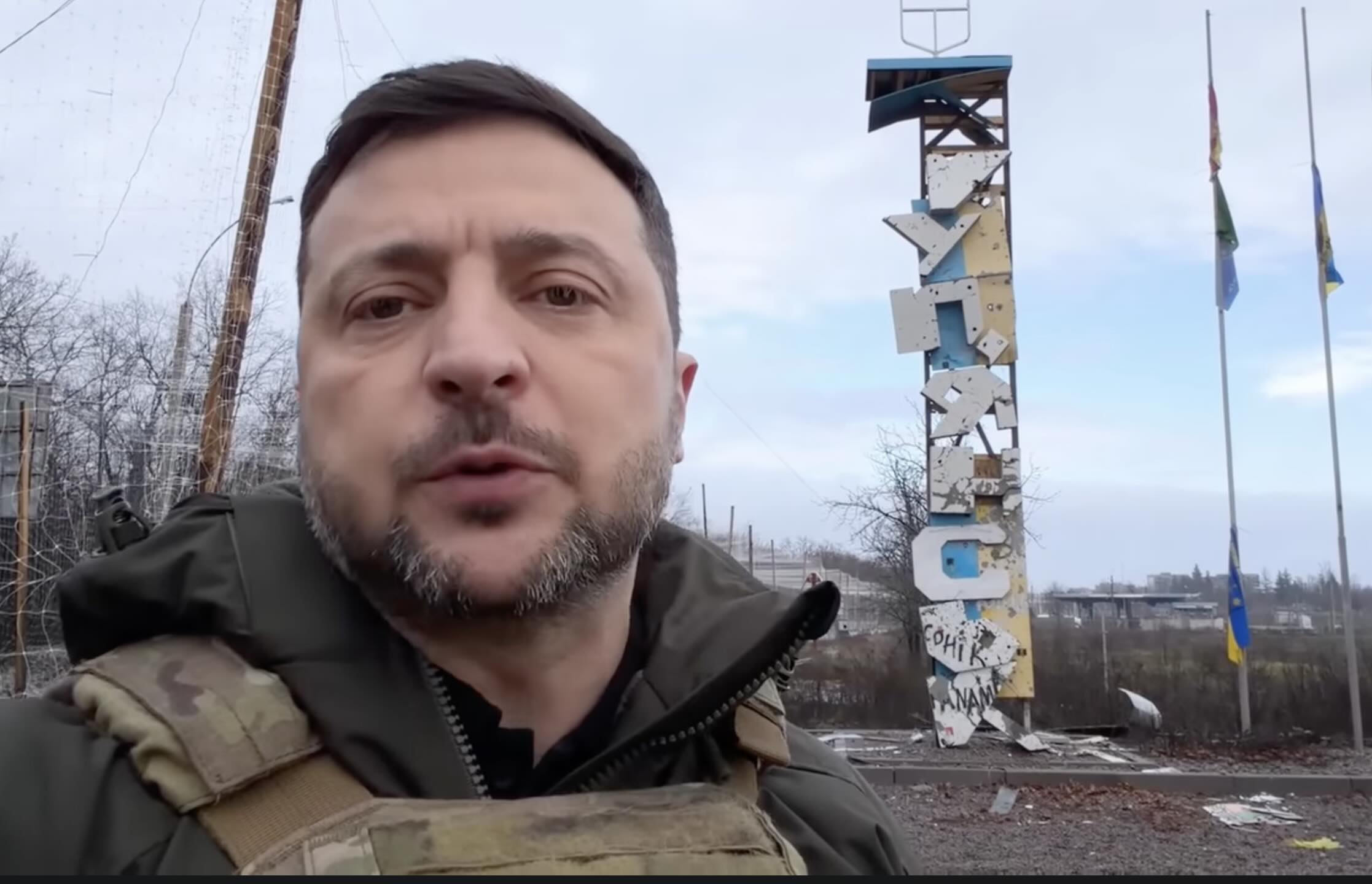
President Volodymyr Zelenskyy travelled to the area on Friday and released a short video from the town’s entrance sign, presenting the operation as both a military and diplomatic signal.
Kupiansk has been a focal point of the northern front in recent months. Russia has repeatedly claimed progress there, including statements in November that the town was under full Russian control. Ukraine denied those claims at the time. On 12 December, Ukrainian statements shifted from denial to describing a successful counterattack and partial encirclement of Russian troops in the city centre.
In the video posted on social media, Zelenskyy, wearing body armour, stood in front of a damaged sign reading “Kupiansk” and congratulated Ukrainian Ground Forces personnel on their service day, which Ukraine marks on 12 December. He said success at the front was essential for achieving results in diplomacy and for strengthening Ukraine’s position in talks about ending the war.
Ukraine’s National Guard said the operation on the Kupiansk axis was led by the Khartiia Corps. The corps stated that Ukrainian units entered the town and worked along multiple axes to sever Russian logistics, leaving Russian troops “completely cut off” in the city. Several hundred Russian troops were assessed to be surrounded.
The troops from the 475th Assault Regiment (Code 9.2), supported by a battalion of the 92nd Assault Brigade, had liberated Kindrashivka and surrounding forested areas. It also reported that the 13th Khartiia operational brigade had liberated Radkivka and nearby terrain and pushed Russian forces out of several dozen houses in northern Kupiansk. These moves, in Ukraine’s account, were aimed at isolating Russian groups in the built-up area by cutting supply routes and restricting movement between positions.
The same report said Russian forces had earlier pushed into Kupiansk up to six kilometres from the Oskil River, creating what Ukraine described as a critical situation in the town and nearby villages. It added that, in September, Commander-in-Chief Oleksandr Syrskyi formed a “search-and-strike” grouping involving Khartiia units and other formations, alongside a separate “Kupiansk” tactical grouping operating inside the town.
According to Ukrainska Pravda’s account of the Khartiia commander’s remarks, Ukraine claims more than 1,000 verified Russian deaths in the area since September, with no more than 200 Russian troops currently assessed to remain inside the city itself. The commander also said Ukrainian forces were observing “many foreigners”, including from Syria and African countries.
Ukrainian accounts also describe Russian resupply as heavily constrained. They say Ukrainian forces brought the exits of a gas pipeline route used by Russian troops under fire control, leaving drones as the only remaining means of delivering supplies. The report also said that up to 500 civilians were still in the city, complicating combat operations.
Open-source mapping has offered some support to the broad outline of Ukraine’s claims, though it does not confirm casualty figures. Reuters reported that Ukraine’s Deep State battlefield mapping project showed at least three villages to the north and west of Kupiansk under Ukrainian control and suggested that Ukrainian forces had regained northern districts of the town, with indications of Russian elements boxed into the centre.
The reported developments come amid intensified diplomatic activity framed as “U.S.-backed” peace efforts. Kyiv has used the Kupiansk narrative to challenge Moscow’s claims of steady advances across the front. Russia has said it is moving “on all fronts” and has asserted that it seized both Kupiansk and the eastern city of Pokrovsk—claims Ukraine rejects. In late November, the Kremlin also claimed that thousands of Ukrainian troops were trapped near the Oskil River.
On the ground, the situation remains fluid and difficult to verify independently. What can be said with confidence is that Ukraine is publicly claiming a locally significant counterattack around Kupiansk, underscored by a presidential visit designed to demonstrate control of access routes and confidence in the immediate security picture.