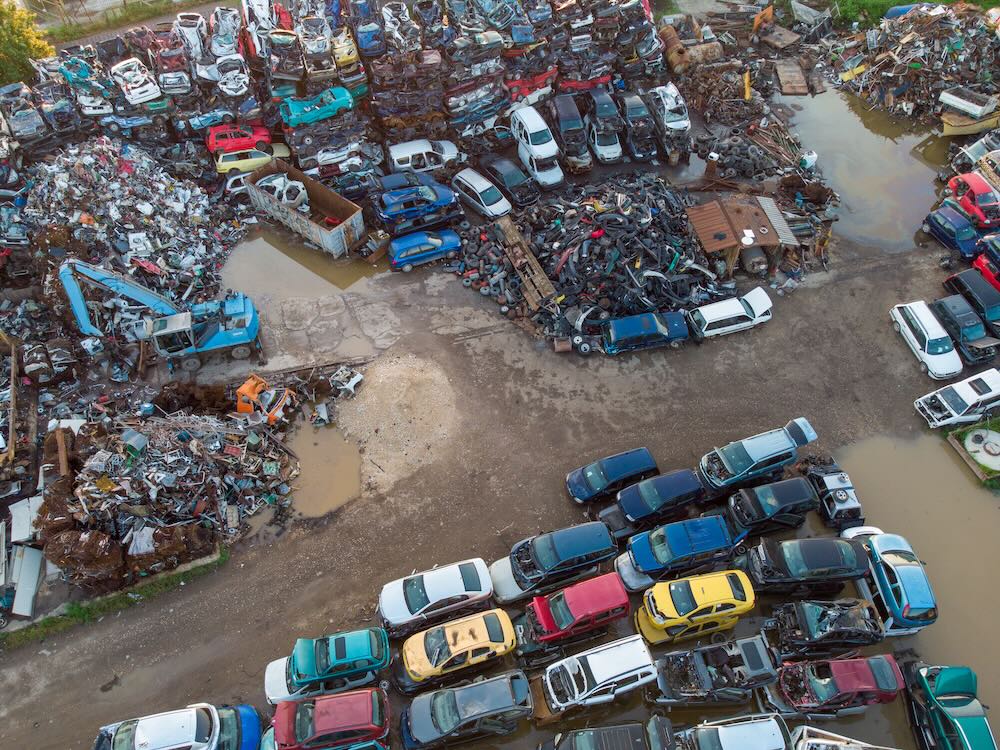
EU negotiators have agreed new rules intended to make cars and other vehicles easier to dismantle, reuse and recycle, while tightening controls intended to curb the “missing vehicles” problem and restrict exports of non-roadworthy used cars.
The Council presidency and European Parliament representatives reached a provisional agreement on 12 December 2025 on a regulation covering circularity requirements for vehicle design and the management of end-of-life vehicles (ELVs). The text is set to replace two existing directives and apply across the vehicle lifecycle, from design and production to end-of-life treatment.
The deal is framed as part of the EU’s wider circular economy agenda, in which policymakers are seeking to reduce waste, retain secondary raw materials within the single market and standardise enforcement across member states. The Commission first proposed the regulation in July 2023 after a review of the existing ELV framework.
A central element is a binding recycled-plastics requirement for new vehicles. Under the agreed draft, the plastic used in each new vehicle type would have to contain at least 15 per cent recycled content within six years of the regulation entering into force, rising to 25 per cent within 10 years. At least 20 per cent of the recycled-plastic requirement would have to be met through “closed-loop” material recovered from end-of-life vehicles, or from parts removed during the use phase.
The agreement also sets a pathway for future recycled-content targets for other materials. The Council said the Commission would be required to introduce targets for recycled steel, aluminium and other materials such as magnesium and critical raw materials via delegated acts, following feasibility work. Parliament said steel and aluminium targets would be brought forward two years after entry into force, after studies, with an assessment also foreseen for possible critical raw material targets.
Beyond material targets, the draft regulation contains design-oriented requirements intended to support dismantling and reuse. Parliament said new vehicles should be designed to allow authorised treatment facilities to remove as many parts and components as possible, with a view to replacement, reuse, recycling, remanufacturing or refurbishment where technically possible.
The deal expands the categories covered by EU end-of-life rules. The Council said passenger cars and light commercial vans remain fully in scope, but treatment requirements — including collection, depollution and mandatory removal of parts — would extend to regular heavy-duty vehicles such as trucks, motorcycles and special-purpose vehicles, with an exemption agreed for small-volume manufacturers of heavy-duty special-purpose vehicles.
Negotiators also focused on enforcement and traceability, citing large numbers of vehicles disappearing from official systems. The Council estimated around 3.5 million vehicles “disappear without a trace” from EU roads each year, and linked the issue to illegal dismantling, disposal and exports. The provisional agreement sets out criteria to determine when a vehicle is to be treated as waste — and therefore an ELV — and would require such vehicles to be handled by authorised treatment facilities, rather than being sold on as used vehicles.
To address the same issue, the text tightens rules around transfers of ownership. Parliament said that when an economic operator sells a vehicle, the documentation would be either an assessment that it is not an ELV or a valid roadworthiness certificate. Private sellers would be required to provide documentation only in higher-risk situations, including where a vehicle is declared a total economic loss or where the sale is concluded exclusively online. The Council described a “risk-based approach” for private-person transfers and highlighted scenarios such as insurance write-offs and online-only sales without a physical handover.
End-of-life treatment requirements are also reinforced. Parliament said specific obligations would apply to the removal of certain parts and components and to the removal of liquids, fluids and hazardous substances before shredding or compacting. It also said national authorities would be required to establish inspection strategies aimed at detecting illegal activities in collection, treatment and export.
The deal strengthens extended producer responsibility (EPR), shifting more cost and organisational responsibility to manufacturers. Parliament said that, three years after entry into force, manufacturers would be required to cover the costs of collecting and treating vehicles that have reached end-of-life. The Council said the agreement establishes a cross-border EPR mechanism intended to ensure producers remain financially responsible regardless of where a vehicle reaches end-of-life within the single market, and includes “free take-back” and proper treatment obligations.
Exports are another headline element. The Council said the regulation would ban the export of used vehicles that are no longer roadworthy, with the ban set to apply five years after entry into force. Parliament similarly described an export ban for non-roadworthy vehicles and said the deal clarifies criteria and documentation for customs authorities.
Both institutions cited the scale of the vehicle fleet and waste stream. Parliament put the number of motor vehicles on EU roads at 285.6 million, with around 6.5 million reaching end-of-life each year. The Commission, in its background overview, states that more than six million vehicles in Europe reach end-of-life annually, and warns that inadequate management leads to environmental harm and loss of materials.
The provisional agreement now needs endorsement by both Parliament and the Council before formal adoption. The Council said the regulation would start applying two years after its entry into force.