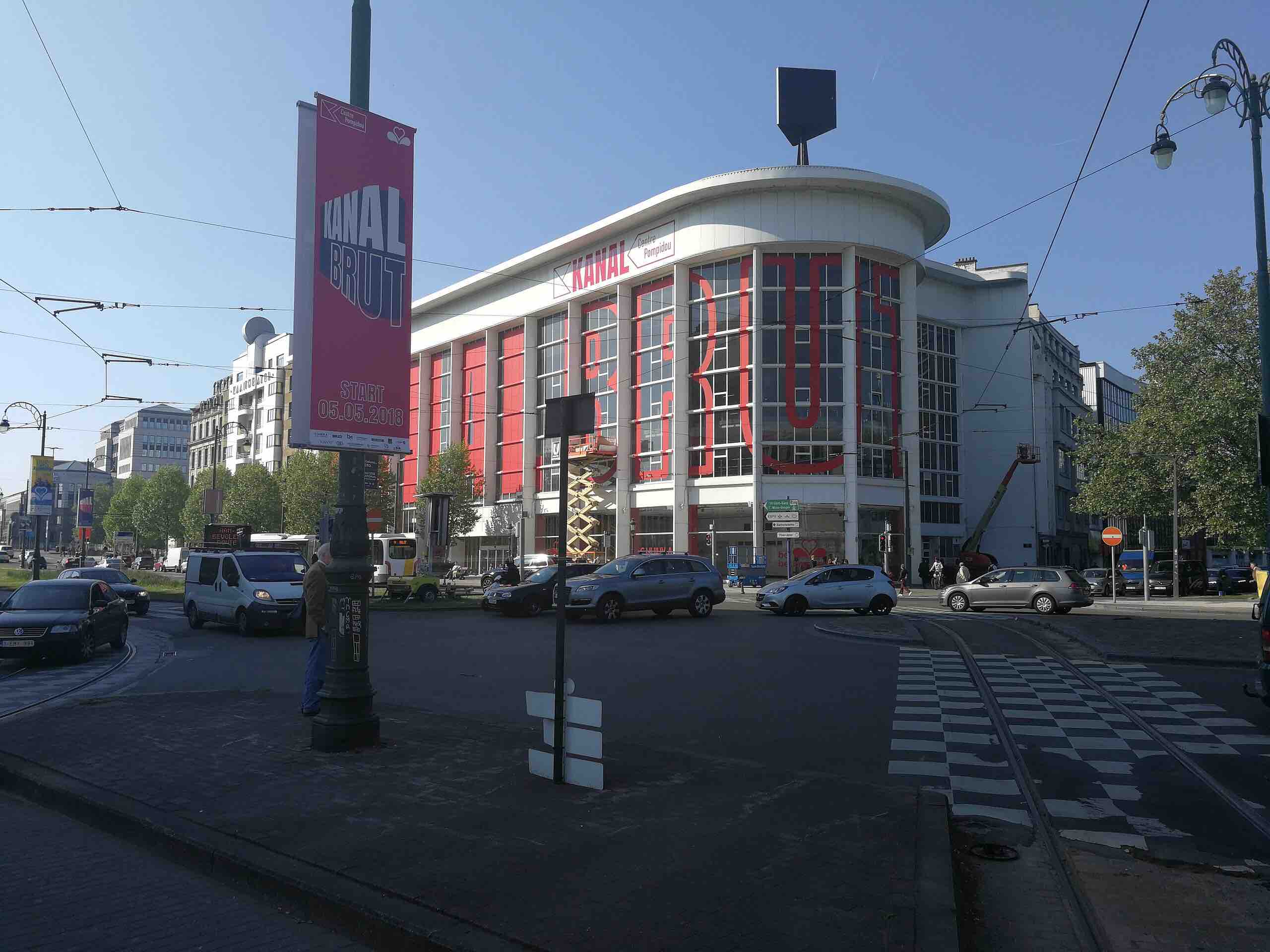
Once hailed as a bold leap toward transforming Brussels into a modern cultural capital, the troubled future of the Kanal arts complex now appears as chilling proof that the city’s appetite for public-sector staffing is eating into its ability to fund anything else — from museums to social services.
The critics had warned that between vast public-sector salary bills, pension liabilities and rising communal staff costs, local finances in Brussels would strain under their own weight. Now the collapse of Kanal’s funding — despite the building being 95 per cent complete — seems to confirm those concerns.
Staff Costs Swallow the Budget
Recent figures show the problem is systemic: in the municipalities of Brussels, staff and pension costs have ballooned, virtue of recent wage indexation, rising pension payouts and generous statutory-staff provisions. According to a report cited by the bank Belfius, municipal staff costs now represent over 40 per cent of all commune spending.
At the level of the City of Brussels itself, the most recent budget revealed that more than half of ordinary expenditure — roughly €500 million — goes on staff costs. With over 9,000 employees, the city remains one of the largest public employers in the region.
The scale of the payroll burden is no trivial footnote: it dictates what else the city can afford — and increasingly, what it cannot.
Kanal: A Casualty of Impaired Priorities
Which brings us back to Kanal. The ambitious art centre — to occupy a repurposed 1930s Citroën garage and rival major European institutions — was envisioned as a flagship project for Brussels. A five-floor, 12,500 m² museum and cultural complex, due to open in November 2026, with an inaugural show featuring works by masters like Matisse, Picasso and Giacometti.
Yet, with no functioning regional government for more than 500 days and repeated failure to adopt a 2025 budget, the city’s finances are under a microscope. Under proposed austerity plans, Kanal’s €35 million annual operating budget could be slashed by as much as 60 per cent — just as staff-cost pressures continue to mount elsewhere.
It is not just Kanal that is threatened. Funding freezes and cuts are rippling across non-profits, social-welfare centres (CPAS), hospitals and community services — sectors critical to the most vulnerable.
A Structural Problem — Not a One-Off Overspend
This is not the story of a single over-ambitious project gone awry. It is the symptom of a structural imbalance: a local government sector where salary bills, pensions and social obligations have crowded out discretion for public investment.
The financial stress has grown over years. As one Brussels finance report recently acknowledged, successive crises — from inflation to demographic change and then an energy shock — have battered municipal coffers. The result: dwindling reserves, increased borrowing, and shrinking capacity to fund new public goods.
In a region where public-sector staff numbers — and benefits — have steadily increased, while tax bases remain constrained, the collision between ambition and fiscal reality was always looming.
Consequences: Culture, Social Services — All Take a Hit
The fallout is widespread. Kultur — once seen as a showpiece of civic renewal — may now become a symbol of lost priorities. Kunst institutions and community organisations reliant on regional subsidies are already feeling the heat, as budget freezes and cuts begin.
Even essential services are under strain. Social-welfare centres, chronically underfunded and overstretched, have already shed staff: In one Brussels municipality, the local CPAS lost 21 workers in 2025 alone. Health services are in a similar bind — nearly three-quarters of the city’s public hospitals report unsustainable financial pressure.
Rather than being able to invest in long-term improvements — cultural venues, infrastructure, social innovation — the region finds itself stuck servicing personnel and pension bills.
The Political Deadlock Masks a Moral Dilemma
Let it not be forgotten: the inability to form a regional government after the 2024 elections has exacerbated the inertia. For months on end, Brussels has operated without a fully empowered executive — forced instead to “roll over” last year’s budget month by month. In such conditions, long-term projects naturally slide down the list.
But even before that, the funding reality was clear: when payroll absorbs more than half of operating budgets, there is limited room for ambition or renewal. The choice becomes stark: more public-sector employment — or better public services. The current fiscal trajectory appears to favour the former.
In May 2025, even a proposal for elected officials to take a temporary pay cut — to help ease the funding crisis — was rejected. The reasoning? Parliament remained active, and the pay cut was “inappropriate.” The measure was swiftly cast aside, underscoring political reluctance to tighten belts — even when budgets are bleeding.
Why This Matters — For Brussels, And Beyond
Brussels is not just any city: it is the administrative heart of the European Union, home to international institutions and arguably the continent’s geopolitical nerve centre. If even here cultural ambition yields to payroll pressures, the implications are profound.
At stake is not just whether a museum opens. It is whether the public sector can still serve as a vehicle for renewal — or whether it becomes simply a payroll machine, draining resources without reinvesting in the city’s future.
Moreover, the pattern is not confined to Brussels. Across Belgium, local government spending — particularly on staff and pensions — is growing faster than revenues, and public debt is rising, prompting warnings from the OECD that without consolidation the national debt could spiral dangerously.
If Belgium is to navigate ageing demographics, climate costs, and economic stagnation, local governments must regain fiscal discipline — before ambitions consume the ability to act.
A Plea for Priorities — And for Honesty
Brussels’ current predicament demands more than political wrangling. It calls for realism. That means recognising that public employment — while vital — cannot indefinitely absorb the lion’s share of communal budgets without sacrificing everything else.
It means policymakers must decide: do we want a city defined by payroll and pension obligations — or by livable neighbourhoods, modern theatres, public infrastructure, social solidarity, and yes — culture that inspires?
As the fate of the Kanal Arts Complex painfully shows, when payroll is rewarded before priorities, the city loses more than money. It loses faith.
If Brussels is to survive this spiral it must act — not by borrowing more, but by choosing where it wants to spend. Because there is only one bottom line: Brussels’ budget cannot serve both paychecks and progress.
Main Image: By Marc-AntoineV – Own work, CC BY-SA 4.0, https://commons.wikimedia.org/w/index.php?curid=69028630
Click here for more News & Current Affairs at EU Today
________________________________________________________________________________________________________________________