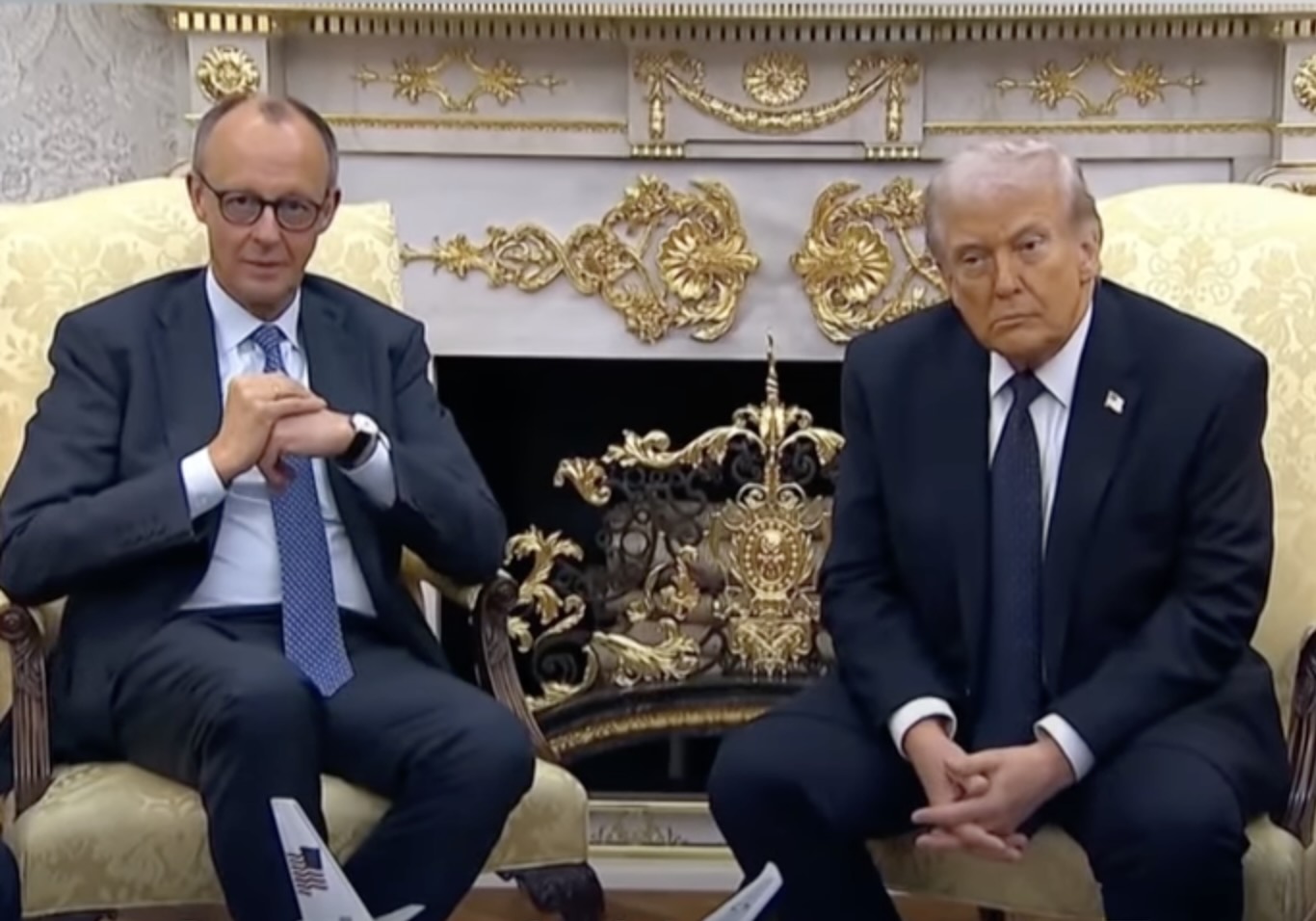
German Chancellor Friedrich Merz has now said publicly what many European officials have been signalling for months in private: Europe will not accept a deal on Ukraine negotiated behind its back.
After talks with US President Donald Trump in Washington, Merz said he had made clear that any sustainable agreement would require European backing, and that he had pressed Trump to increase pressure on Vladimir Putin because Russia was plainly not moving towards a serious end to the war.
This matters not simply because of the language used, but because of the shift in European confidence behind it. For much of the past year, major European governments were careful in public when dealing with Trump’s claims that he could reach an understanding with Putin. That caution is now giving way to something more direct. Merz’s intervention suggests Berlin believes the White House needs to hear a harder truth: the United States cannot construct a viable Ukraine settlement on its own if the political, financial and sanctions architecture required to sustain that settlement remains largely European.
The first reason is practical. Even if Trump wanted to strike some form of bargain with Moscow involving sanctions relief, he cannot by himself remove core European restrictions on Russia. EU economic sanctions against Russia have been extended until 31 July 2026, and the bloc has also moved to prohibit transfers of immobilised Russian central bank assets back to Russia. In other words, some of the most valuable cards in any negotiation are not in Washington’s hands at all. They are in Brussels, Berlin, Paris and other European capitals.
That gives Merz room to speak with greater bluntness than many of his predecessors or contemporaries have been willing to use. His remarks amount to a reminder that Europe is not a bystander expected merely to endorse an agreement drafted elsewhere. It is a principal actor whose consent is necessary both for sanctions policy and for any future financial settlement touching Russian assets. A White House that ignores that reality may still produce headlines, but not an enforceable or durable peace framework.
The second reason for the sharper tone is Trump’s own weakened negotiating position. His tariff policy, which had served as both an economic weapon and a political warning to allies, suffered a major legal defeat when the US Supreme Court struck down his sweeping global tariffs pursued under emergency powers legislation. That the ruling was a significant setback with major implications for the global economy. That matters in the European context because it reduces one of the administration’s more obvious instruments of pressure over partners who might otherwise have hesitated to confront Washington more openly.
The third factor is geopolitical. Trump’s meeting with Merz took place against the backdrop of US strikes related to Iran, with the American president saying that Germany was helping in that context. Whether or not Europe is fully aligned with Washington’s wider approach to Iran, the broader point is plain enough: an administration dealing with renewed Middle East tension has stronger incentives than before to keep European governments broadly on side. That does not hand Europe a veto over American policy, but it does improve Europe’s leverage in parallel negotiations over Ukraine.
Merz’s demand for stronger pressure on Russia also reflects a wider European judgement that the current negotiating track has not altered Kremlin behaviour. Merz said Russia was stalling and acting against the intentions of the American leadership. At the same time, the February talks in Geneva produced no breakthrough, with core disputes left unresolved and clear Ukrainian dissatisfaction with the outcome. Subsequent reporting indicated that Russian officials were considering suspending the negotiations unless Ukraine signalled readiness to yield territory. Put plainly, Europe sees little evidence that Moscow is negotiating towards compromise; rather, it appears to be proceeding on the assumption that delay works to Russia’s advantage.
That is why Merz’s words should not be read as mere transatlantic posturing. They are an attempt to force strategic clarity. Europe is signalling that a process which sidelines Europeans, weakens sanctions leverage and leaves Ukraine facing demands under military pressure will not command support across the continent. It is also signalling to Trump that, if he wants an outcome that can survive beyond a photo opportunity or a bilateral communiqué, he must deal with the fact that Europe remains central to both the pressure on Russia and the guarantees any settlement would require.
There is also a final irony in the emerging European stance. By insisting on a seat at the table, leaders such as Merz may be trying not only to protect Ukraine, but also to save the White House from drifting into an arrangement that would look less like peace than acquiescence to Kremlin terms. Europe’s message is therefore simple: no deal on Ukraine will be credible without Europeans, because Europe still holds too much power over the outcome to be treated as an afterthought.