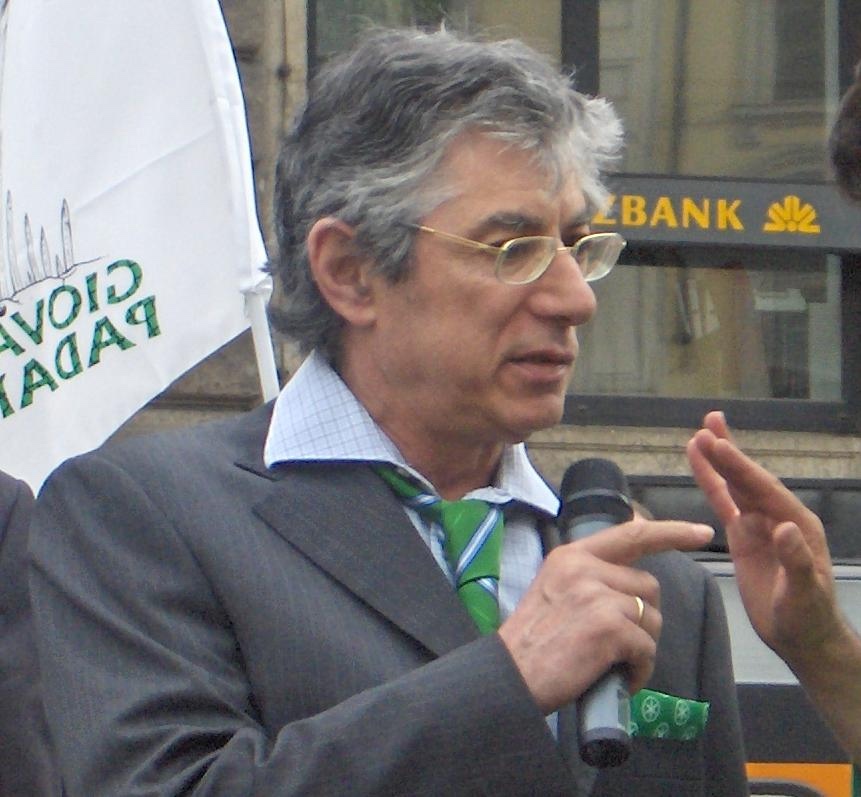
Umberto Bossi, the gravel-voiced founder of Italy’s Northern League who channelled regional anger into a political force that transformed the country’s landscape, has died at the age of 84.
He passed away in a hospital in Varese, the Lombard town that served as both his political heartland and symbolic capital.
For nearly four decades, Bossi stood at the centre of Italy’s political theatre: a disruptor, a populist, and, to his followers, a champion of neglected northern taxpayers. To his critics, he was an incendiary demagogue whose rhetoric sharpened divisions between north and south. Few, however, doubted his impact.
Born on 19th September 1941 in Cassano Magnago, in the industrial north, Bossi’s early life gave little indication of the political force he would become. His path into politics was unconventional, marked by a brief flirtation with left-wing activism before he turned decisively toward regionalism.
In the 1980s, he founded a small autonomist movement in Lombardy that would evolve into the Lega Nord. From these modest beginnings, Bossi built a movement that tapped into a potent mix of fiscal resentment, cultural identity, and distrust of Rome. His message—often delivered in blunt, provocative terms—resonated with small business owners and voters who felt overburdened by taxes and underserved by central government.
By the early 1990s, as Italy’s traditional parties collapsed amid corruption scandals, Bossi emerged as one of the most distinctive voices of a new political era. He presented himself as an outsider determined to sweep away a discredited establishment. His calls for autonomy, and at times outright independence for a notional northern state he dubbed “Padania,” shook the foundations of Italian politics.
Bossi’s style was unmistakable. Gruff, theatrical, and often confrontational, he relished political combat. Supporters admired his authenticity; detractors recoiled at his language and tone. Yet even those who opposed him often conceded that he possessed a rare instinct for the public mood.
His rise brought him into alliance with Silvio Berlusconi, the media magnate turned politician who dominated Italy’s centre-right for years. The partnership was at times uneasy, punctuated by quarrels and reconciliations, but it proved politically consequential. Bossi served twice as a minister for institutional reforms in Berlusconi-led governments, pushing—albeit with limited success—for greater federalism.
Despite periods in government, Bossi never fully shed his anti-establishment persona. His rhetoric continued to target the perceived inefficiencies and inequities of the Italian state. For a time, his party’s influence was such that it helped determine the direction of national policy, particularly on issues of decentralisation and fiscal reform.
Yet his career was not without setbacks. In 2004, a serious stroke curtailed his political activity and visibly affected his health. Though he returned to public life, the episode marked a turning point.
A more damaging blow came in 2012, when a financial scandal involving party funds forced him to step down as leader of the Northern League. He was later convicted of misusing party money, a development that tarnished his reputation and hastened his political decline.
In his later years, Bossi remained a symbolic figure within the movement he had founded, even as its direction changed under new leadership. His successor, Matteo Salvini, transformed the party—now known simply as the League—into a broader nationalist force with ambitions across the whole country, a shift that would once have seemed improbable given its northern roots.
Tributes following Bossi’s death reflected the complexity of his legacy. Political allies praised his passion and his role in reshaping Italy’s political system, while opponents acknowledged him as a formidable and, at times, oddly endearing adversary. Italy’s President described him as a committed democrat, underlining the paradox of a man who challenged the system while ultimately becoming part of it.
Bossi’s enduring significance lies not only in the party he created, but in the broader currents he helped to set in motion. Long before populism became a defining feature of European politics, he had demonstrated its potential power. He gave voice to grievances that mainstream parties had overlooked, and in doing so altered the contours of political debate in Italy.
He is survived by his wife, Manuela Marrone, and their children.
In the end, Umberto Bossi leaves behind a legacy that resists simple judgment. He was a provocateur and a pioneer, a divisive figure who nonetheless commanded loyalty and attention in equal measure. Italian politics, often theatrical by nature, rarely produced a character quite like him—and may not again.
Main Image: Door Theriddle op de Italiaanstalige Wikipedia(Originele tekst: Damiolini Severino) – Damiolini Severino, Publiek domein, https://commons.wikimedia.org/w/index.php?curid=3769487
This Obituary Originally Appeared at EU Global
Click here for more News & Current Affairs at EU Today
Click here to check out EU TODAY’S SPORTS PAGE!
_______________________________________________________________________________________________________________________