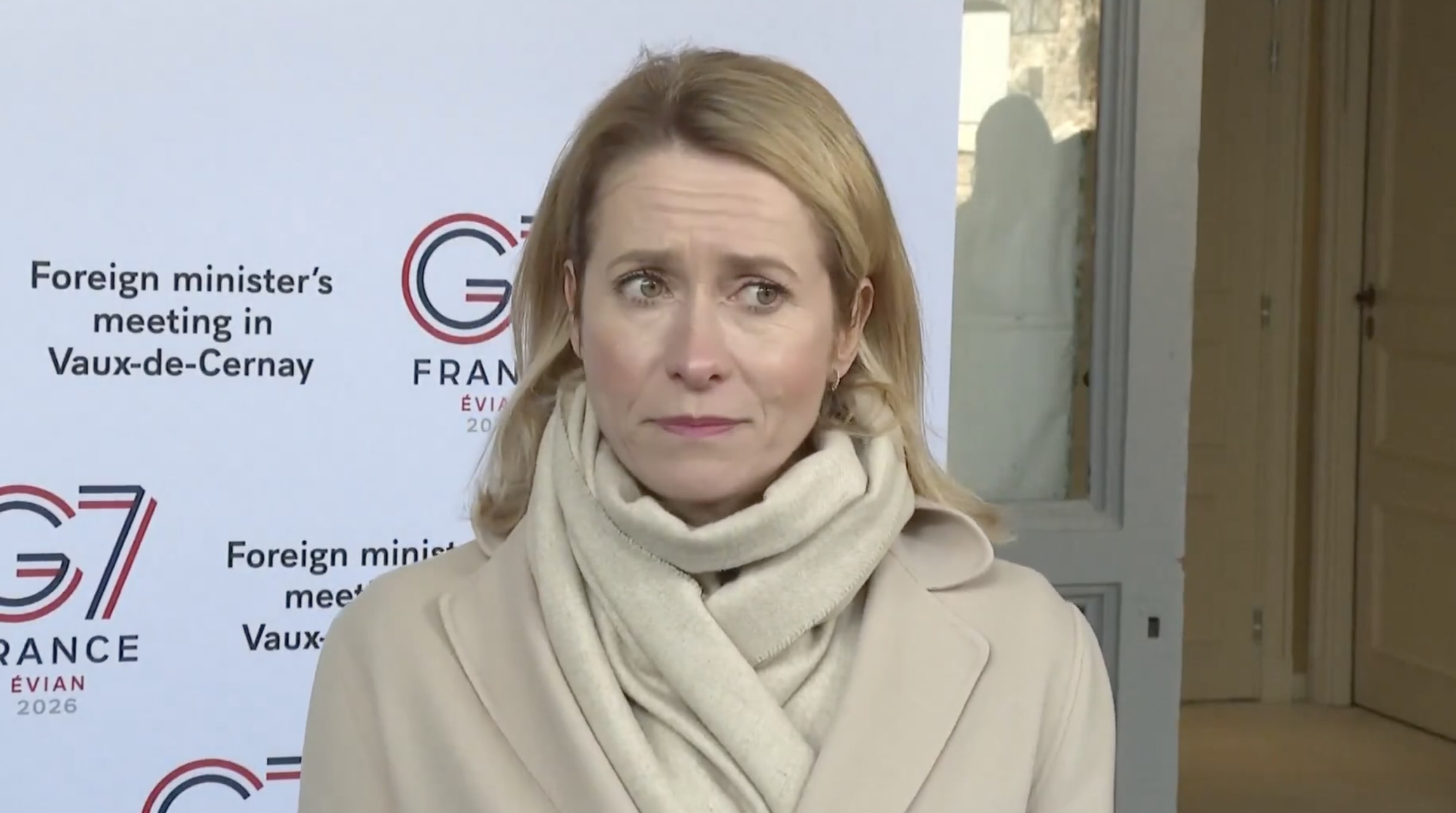
EU foreign policy chief Kaja Kallas has warned against efforts to push Ukraine into territorial concessions to Russia, saying such demands reflect a familiar negotiating tactic from Moscow.
EU High Representative Kaja Kallas on Thursday warned against pressuring Ukraine to cede territory to Russia as part of any peace negotiations, saying such demands follow what she described as a recognisable Russian negotiating pattern. She made the remarks on the sidelines of a meeting of G7 foreign ministers in France.
Kallas expressed concern over reported US pressure on Kyiv to surrender territory as part of a settlement framework. She said this was “the Russian playbook”, arguing that Moscow was demanding land that was never rightfully its own and that negotiators should not fall into that trap.
The comments place the European Union publicly at odds with any approach that would treat Ukrainian territorial concessions as the basis for progress in negotiations. The line is consistent with the EU’s established position that any peace arrangement must be acceptable to Ukraine and supported by Europe. In remarks published by the EEAS after the Foreign Affairs Council earlier this month, Kallas said the EU’s position had not changed and that a viable peace plan had to be supported by Ukraine.
Her intervention also reflects a broader concern in Brussels that diplomatic pressure should be directed at Moscow rather than Kyiv. In previous EEAS remarks on Ukraine, Kallas said that only Ukraine could decide the terms of any deal and that concessions should come from the aggressor, not the victim. While those remarks were made in December 2025, they provide useful context for Thursday’s comments and show continuity in the EU’s line on territorial issues.
Thursday’s remarks came at a sensitive moment in wider Western diplomacy. The G7 meeting in France is taking place against the backdrop of continued efforts to manage both the war in Ukraine and the fallout from the conflict involving Iran, with European governments concerned that overlapping crises could weaken focus on Russia’s war. In separate remarks on Thursday, Kallas said the war in the Middle East was connected to the war in Ukraine and that Russia was benefiting from developments there, underlining the EU view that the two security theatres cannot be considered in isolation.
The issue of territorial concessions remains politically central because it goes to the basis of any future settlement. A negotiation that formalises Russian control over occupied Ukrainian territory would raise questions not only about Ukraine’s sovereignty, but also about the wider European security order and the principle that borders cannot be changed by force. Kallas did not set out a new EU initiative on Thursday, but her language made clear that Brussels is resisting any diplomatic formula built around Ukrainian territorial surrender.
That does not mean the EU has presented a fully detailed alternative negotiating track in public. What it has done, however, is maintain a consistent set of principles: support for Ukraine, rejection of imposed territorial concessions, and insistence that any settlement must be durable rather than simply expedient. The Council’s summary of the 16 March Foreign Affairs Council said ministers discussed continued support for Ukraine, including through the €90 billion Ukraine Support Loan for 2026 and 2027, as well as ways to increase pressure on Russia. That indicates that the EU is still framing the issue in terms of sustained support and coercive pressure on Moscow rather than reciprocal concessions by Kyiv.