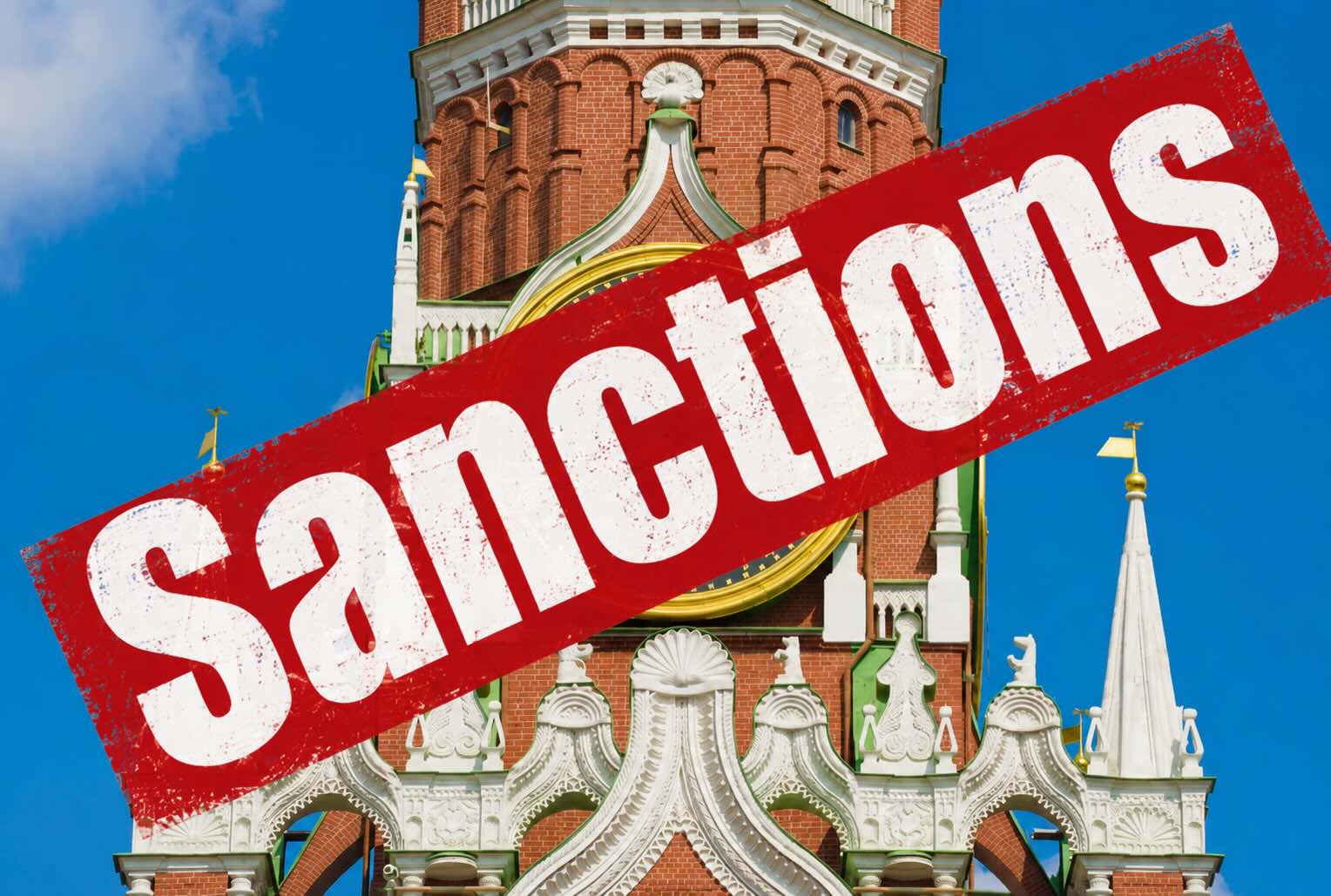
The Kremlin has dismissed the European Union’s planned new sanctions against Russian banks, but Moscow’s response points to the central question behind the latest package: whether Russia’s financial system is still vulnerable after more than four years of war and successive rounds of Western restrictions.
The European Union has put forward a 21st sanctions package against Russia, with a heavy focus on financial services, energy, trade, crypto networks and channels used to sustain Russia’s war economy. The package is not yet adopted. It will require unanimous approval by EU member states, and the final text may still change during negotiations.
The financial measures are the most politically direct part of the proposal. The EU plans to impose restrictions on a large number of Russian banks and crypto-linked networks, including asset freezes and transaction bans. The proposed measures would take the number of sanctioned Russian banks above 100, covering a substantial part of the country’s internationally connected financial sector.
The package also targets crypto platforms that Brussels says are helping Russia evade restrictions. This matters because Russia’s largest banks have already faced extensive sanctions since 2022, while Russian companies have increasingly turned to smaller lenders, alternative payment networks, intermediaries and crypto-linked structures to keep trade moving.
That is why the new package is less about symbolic escalation than enforcement depth. The EU is no longer only targeting major state banks already cut off from normal Western finance. It is trying to restrict the secondary channels that have grown around the sanctions regime.
Moscow’s public response was predictable but revealing. Kremlin spokesman Dmitry Peskov said that Russia’s largest banks had long been under sanctions and that this had not prevented them from making large profits, developing and maintaining what he described as stability. He also said the Russian central bank was closely monitoring the sector and taking the necessary measures to maintain stability, according to remarks from Moscow.
The statement was intended to project control. But it also confirms that the banking sector remains a central battlefield in the economic confrontation between the EU and Russia. If the sanctions were irrelevant, they would not require such direct reassurance from the Kremlin.
The Russian banking system has not collapsed under sanctions. That fact is important. The country has adapted through capital controls, state support, domestic payment systems, trade rerouting, high commodity revenues and closer financial links with non-Western partners. Russian banks have also benefited from a war economy in which state spending, defence procurement and managed credit have supported activity.
But resilience is not the same as strength. Russia’s economy has been affected by sanctions, high interest rates and war expenditure. It recorded a 0.3 per cent contraction in the first quarter of 2026, its first quarterly decline since early 2023, while growth has slowed sharply from previous levels.
The pressure is also uneven. Large state-linked banks can survive under sanctions because they remain central to the domestic economy and can rely on state backing. Smaller lenders, trading firms and cross-border intermediaries are more exposed when new restrictions close off specific channels. That appears to be the logic of the EU’s latest proposal.
The crypto measures are particularly important. Brussels is seeking to restrict platforms that allow Russian-linked payments to move outside conventional banking controls. The package also lays the groundwork for tougher action against crypto-asset services in third countries where they are judged to be facilitating sanctions evasion. That would extend the sanctions debate beyond Russia itself and into the financial systems of countries used as transit points.
This creates a diplomatic problem for the EU. Sanctions that reach into third countries are harder to enforce and can produce resistance from states that do not want to be drawn into the West’s confrontation with Moscow. But without such measures, Russia can continue to exploit gaps between formal sanctions and practical enforcement.
The proposed package also shows how much the sanctions regime has changed since the early stages of the war. Initial measures focused on visible targets: major banks, oligarchs, state assets, export controls and energy revenues. Later packages have moved into more technical territory: shadow-fleet vessels, payment networks, crypto platforms, drone components, re-export routes and third-country intermediaries.
That evolution reflects a basic reality. Sanctions rarely work as a single blow. They require constant adjustment because the targeted economy adapts. Russia has spent years building alternative routes for trade, finance and procurement. The EU is now trying to close those routes faster than Moscow and its commercial partners can replace them.
The political challenge inside the EU is unanimity. Every new sanctions package requires agreement among all member states. That gives individual capitals leverage over the final text and creates space for exemptions, delays or dilution. The more technically complex the package becomes, the more difficult enforcement becomes after adoption.
For Ukraine, the issue is straightforward. Financial sanctions are one of the few tools available to the EU that can directly increase the cost of Russia’s war without requiring European troops on the battlefield. For Moscow, the aim is to show that sanctions have failed and that the Russian financial system can continue operating indefinitely under pressure.
Neither claim should be accepted without qualification. The EU has not broken Russia’s banking system. Russia has not escaped the cost of financial isolation. The latest package sits in that contested space: not a decisive instrument on its own, but part of a long effort to make the war economy less efficient, more expensive and harder to sustain.
The test will not be whether Peskov admits vulnerability. He will not. The test will be whether Russian firms find it harder to move money, settle trade, access intermediaries and finance procurement once the package is agreed and enforced.
That is where the real sanctions battle now lies: not in declarations from Brussels or Moscow, but in the smaller financial channels that keep Russia’s war economy connected to the outside world.