Norway is challenging the European Union to reconsider its opposition to new Arctic oil and gas development, arguing that European energy security cannot depend indefinitely on distant suppliers while reserves from a close NATO ally remain politically constrained.
The argument has gained force as Europe faces renewed pressure from conflict in the Middle East, the continuing phase-out of Russian fossil fuels and growing concern over the reliability of global liquefied natural gas supplies. Oslo’s position is that Arctic resources, particularly in the Barents Sea and northern Norway, should be assessed not only through climate policy but also through the security demands created by Russia’s war against Ukraine and instability in the Gulf.
The EU’s Arctic policy has until now opposed further hydrocarbon development in the region and supported efforts to keep future Arctic oil and gas resources in the ground. That position reflected environmental concerns, the vulnerability of the Arctic ecosystem and the bloc’s wider climate commitments. It also fitted the assumptions of a pre-2022 energy debate, when the EU was still heavily reliant on Russian gas and had not yet had to replace it at speed.
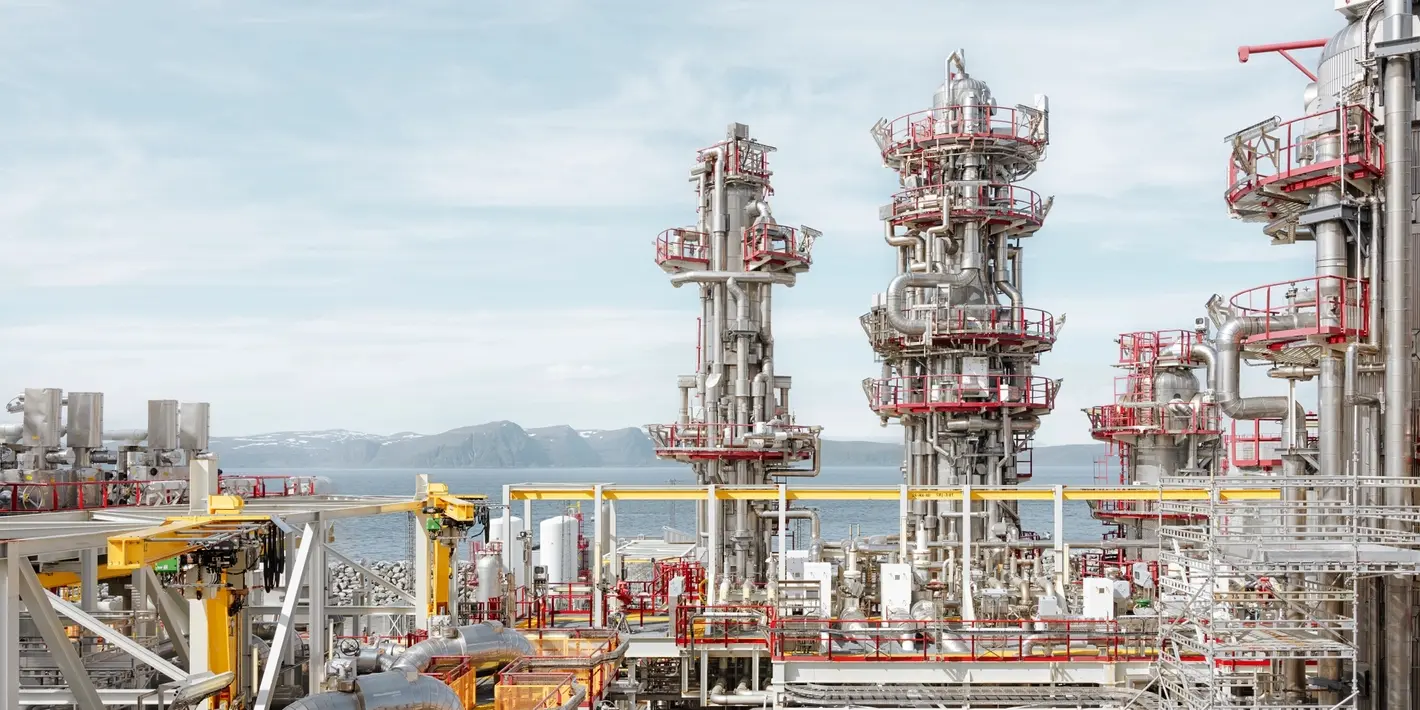
Those assumptions have changed. Norway has become one of Europe’s most important energy suppliers since Russia’s full-scale invasion of Ukraine. It now provides a large share of European gas, including from offshore fields and northern infrastructure such as the Hammerfest LNG plant. Norwegian officials argue that the EU’s continued resistance to Arctic production is increasingly inconsistent with its demand for secure, non-Russian energy.
The case being made in Oslo is direct: if Europe must buy gas, it is safer to buy it from Norway than from more distant suppliers exposed to maritime chokepoints, geopolitical pressure or changing US export politics. That argument has become more pointed after recent tensions around the Strait of Hormuz, where disruption would affect global energy prices and LNG flows even if European buyers were not the direct target.
For Norway, the issue is also industrial and financial. Continued development in the Barents Sea requires investment, regulatory certainty and access to financing. If the EU maintains a political stance against Arctic hydrocarbons, it could affect not only future production but also the willingness of banks, investors and companies to support projects that Oslo considers strategically important.
The EU is already reviewing its Arctic policy in light of a changed geopolitical and economic environment. That review creates an opening for Norway to press its case. However, any shift would be contentious. Environmental groups and some investors have urged Brussels to hold firm, warning that energy-security arguments could be used to prolong fossil-fuel dependence and weaken climate commitments.
That tension is the core of the dispute. Norway is not asking the EU merely to accept more gas. It is asking Brussels to recognise Arctic production by an allied state as part of Europe’s security architecture. Such a change would mark a significant adjustment in how the EU balances climate policy, energy sovereignty and strategic dependence.
There is also a defence dimension. Northern Norway and the Barents region sit close to Russia’s Kola Peninsula, home to major elements of Russia’s Northern Fleet and strategic nuclear forces. Norwegian officials have long argued that civilian presence, industrial activity and infrastructure in the north support wider surveillance, resilience and state presence in a strategically sensitive area. Energy production is therefore presented not only as an economic activity, but as part of maintaining national capacity in the High North.
For Brussels, the decision is not straightforward. The EU has spent years building policy around the reduction of fossil-fuel dependence, tighter climate targets and protection of vulnerable ecosystems. Reversing or softening its Arctic position would be criticised as a retreat from those commitments. It could also complicate relations with Arctic indigenous communities and environmental organisations, which have raised concerns about the cumulative impact of industrial expansion.
At the same time, the EU’s energy transition has not eliminated gas demand. Industry, power systems and households remain exposed to supply shocks and price spikes. The move away from Russian gas has increased the importance of alternative suppliers, including Norway, the United States and Qatar. That shift has reduced Moscow’s leverage but has not removed Europe’s external vulnerability.
This is why Norway’s argument is politically effective. It forces the EU to confront the difference between reducing fossil-fuel demand over time and managing energy security in the present. A policy that rejects Russian gas but also discourages allied Arctic supply may be difficult to defend if European consumers and industry face renewed price pressure.
The immediate question is whether Brussels can revise its Arctic stance without appearing to abandon its environmental principles. One option would be to distinguish between high-risk frontier drilling and production from existing or already developed Norwegian infrastructure. Another would be to frame any adjustment as temporary, security-driven and subject to strict environmental standards. Neither approach would remove the political controversy.
Norway’s pressure comes at a moment when Europe’s energy debate is being reshaped by war, sanctions, maritime risk and industrial competitiveness. The EU’s original Arctic position was built around climate and conservation. Oslo is now asking whether that position is still adequate in a security environment defined by Russia, Gulf instability and a more uncertain global gas market.
For the EU, the issue is not whether Norway is a trusted supplier. It is. The question is whether Brussels is prepared to treat Arctic gas from an ally as a strategic asset, rather than as a contradiction of its climate policy.
Image:The Hammerfest LNG facility, Einar Aslaksen / Equinor ASA