The confrontation over an Adriatic resort links foreign investment, protected land, disputed ownership and Albania’s EU accession standards.
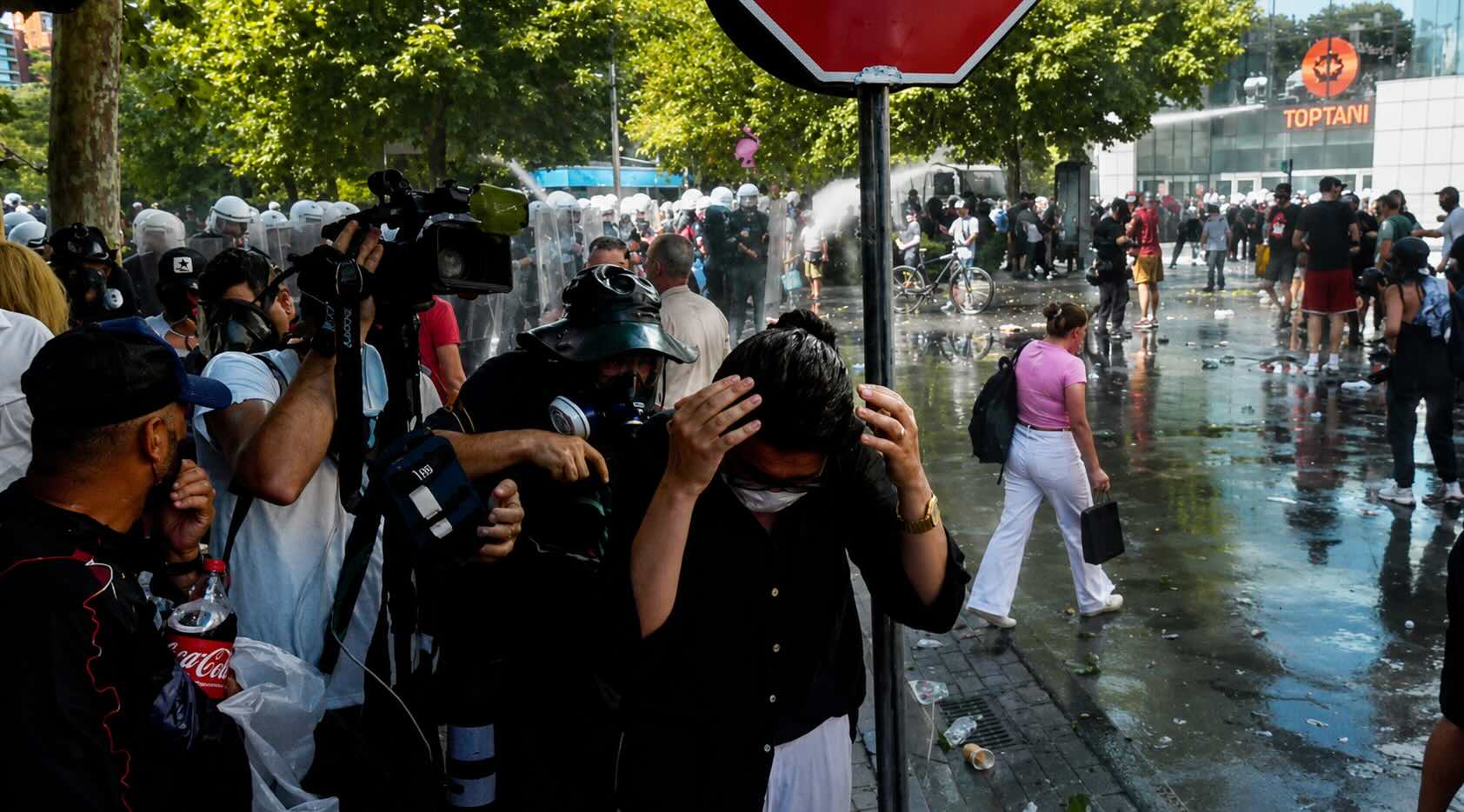
Albanian police used water cannon and tear gas against protesters during demonstrations triggered by plans for a multibillion-dollar resort involving Jared Kushner on an environmentally sensitive stretch of the Adriatic coast. Reuters reported that the dispute is connected to protected land, alleged corruption and a criminal investigation into disputed property ownership.
The violence makes the story immediate, but the underlying issue is institutional. Albania is seeking EU membership and must show that investment, property rights, environmental protection and criminal investigations are governed by law rather than political influence. A luxury coastal project involving a high-profile foreign investor is therefore not only a local development dispute. It is a test of the rules that Brussels watches most closely in candidate countries.
The project reportedly involves land on the Adriatic coast and has drawn opposition from residents and environmental campaigners. Prosecutors suspect that a businessman involved in selling land to the resort’s developers forged title deeds. He denies the allegations, and the developers say they believe the transactions were valid. Those competing claims must be handled carefully. The legal process has not established final wrongdoing. But the existence of the investigation is enough to make the project politically sensitive.
EU Today recently analysed how Serbia’s stalled EU bid exposes the limits of Brussels’ enlargement strategy. Albania is a different case, but the same enlargement question appears: can candidate countries attract investment while proving that courts, prosecutors, land registries and environmental authorities operate independently?
Foreign investment is not the problem by itself. Albania needs capital, tourism infrastructure and jobs. Coastal development can bring revenue, improve roads, create employment and raise international visibility. The problem arises when valuable land, weak administration, political connections and environmental exemptions converge. That combination can turn investment into a rule-of-law stress test.
Property ownership is especially sensitive in Albania because of the country’s complicated post-communist land history. Restitution claims, informal construction, disputed titles and weak records have created recurring conflicts. A major resort project magnifies those weaknesses. If title deeds are disputed, every subsequent approval becomes vulnerable to challenge.
Environmental protection adds another layer. Sensitive coastal land is often politically attractive because it has high tourism value. It is also ecologically vulnerable. EU accession requires alignment with environmental standards, public consultation, protected-area rules and transparent permitting. A project that appears to override those principles can damage Albania’s credibility even if it promises economic benefits.
The use of water cannon and tear gas risks changing the narrative. Governments often want to frame such projects as national development opportunities. Images of police confronting protesters can instead make them look like symbols of forced development. That matters internationally because EU institutions pay attention not only to legislation, but to how authorities respond to civic opposition.
Kushner’s involvement increases scrutiny because of his proximity to US political power. Even if the developers’ legal position is sound, the optics are difficult. Candidate countries seeking Western investment must avoid the perception that powerful foreign names receive smoother treatment than local communities or environmental rules. Perception can be politically damaging even before courts decide facts.
For Prime Minister Edi Rama’s government, the resort may be presented as proof that Albania can attract elite investment and compete as a Mediterranean tourism destination. For opponents, it may represent the risks of concentrated power, weak land governance and environmental sacrifice. The EU will likely judge less by rhetoric than by whether permits, investigations and court proceedings are transparent.
The dispute also illustrates a broader problem in the Western Balkans. Governments often argue that rapid development requires administrative flexibility. Brussels argues that accession requires predictable rules. Investors want speed and certainty. Citizens want fairness and environmental protection. When institutions are weak, those demands collide.
The next stages will matter more than the protest itself. Prosecutors must be allowed to pursue the title-deed allegations independently. Courts must resolve disputes without political pressure. Environmental assessments must be credible. Police conduct must be reviewed if force was excessive. Developers must disclose enough about ownership, financing and permits to sustain public trust.
Albania’s EU path will not be decided by one resort. But enlargement credibility is built through cases exactly like this, where economic ambition meets institutional restraint. If Tirana can show that even powerful projects are subject to transparent law, it strengthens its accession case. If the project proceeds through force, opacity or unresolved ownership doubts, it will feed the argument that Albania’s European future remains ahead of its institutions.