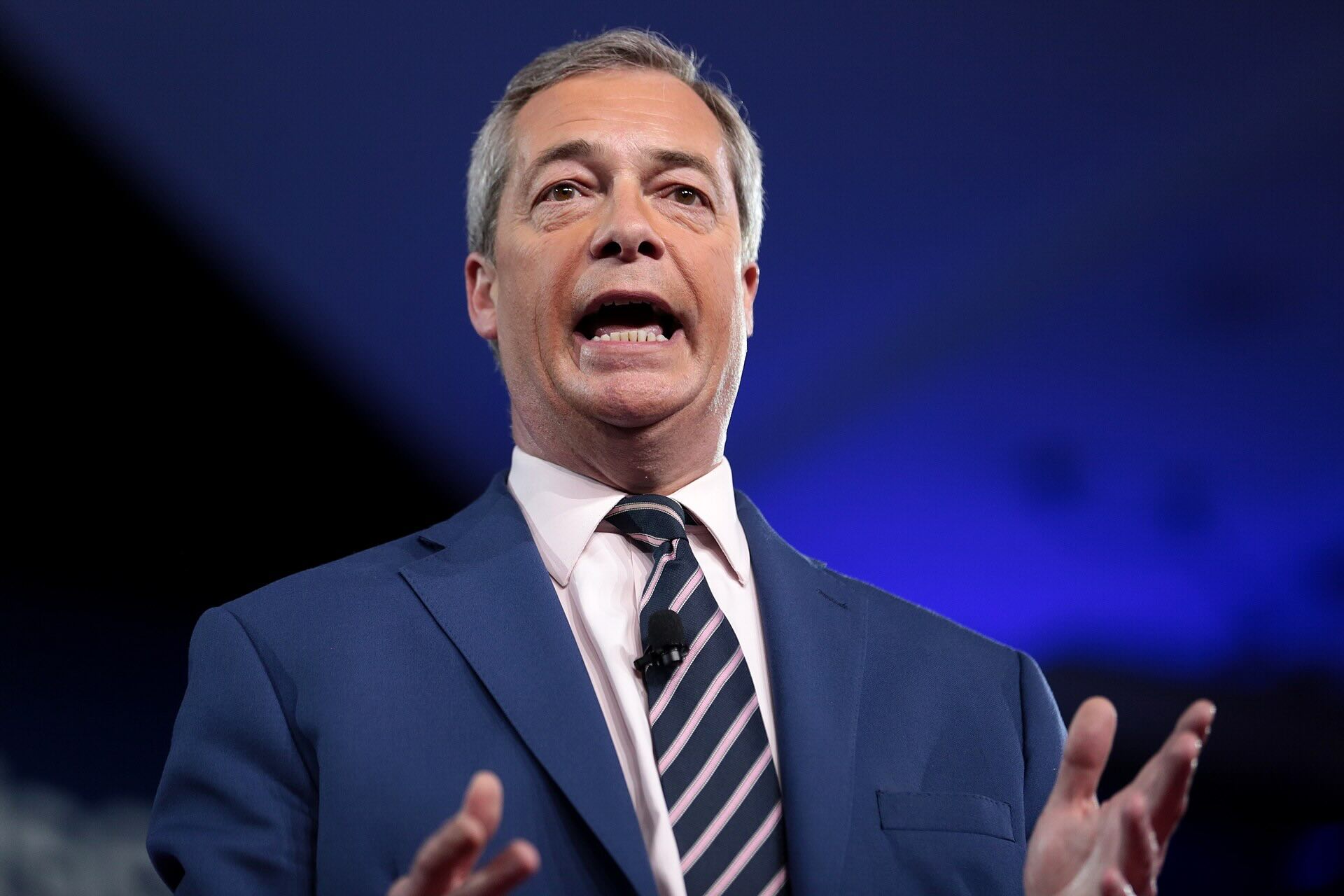
A new investigation into Nigel Farage’s 2015–16 “Say No to EU” tour has raised questions over whether European Parliament funding was used for domestic referendum campaigning before the UK’s Brexit vote.
EU budget funds allocated to Nigel Farage’s former political group in the European Parliament were used to help finance anti-EU rallies before the UK’s 2016 Brexit referendum, according to a new investigation.
The investigation says that around €1.8 million in European Parliament funding was spent by the Europe of Freedom and Direct Democracy group on activities linked to the “Say No to EU” tour and related campaign material in 2015–16. The reported expenditure included venue hire, banners, livestream production and other event costs connected to Farage’s anti-EU campaign activity.
The allegations are politically sensitive because public funds provided to parliamentary groups are not supposed to be used for domestic electoral campaigning. They are intended to support political activity at European level, not national referendum campaigns or party-political operations inside a member state.
The matter also raises questions under UK referendum finance rules. During the Brexit referendum period, campaign spending above specified thresholds had to be reported by registered campaigners. Foreign funding for referendum campaigning was restricted. If European Parliament funds were used to support campaign activity in Britain, the legal question is whether that spending should have been declared, who controlled it, and whether the source of the funds was permissible under UK law.
Farage has denied wrongdoing. His position is that the events were part of his European political activity rather than an unlawful use of public funds for a domestic campaign. The question now is whether regulators or parliamentary authorities treat the new material as sufficient to justify further scrutiny.
The Europe of Freedom and Direct Democracy group, which included UKIP MEPs and other Eurosceptic politicians, received public funding as a recognised political group in the European Parliament. Such groups were entitled to funding for staff, events, communications and political work related to their parliamentary activity. The rules, however, limited the use of those funds for national party campaigns and domestic electoral purposes.
That distinction is central to the case. Farage’s campaign against the EU was simultaneously European political activity and part of a British national referendum campaign. The overlap between those two categories created a financing problem: speeches, rallies and material opposing EU membership could be presented as European-level political advocacy, while also serving the practical purpose of influencing the UK referendum.
The “Say No to EU” tour took place before and during the period leading up to the 23 June 2016 vote. It was separate from Vote Leave, the officially designated Leave campaign, but formed part of the wider anti-EU mobilisation that helped shape the referendum climate. If European Parliament funds were used to pay for events, messaging or production costs that had a domestic campaign effect, the issue becomes one of accountability and regulatory classification.
The case also returns attention to the broader use of EU funds by Eurosceptic groups inside the Parliament before Brexit. The European Parliament has previously examined misuse of funds by political groups and members, including cases in which public money was alleged to have supported national political activity. Those cases often turned on whether expenditure was genuinely European in purpose or whether it effectively subsidised domestic party work.
For Brussels, the issue is not only historical. It goes to the credibility of EU budget control. Public funds provided to parliamentary groups are meant to support democratic debate within the European Parliament. If they were used to finance a national referendum campaign aimed at removing a member state from the EU, the political irony would be considerable, but the institutional issue is more practical: whether existing controls were sufficient to prevent cross-border misuse of parliamentary money.
For the UK, the question is whether referendum finance rules adequately captured activity by groups that were not formally part of the designated campaigns but contributed to the political environment around the vote. The 2016 referendum has already faced years of scrutiny over data use, campaign spending, donations and foreign influence. This latest material adds another strand: the possible role of EU institutional funding in campaign activity that helped support Brexit.
The timing of the investigation is also notable. The UK is approaching the 10th anniversary of the Brexit vote, while the political consequences of leaving the EU remain central to debate in Britain and in Brussels. Farage, now leader of Reform UK, remains an active figure in British politics, and questions about campaign finance continue to carry present-day relevance.
The legal consequences are uncertain. Much will depend on whether the relevant authorities consider the new evidence actionable after so many years, and whether the expenditure can be linked clearly to regulated referendum campaign activity. Records of political group spending, event organisation and campaign material would be central to any further assessment.
The case nevertheless matters because it concerns the use of public money, the boundary between European parliamentary work and national campaigning, and the ability of regulators to police political financing across jurisdictions.
Brexit was decided by British voters. The question raised by the new investigation is narrower but important: whether part of the campaign activity that helped create the political climate around that vote was financed through funds intended for the work of the European Parliament itself.