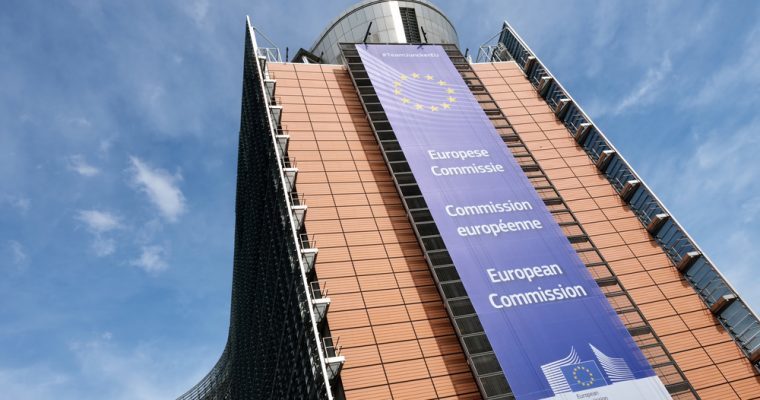
In classic Brussels fashion, the European Commission has unveiled a sweeping new initiative with an eye-catching title and even grander ambitions.
The European Ocean Pact, adopted this week, is billed as a comprehensive framework to protect the seas, power a sustainable blue economy, and secure the future of coastal and island communities. It promises everything from maritime defence and drone fleets to a youth ambassador network and global ocean diplomacy.
But like so many all-encompassing European strategies, the Ocean Pact risks drowning in its own breadth.
At the heart of the initiative lies a noble idea: that the EU needs a unified strategy to steward its marine resources, bolster maritime industries, and safeguard the livelihoods of coastal citizens. The Pact’s six priorities — covering everything from biodiversity to border security — are a tacit admission that Europe’s fragmented ocean policies to date have struggled to deliver joined-up results. By establishing a single reference framework, the Commission aims to “cut red tape” and improve policy coherence. In theory, it’s a sensible approach. In practice, it may prove easier said than done.
To begin with, the Pact’s ambitions on ocean health are formidable. Brussels pledges support for restoring degraded marine ecosystems and managing marine protected areas more effectively. Yet this comes in the same breath as promises to “boost competitiveness” in fisheries, shipping, and aquaculture — sectors that, despite improving sustainability practices, remain some of the greatest pressures on ocean habitats. Reconciling ecological recovery with commercial expansion will be the first major test of the Pact’s credibility.
The forthcoming revision of the Common Fisheries Policy (CFP) is especially fraught. It’s no secret that the CFP is one of the most politically sensitive files in Brussels. Coastal nations — from France and Spain to Ireland and Denmark — defend their quotas and fleets with near-religious fervour. Reform attempts often descend into stalemate. How the Commission proposes to square sustainable fisheries with industry demands remains to be seen.
Then there’s the promise of a “Blue Generational Renewal Strategy,” intended to bring young professionals into maritime sectors and reverse the greying workforce. This is a laudable goal, but here too, the details are scarce. Attracting young talent to the maritime economy will take more than new slogans — it requires vocational education, targeted investment, and attractive career pathways in industries still viewed by many as archaic and low-paid.
One of the more curious features of the Pact is its dive into maritime security and defence. The Commission plans a coordinated effort to remove unexploded ordnance from European waters — a relic of past wars that still threatens fishing and shipping. More strikingly, it proposes a European drone fleet equipped with artificial intelligence and advanced sensors to bolster maritime surveillance.
While this may appeal to techno-optimists and security hawks, the idea of an EU naval drone programme raises questions about duplication of national capabilities and the blurring of civil and military lines in Commission policy. The EU has long trod carefully around defence matters — the Ocean Pact’s leap into hard security is bound to raise eyebrows in both capitals and coastal communities.
Perhaps the most ambitious plank of the Pact lies in EU ocean diplomacy. Brussels is aiming to take the lead on everything from the UN’s high seas biodiversity agreement to a global plastics treaty. In an era when China is investing heavily in maritime infrastructure and the United States is only beginning to pay serious attention to ocean governance, the EU sees a window to assert leadership on the global stage.
But as ever, Europe’s soft power will only be as effective as its internal discipline. It’s hard to promote good governance abroad while struggling to enforce it at home.
The Ocean Pact’s long-term anchor will be a proposed Ocean Act by 2027 — a legislative instrument designed to translate its principles into binding policy. It will be backed by a new Ocean Board and a digital dashboard to track progress. If Brussels can resist the temptation to bury the Pact in jargon and bureaucratic sprawl, these tools could give it some real weight.
President Ursula von der Leyen is expected to present the Pact at the upcoming United Nations Ocean Conference. No doubt, the international audience will hear the usual platitudes about global cooperation and sustainable growth. But the real challenge lies closer to home: convincing European fishermen, shipowners, mayors, scientists and diplomats to row in the same direction.
The European Ocean Pact may yet prove a tide-turning moment in EU marine policy — but only if Brussels stays afloat amid the currents of competing national interests, conflicting sectoral priorities, and the perennial risk of institutional overreach. As ever with the EU, the waters are deep and the voyage uncertain.