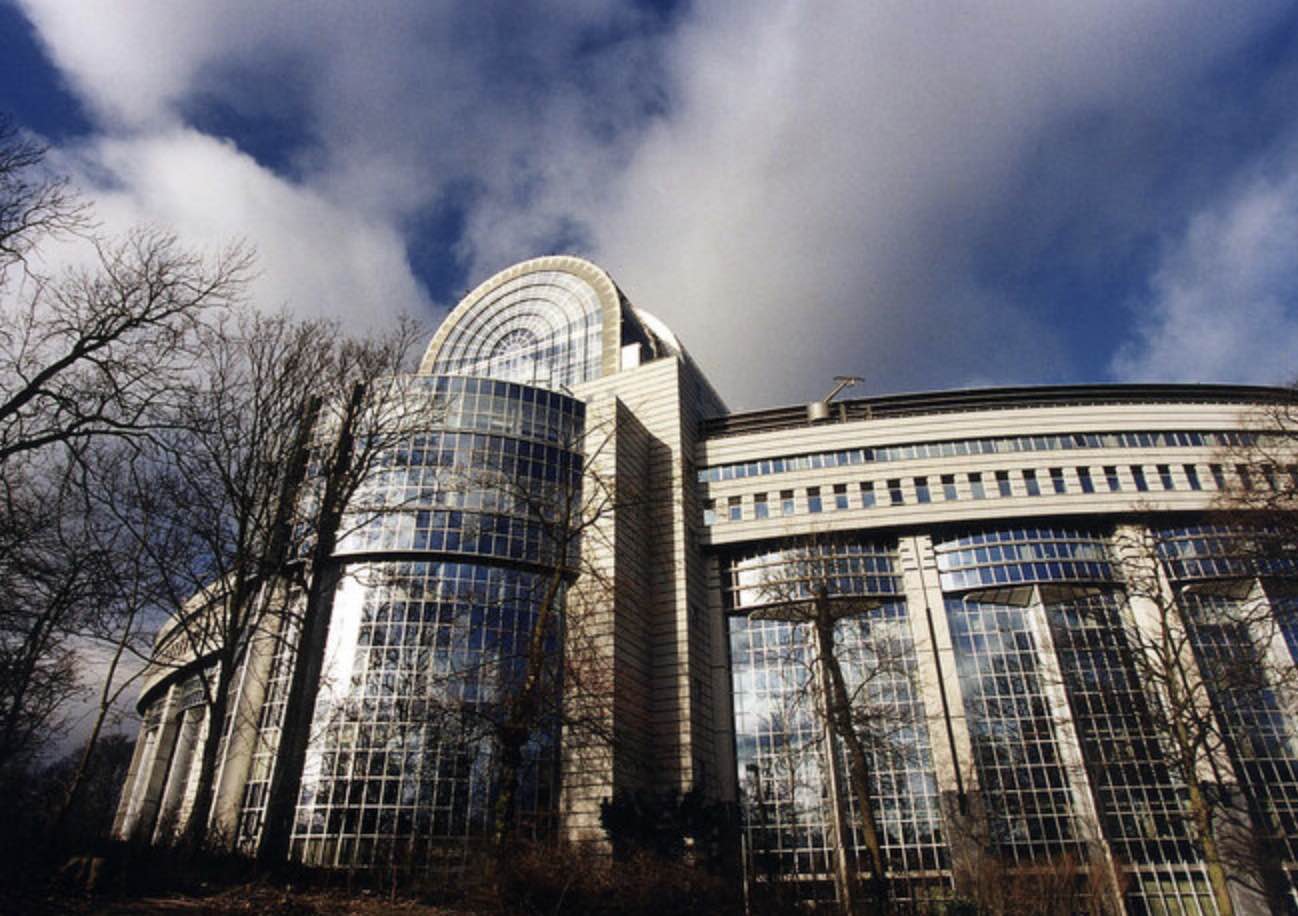
The announcement that Members of the European Parliament will travel to China for the first time in eight years is being framed, quite predictably, as a pragmatic step forward.
In reality, it is something more complicated: a cautious re-engagement wrapped in the language of digital cooperation, but shadowed by unresolved tensions that no amount of polite dialogue can erase.
According to the European Parliament’s own statement, the nine-member delegation—led by Internal Market Committee chair Anna Cavazzini—will visit Beijing and Shanghai with a focus on the digital economy, e-commerce, and regulatory standards. This is, on the surface, entirely sensible. China is not just a major player in the global digital economy; in some areas, it is the dominant force. Any serious policymaker in Brussels would be remiss not to engage directly with that reality.
Yet the timing and framing of this visit invite scrutiny.
For eight years, there has been no such parliamentary engagement. That absence was not accidental—it reflected a deterioration in relations driven by sanctions, human rights concerns, and an increasingly assertive Chinese foreign policy. The European Parliament, in particular, has often positioned itself as the moral conscience of the EU, frequently condemning Beijing’s actions, from Xinjiang to Hong Kong.
So what has changed?
The honest answer is: not much in Beijing. What has changed is Europe.
The EU finds itself navigating a far more competitive and fragmented global environment. The United States is pursuing an aggressive industrial and technological strategy. China continues to expand its influence, particularly in digital infrastructure and e-commerce. And Europe, caught between the two, is trying to defend its regulatory model while remaining economically relevant.
That is where this visit comes in.
The delegation’s stated aim is to better understand China’s “innovative tech sector and e-commerce dominance” while also ensuring that EU rules—particularly on product safety and consumer protection—are respected. This dual objective reveals the EU’s central dilemma: it wants access to China’s market and insight into its technological ecosystem, but it also wants to export its own standards.
In theory, this is the Brussels playbook—what some have called the “Brussels Effect.” Set the rules at home, and the world will follow.
In practice, China is not the world.
Meetings with major platforms such as Alibaba and Shein are intended to address concerns over non-compliant goods entering the EU via small parcels. This is not a trivial issue. European regulators have long worried that the explosion of low-cost e-commerce imports undermines both consumer safety and fair competition. But the idea that a short parliamentary visit will fundamentally alter the behaviour of Chinese tech giants borders on wishful thinking.
The deeper question is whether the EU is engaging China from a position of strength—or from necessity.
There is a risk that this visit signals a subtle shift from principled distance to pragmatic accommodation. The language of “fair competition” and “level playing fields” is important, but it can also obscure the asymmetry in the relationship. China’s digital ecosystem operates under a fundamentally different political and regulatory framework—one in which the state plays a decisive role, and where data governance is inseparable from national security.
Europe, by contrast, is attempting to build a rules-based digital market grounded in transparency, privacy, and consumer rights.
These are not easily reconciled models.
To be clear, engagement is not the problem. Dialogue, even with strategic rivals, is essential. The alternative—mutual isolation—is neither realistic nor desirable. But engagement without clarity can quickly become drift.
If this visit is to mean anything, it must go beyond polite exchanges and photo opportunities. It must confront the difficult issues head-on: market access for European firms, the enforcement of EU standards on imported goods, and the broader question of reciprocity in digital trade.
It must also avoid the temptation to treat the digital economy as a neutral space. It is not. Technology is now at the heart of geopolitical competition, and any discussion of platforms, data, and e-commerce inevitably touches on questions of power and influence.
There is, finally, a symbolic dimension to this trip that should not be ignored.
After eight years of absence, the return of European lawmakers to China suggests a reopening of channels that had been effectively frozen. That may be welcome. But symbolism cuts both ways. If the visit is perceived as Europe softening its stance without securing tangible concessions, it risks undermining the credibility the Parliament has built through its previous positions.
The EU likes to see itself as a regulatory superpower. This visit will test whether it can also act like one on the global stage.
Because in the end, the issue is not whether Europe talks to China. It must. The issue is how—and on whose terms.
Click here for more News & Current Affairs at EU Today
Click here to check out EU TODAY’S SPORTS PAGE!
—————————————————————————————————————————–