
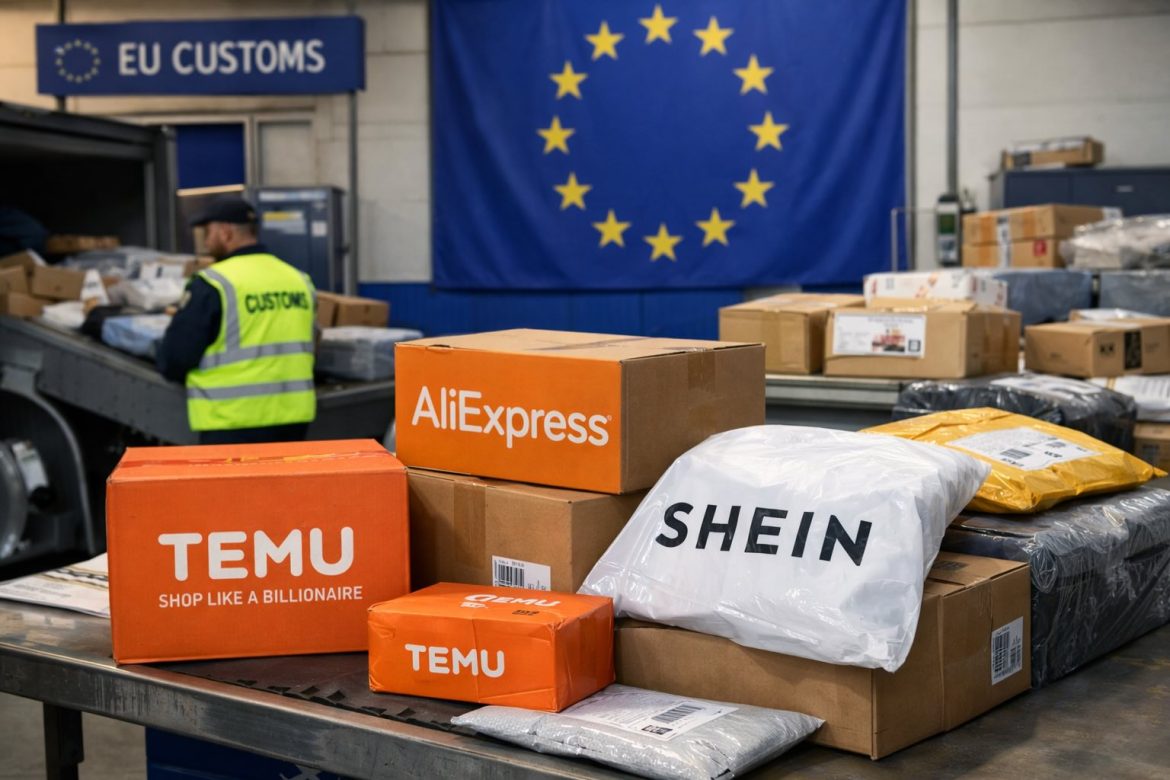
A European Parliament delegation has used its first visit to China in eight years to raise concerns over unsafe products entering the EU market, fair competition and access for European firms, as Brussels tightens customs rules aimed largely at Chinese e-commerce platforms.
A delegation of European Parliament lawmakers has pressed Chinese officials over unsafe and non-compliant products entering the European Union, in a rare visit to Beijing that underlines the increasingly regulatory character of the EU-China relationship. It is the first visit by EU lawmakers to China in eight years.
The nine-member delegation is led by Anna Cavazzini, chair of the European Parliament’s Internal Market and Consumer Protection Committee. The group met senior Chinese officials and lawmakers to discuss product safety, fair competition, online child protection and forced labour concerns. The delegation is also due to meet representatives of Shein, Alibaba and Temu during talks in Beijing and Shanghai.
The visit comes less than a week after EU institutions reached an agreement on a major customs reform designed to tighten controls on unsafe and illegal goods entering the bloc through online platforms. Under that agreement, platforms selling into the EU will be treated as importers, making them responsible for customs duties and compliance with product-safety rules. Repeat violations could lead to fines of between 1% and 6% of annual EU sales.
The reform is aimed in large part at the rapid growth of low-value parcels entering the EU, most of them from China. More than 5.8 billion such parcels entered the bloc in 2025 and more than 90% originated in China. Brussels has argued that national customs systems are struggling to deal with the volume, creating risks for consumer safety and distortions in competition.
The Council of the EU said on 26 March that the customs overhaul would tighten controls on non-compliant, dangerous or unsafe goods while creating new tools to improve enforcement and duty collection. It described the agreement as a landmark reform of the customs framework.
That gives the parliamentary visit a practical policy context. This is not simply a symbolic re-engagement between Brussels and Beijing. It is directly linked to a concrete EU regulatory agenda: consumer protection, e-commerce enforcement and market fairness. Cavazzini and her delegation raised both unsafe imports into the EU and insufficient access for European businesses operating in China.
China, for its part, has presented the visit as an opportunity to steady relations. Chinese foreign ministry spokesperson Mao Ning said the delegation’s trip would help enhance understanding of China and contribute to sound and stable ties between China and the EU. Beijing has been trying to improve relations with Europe after a period marked by disputes over trade imbalances, China’s ties with Russia during the war in Ukraine and Chinese export restrictions on rare earths.
The timing also reflects a broader thaw after China lifted sanctions on some European lawmakers last year. Those sanctions, imposed in 2021, had led the European Parliament to suspend official contacts with China. The current visit became possible only after that barrier was removed.
For Brussels, however, the issue is less about diplomatic optics than about enforcement. The customs changes agreed last week include the removal of the current duty exemption for parcels worth less than €150, a €3 fee from July, and a new EU Customs Authority based in Lille. A central customs data hub is due to start with e-commerce in 2028 before expanding more widely.
The result is that EU-China economic relations are being shaped increasingly by regulatory disputes rather than traditional tariff politics alone. Market access, product safety, digital platforms and the integrity of the single market now sit closer to the centre of the relationship. The parliamentary delegation’s meetings in China suggest Brussels wants to signal that those concerns are no longer secondary matters, but part of the main framework through which trade ties with China will now be managed.

