The morning mist still clung to the trees of Sandringham when the first unmarked cars turned quietly onto the estate’s narrow lanes.
For decades, such movements would have been interpreted as the discreet choreography of royal life — courtiers arriving, guests departing, a private secretary summoned. But this Thursday was different. These were police vehicles.
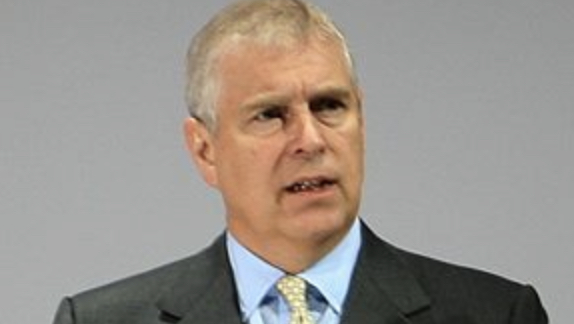
Andrew Mountbatten-Windsor, younger brother of the King, was taken into custody on suspicion of misconduct in public office after officers carried out coordinated searches at properties in Norfolk and Berkshire. The arrest, strikingly coinciding with his 66th birthday, marks the most dramatic moment yet in a long and corrosive scandal that has trailed the Royal Family for years.
Thames Valley Police confirmed that a man in his sixties from Norfolk had been detained and remains in custody while investigations continue. Photographs circulating within hours showed plain-clothes officers and multiple vehicles arriving at Wood Farm, the modest house on the Sandringham estate where Andrew had recently been staying.
The investigation centres on allegations that, during his time as a British trade envoy, he shared confidential government material with the late financier and convicted sex offender Jeffrey Epstein. Police had already been assessing a complaint before deciding a full criminal inquiry was warranted.
Yet the gravity of the moment cannot be understood merely as a question of official documents or government protocol. The arrest also reopens wounds the monarchy has spent years attempting — unsuccessfully — to cauterise.
Andrew has long been dogged by claims connected to Epstein’s international sex-trafficking network. Among the most serious were allegations from victims who said they had been trafficked for sexual encounters with powerful men, including the Duke. He has repeatedly and emphatically denied any wrongdoing.
Although never criminally charged over those accusations, he settled a civil lawsuit brought by Virginia Giuffre and was subsequently stripped of royal duties and military patronages. The palace hoped that retreat from public life would draw a line under the affair. Instead, new disclosures — including recently released files — appear to have revived investigators’ interest in his relationship with Epstein.
For the monarchy, the symbolism is devastating. Britain’s constitutional settlement rests not merely on law but on legitimacy — the quiet public acceptance that the Crown stands above the turbulence of politics and scandal. A senior royal being arrested at a royal residence punctures that illusion in a way no tabloid revelation ever quite could.
King Charles III now faces a dilemma familiar to sovereigns but rare in modern times: how to balance familial loyalty against the institution’s survival. Buckingham Palace has so far maintained careful silence, though the police emphasised the intense public interest and the need to preserve the integrity of the investigation.
The crisis is particularly acute because Andrew’s difficulties have never been solely legal. They are reputational, moral and international. Epstein’s network was global; so too is the monarchy’s audience. Every development resonates from Washington to Canberra.
Within Britain, the reaction has been visceral. The spectacle of officers searching royal property underscores a broader societal shift: the decline of automatic deference. Once, royal proximity seemed to confer insulation. Today it appears to do the opposite, magnifying scrutiny.
The potential offence under investigation — misconduct in public office — is not trivial. The charge historically addresses abuses of power by officials entrusted with public responsibilities, and its seriousness is reflected in the severity of possible penalties.
None of this, of course, establishes guilt. An arrest is not a conviction, and British law requires only reasonable suspicion rather than proof beyond doubt at this stage. Andrew continues to deny wrongdoing, and due process will determine the outcome.
Nevertheless, the reputational damage to the Royal Family may prove irreversible. Even before this morning’s events, Andrew had become a figure largely absent from public ceremonial life. Now he risks becoming something far worse for the monarchy: a permanent symbol.
For decades the Windsors weathered crises — abdication, divorces, tragedy, and the tragic death of Diana — yet the institution endured because scandals remained personal rather than institutional. The Epstein association altered that calculus. This arrest intensifies it.
The monarchy survives on trust more than tradition. If the public comes to believe that privilege shields wrongdoing, the Crown’s moral authority weakens. Conversely, if justice proceeds impartially, it may paradoxically strengthen the principle that even the highest are subject to the law.
The royal estate, once a sanctuary of hereditary continuity, had briefly become a scene of criminal investigation — and Britain’s most ancient institution now faces one of its most modern tests.
Main Image: – via Wikipedia
Click here for more News & Current Affairs at EU Today
Click here to check out EU TODAY’S SPORTS PAGE!
_____________________________________________________________________________________________________________________