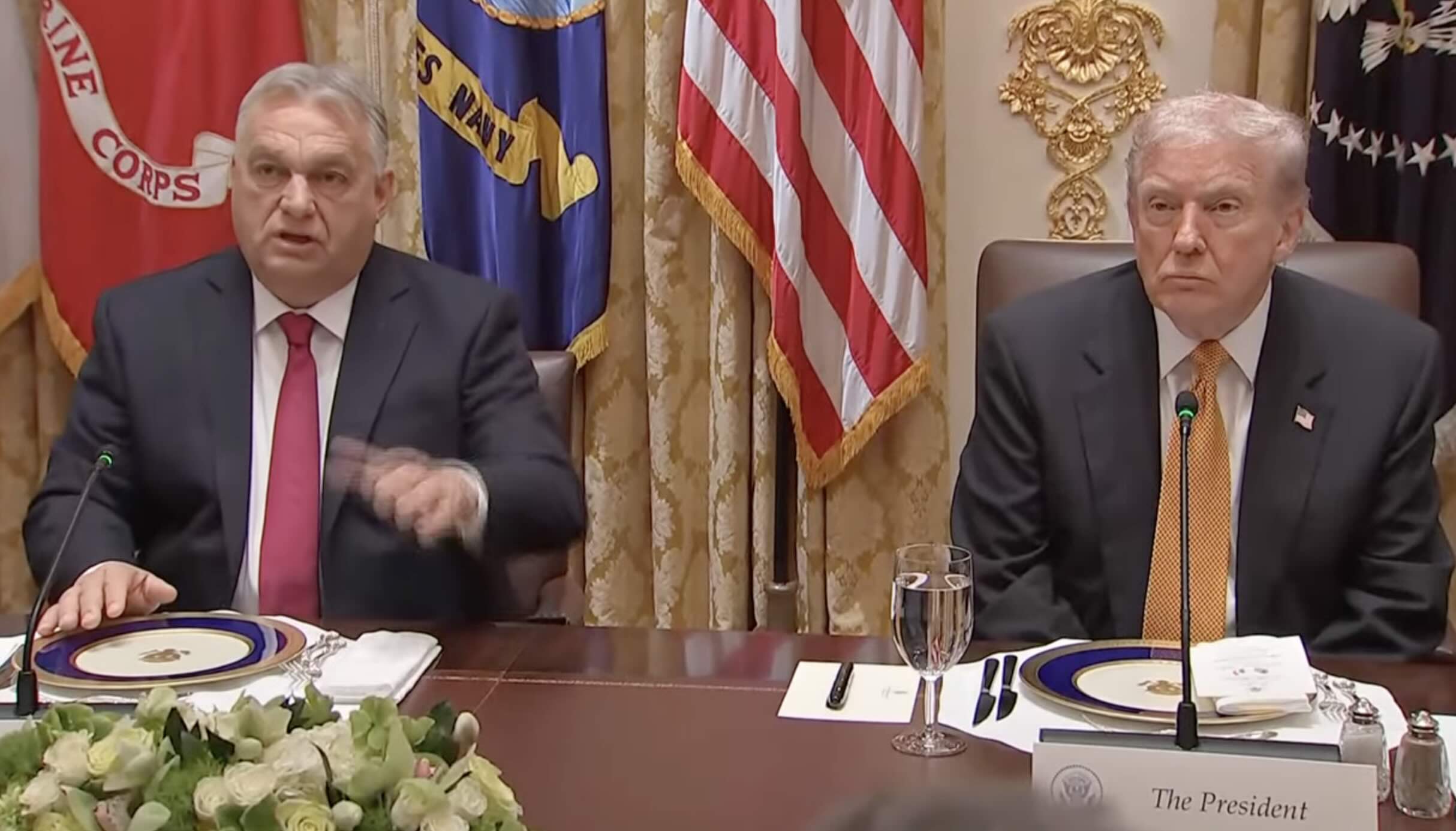
Hungary has acknowledged that there is no agreement with the United States on a proposed financial package worth up to $20 billion, despite earlier suggestions from Prime Minister Viktor Orbán that such support could be available as an alternative to frozen European Union funds.
Foreign minister Péter Szijjártó said on Tuesday that Orbán and US President Donald Trump had not concluded any deal on a specific sum during their meeting in Washington last month. Instead, they agreed to launch talks on “a new type of financial cooperation” aimed at providing what he described as financial protection for Hungary’s economy.
The clarification came after Trump told Politico that he had not promised Orbán a $20 billion package, although he confirmed that the Hungarian leader had asked for substantial support. “No, I haven’t promised him that, but he has certainly asked for it,” Trump said in the interview, published on Monday.
In November, Orbán had presented the prospective US-backed arrangement as a significant opportunity for Hungary to access a financial “shield”, indicating that Budapest could draw on a currency swap line or a flexible credit line, with a potential volume between $10 billion and $20 billion, subject to US approval.
Hungarian officials framed the prospective US cooperation as a counterweight to EU financing, large parts of which remain blocked in a long-running dispute between Budapest and Brussels over rule-of-law standards and judicial and media reforms. The European Commission has kept tens of billions of euros in cohesion and recovery funding on hold, arguing that Hungary has not yet met the conditions attached to the disbursements.
Szijjártó, addressing domestic and international questions after Trump’s remarks, insisted that the Hungarian government had never claimed a finalised agreement existed on the $20 billion figure. He said that while no concrete facility had been agreed, Budapest and Washington had committed themselves to consultations on the “forms and mechanisms” of possible cooperation that could strengthen Hungary’s financial resilience.
According to Reuters, during his 7 November visit to the White House, Orbán did secure a one-year waiver from US sanctions affecting the use of Russian energy, allowing Hungary continued access to Russian oil and gas supplies despite broader Western efforts to reduce dependence on Moscow. The prime minister later linked this and the potential US financial instruments to his broader strategy of navigating between EU and US pressures while maintaining Hungary’s energy arrangements with Russia.
The debate over the supposed $20 billion package comes at a sensitive moment for Hungary’s economy. Growth has been weak since 2022, inflation has eroded real incomes, and international rating agencies have flagged concerns about pre-election spending. Fitch Ratings last week revised Hungary’s outlook from “stable” to “negative”, citing a loosening fiscal stance and uncertainty over consolidation plans ahead of the 2026 parliamentary elections.
In response to economic pressure and falling living standards, the Orbán government has introduced a series of support measures, including tax cuts for families, wage increases in selected sectors and food vouchers for pensioners. These steps form part of a broader attempt to bolster household purchasing power and stabilise public sentiment before voters go to the polls.
The clarification over US funding also has a domestic political dimension. Opinion polls show that Orbán’s Fidesz party faces a competitive contest in 2026 against the emerging opposition Tisza movement led by Péter Magyar. Recent surveys indicate that while Fidesz has narrowed the gap through increased spending and targeted benefits, Tisza remains a serious challenger, and the race is expected to be closely fought.
Against this background, the prospect of substantial external financial backing, whether from the EU or the US, has featured prominently in government messaging. Orbán has repeatedly argued that Hungary requires predictable support to manage economic headwinds, energy costs and the wider impact of the war in neighbouring Ukraine. The suggestion of a US-backed “shield” was presented domestically as evidence that Budapest had options beyond Brussels.
Trump’s explicit denial that he had promised a $20 billion facility, and Szijjártó’s subsequent clarification, now place the emphasis on future negotiations rather than any immediate support. For the moment, Hungary must continue to operate with EU funds largely frozen, international watchdogs signalling fiscal risks, and only the outline – rather than the reality – of a new US-Hungarian financial arrangement.