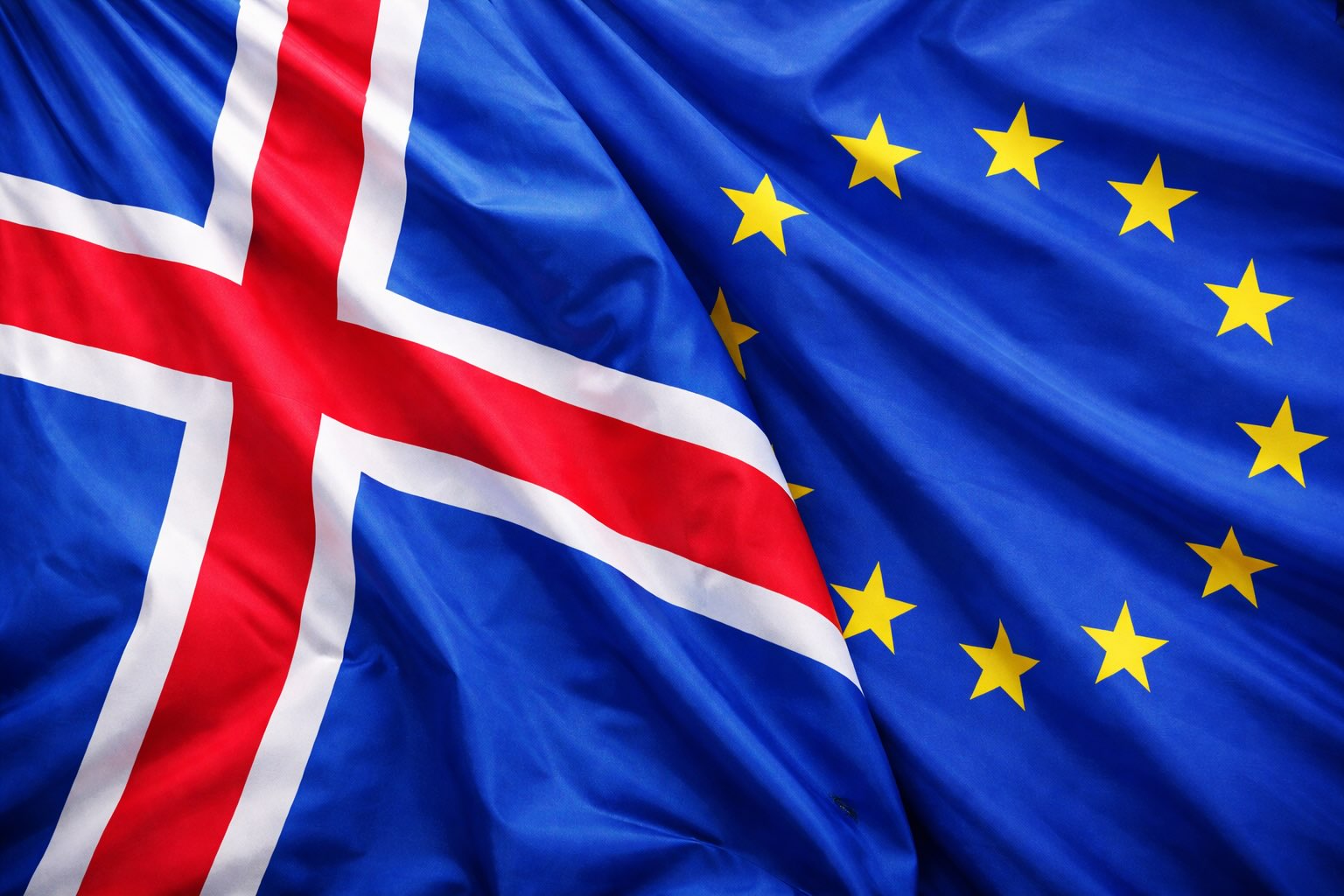
Iceland could complete negotiations on joining the European Union within roughly 18 months and potentially become the bloc’s 28th member state, according to Foreign Minister Þorgerður Katrín Gunnarsdóttir, who has linked the prospect to a renewed national debate on membership and a referendum planned for 29 August.
In an interview reported on Wednesday, Gunnarsdóttir said Iceland’s position differs from that of most accession candidates because the country is already deeply integrated with the EU through the European Economic Area and the Schengen free travel zone. That means a substantial body of EU-related law is already reflected in Icelandic legislation, allowing any renewed accession process to move faster than would normally be expected.
Asked whether Iceland could move ahead of long-standing candidates such as Montenegro and become the next state to enter the Union, the minister’s answer was direct: yes. Her assessment rests on Iceland’s unusual starting point. Unlike most aspirant states, Iceland is already inside the single market through the EEA framework and participates in passport-free movement through Schengen, while maintaining close political and economic ties with Brussels.
The principal obstacle, she indicated, remains fisheries. That issue has long been central to Icelandic scepticism about EU membership and remains one of the most sensitive areas in any possible negotiation. The EEA does not include the EU’s common fisheries policy, and Iceland currently retains control over fishing quotas and sectoral restrictions. Any move towards full membership would therefore reopen a politically charged question that has shaped Iceland’s debate on Europe for years.
The Icelandic government has already approved a proposal for a referendum on whether the country should resume accession talks, with the vote scheduled for 29 August. The measure still requires parliamentary approval, but the government has moved the timetable forward amid a changed international climate. The coalition accelerated its plans against a background of geopolitical uncertainty, economic pressure and wider security concerns in the North Atlantic.
Under the government’s plan, a vote in favour would not bring Iceland directly into the EU. Instead, it would reopen negotiations that were frozen more than a decade ago. Gunnarsdóttir has also made clear that even if voters approve the resumption of talks this summer, Icelanders would still be asked to vote again on any final accession agreement once negotiations had been concluded.
Iceland first applied to join the EU in 2009 in the aftermath of the 2008 financial crisis, when the country’s economic model had been shaken and closer integration with Europe appeared more attractive. Accession talks later stalled and were effectively suspended in 2013, before the process was formally ended by Iceland’s authorities in 2015. At the time, domestic political opposition, sovereignty concerns and dissatisfaction with developments in the eurozone all played a role.
The argument now being advanced by Iceland’s government is that the balance of advantage may have shifted. Gunnarsdóttir has pointed to both economic and security considerations. On the economic side, she argues that Iceland continues to face persistently higher inflation and interest rates than many European countries, while parts of its domestic economy remain heavily concentrated. On the security side, the case for closer anchoring within European structures has gained force as the wider region becomes more exposed to strategic competition and instability.
That reassessment is being reinforced by geography and timing. Iceland sits in an increasingly important North Atlantic space and has no standing army of its own, relying on NATO arrangements and partnership with the United States for defence. In recent months, debate over Arctic security and transatlantic uncertainty has added fresh weight to the European question in Reykjavík. EU Enlargement Commissioner Marta Kos has publicly welcomed Iceland’s renewed debate, describing the country as a strong and trusted partner whose close links to the Union already set it apart.
Polling suggests that support for reopening negotiations is currently ahead, though not overwhelming. Reuters reported this month that a Gallup poll found 57 per cent in favour of resuming accession talks, with about 30 per cent opposed and the remainder undecided. That points to a serious opening for the government, but not to a settled consensus on full membership itself.
For now, the referendum is about whether to reopen the door rather than walk through it. But Gunnarsdóttir’s intervention has altered the tone of the discussion by suggesting that Iceland is not merely reconsidering an old application. It may be attempting to position itself as the EU’s next entrant, and to do so on a faster timetable than countries that have been waiting in the accession queue for years.