Despite recent controversies involving Virginia Giuffre, royal experts overwhelmingly agree that Prince Andrew’s reputation remains irreparably damaged.
The Duke of York, once considered a key member of the royal family, has been unable to distance himself from the shadow cast by his ties to disgraced financier Jeffrey Epstein.
Regardless of the questions now surrounding Giuffre’s credibility, public opinion and the enduring severity of the original allegations continue to block any hopes of rehabilitating Prince Andrew’s public image.
.
For years, Prince Andrew has faced scrutiny over his association with Epstein, a convicted sex offender whose high-profile connections shook the worlds of politics, business, and royalty.
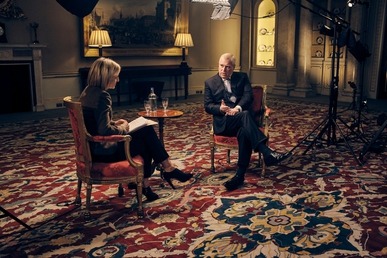
Although Andrew has consistently denied the allegations against him—particularly those made by Virginia Giuffre, who claimed she was trafficked to him by Epstein—the damage was swift and lasting. His 2019 BBC “Newsnight” interview, intended to clear his name, only fueled greater skepticism. Instead of providing clarity, it raised further doubts about his judgment, sincerity, and fitness for public duty.
In the years since, Andrew has effectively been sidelined from official royal life. He stepped back from his public roles and was stripped of his honorary military titles and royal patronages. Even though he reached an out-of-court settlement with Giuffre in 2022, the agreement included no admission of guilt but was widely interpreted as an attempt to avoid a prolonged and potentially embarrassing legal battle. In the court of public opinion, however, the settlement only reinforced suspicions rather than alleviating them.
Now, with new reports questioning aspects of Giuffre’s credibility, some speculated whether this might create a pathway for Prince Andrew’s redemption. However, royal commentators and image experts are quick to dismiss this notion. The consensus is clear: the damage has already been done, and it runs far too deep.
“The allegations against Prince Andrew were not merely about association; they involved extremely serious claims of sexual misconduct,” says royal biographer Katie Nicholl. “Even if some details of Giuffre’s accounts are now under question, the broader context remains unchanged. His poor handling of the situation, especially the infamous ‘Newsnight’ interview, made things infinitely worse.”
Public trust, once broken at such a profound level, is notoriously difficult to rebuild—especially in an era when accountability and transparency are demanded more than ever. According to a recent YouGov poll, Prince Andrew remains one of the least popular members of the royal family, with approval ratings far below those of even minor royals. Simply put, the British public appears unwilling to forgive or forget.
Adding to the challenge is the royal family’s own approach. King Charles III, aiming to streamline and modernize the monarchy, has shown little inclination to reintegrate Andrew into official duties. Buckingham Palace has maintained a careful distance, understanding that any attempt to restore Andrew to a public-facing role would provoke backlash and undermine efforts to project a refreshed, scandal-free image.
Royal historian Robert Lacey emphasises that this stance is unlikely to change: “The monarchy is bigger than any one individual. Allowing Prince Andrew to return to the spotlight would be seen as tone-deaf and damaging at a time when public support is more crucial than ever.”
While some insiders suggest Andrew harbours hopes of a quiet return to public life, the reality is stark. His appearances are limited to private family events, and even then, his presence often draws media attention and renewed controversy. For many observers, his continued retreat from public life seems the only viable option.
There is also the broader context of changing societal attitudes toward power and accountability. The #MeToo movement has reshaped public expectations about how allegations of sexual misconduct should be handled. Celebrities, politicians, and public figures who have been accused—regardless of eventual legal outcomes—often find that their reputations are permanently tarnished. In such an environment, even the perception of wrongdoing can be enough to derail a career, let alone a royal life.
Ultimately, the combination of grave accusations, public relations missteps, and a shifting cultural landscape makes it virtually impossible for Prince Andrew to rehabilitate his image. Even as doubts swirl around Giuffre’s credibility, they do little to erase the broader narrative that has been cemented over years of controversy and scrutiny.
As the royal family looks to the future under King Charles III and, eventually, Prince William, it is clear that they are keen to distance themselves from the scandals of the past. For Prince Andrew, that likely means a life spent largely out of the public eye—an unceremonious end to a royal career that once seemed full of promise.
Main Image: – https://www.thesun.co.uk/wp-content/uploads/2020/07/NINTCHDBPICT000597064379-1.jpg via Wikipedia.